Heidi Fagre
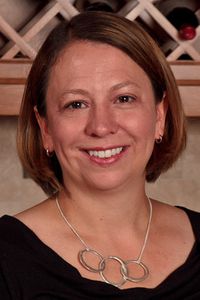
Heidi Fagre was a candidate for at-large representative on the Green Bay Area Public School District school board in Wisconsin. Fagre was defeated in the at-large general election on April 4, 2017.
Fagre participated in Ballotpedia's 2017 school board candidate survey. Click here to read her responses.
Biography
Fagre's work experience includes being the co-owner of Ten Below, a freezer meal co-op and consulting company, and working as a special education and elementary teacher for 10 years. Fagre earned a master's degree in at-risk education. She has three children who attend the Green Bay Area Public School District.[1][2]
Elections
2017
Two seats on the Green Bay Area Public School District Board of Education were up for general election on April 4, 2017. Incumbent Katie Maloney faced challengers Heidi Fagre and Laura McCoy in her bid for re-election.[3] Maloney won re-election, and McCoy won the other seat.[4]
Results
| Green Bay Area Public School District, General Election, 3-year terms, 2017 |
||
|---|---|---|
| Candidate | Vote % | Votes |
 Katie Maloney Incumbent Katie Maloney Incumbent |
40.23% | 9,340 |
| Laura McCoy |
31.05% | 7,210 |
| Heidi Fagre | 28.01% | 6,503 |
| Write-in votes | 0.71% | 165 |
| Total Votes | 23,218 | |
| Source: Brown County Clerk, "Summary Report: Official Results," accessed May 9, 2017 | ||
Funding
Fagre began the race with an existing account balance of $106.24 from her previous campaign. She reported $1,402.42 in contributions and $1,508.66 in expenditures to Green Bay City Clerk, which left her campaign with no balance on hand in the election.[5]
Endorsements
Fagre was endorsed by the Green Bay Education Association and the organization Wisconsin Progress.[6][7]
Campaign themes
2017
Ballotpedia survey responses

Heidi Fagre participated in Ballotpedia's 2017 survey of school board candidates.[8] In response to the question "What do you hope to achieve if elected to the school board?" the candidate stated on February 27, 2017:
| “ | Cultivating an education for all students. I hope to make decisions that lead to powerful learning for all children and take into account the varying learning needs of all children. Teachers and school workers are a valuable resource. We need to look at ways to bring new qualified teachers to Green Bay Schools and work with those who are already here to ensure they stay long-term. Bring awareness of the importance of public schools. They offer the foundation to a community and bring about strong citizens who are called to action in community service, careers and creating a thriving economy.[9][10] | ” |
Ranking the issues
The candidate was asked to rank the following issues based on how they should be prioritized by the school board, with 1 being the most important and 7 being the least important. Each ranking could only be used once.
| Education policy |
|---|
 |
Click here to learn more about education policy in Wisconsin. |
| Education on the ballot |
| Issue importance ranking | |
|---|---|
| Candidate's ranking | Issue |
| Balancing or maintaining the district's budget | |
| Improving relations with teachers | |
| Improving education for special needs students | |
| Improving post-secondary readiness | |
| Closing the achievement gap | |
| Expanding arts education | |
| Expanding school choice options | |
| “ | Public schools are funded through the tax payers. It is important to be able to provide services for the community based on the amount of money that is provided. It is not fiscally responsible for school districts to spend more money than they have coming in. I think it is important for teachers and school boards have a good working relationship. Teachers are on the ground working with the students. They know and understand the needs of the students and open communication can only lead to quality education for students and teachers that choose to stay in the positions.[10] | ” |
| —Heidi Fagre (February 27, 2017) | ||
Positions on the issues
The candidate was asked to answer eight questions from Ballotpedia regarding significant issues in education and the school district. The questions are highlighted in blue and followed by the candidate's responses. Some questions provided multiple choices, which are noted after those questions. The candidate was also provided space to elaborate on their answers to the multiple choice questions.
| Should new charter schools be approved in your district? (Not all school boards are empowered to approve charter schools. In those cases, the candidate was directed to answer the question as if the school board were able to do so.) |
|---|
| Yes. I think that adding charter schools can benefit public schools if they are done in a way that meets the same accountability standards as public schools. Teachers and administrators in charter schools need to be licensed for maximum benefit to students and community. I think that is charter schools are approved the immediate needs of the district need to be addressed and if an charter school fits into the need and budget it can only benefit students. |
| Which statement best describes the ideal relationship between the state government and the school board? The state should always defer to school board decisions, defer to school board decisions in most cases, be involved in the district routinely or only intervene in severe cases of misconduct or mismanagement. |
| The state should defer to school board decisions in most cases. |
| Are standardized tests an accurate metric of student achievement? |
| No. In my opinion Standardized tests do not give accurate representation of student achievement. Student achievement is not solely based on answers that can be fit into boxes or bubbles on a test. Student achievement is based on the whole child: their ability to problem solve with solutions that are beyond the box, their character, their ability to persevere, and the growth that they have made. Each student learns differently and has a different time when their brains are developed and ready to learn certain concepts. We are so busy trying to get students to all reach the same standards when there is no child that we can consider to be standard. All are individuals and I think it is a slipper slope when everyone is held to the same standards in learning. |
| How should the district handle underperforming teachers? Terminate their contract before any damage is done to students, offer additional training options, put them on a probationary period while they seek to improve or set up a mentorship program for the underperforming teacher with a more experienced teacher in the district? |
| Offer additional training options. Offer additional training options. Put them on a probationary period while they seek to improve. Set up a mentorship program for the underperforming teacher with a more experienced teacher in the district. |
| Should teachers receive merit pay? |
| No. I am not sure how to properly assess achievement or effectiveness of teachers to adequately assign them payment. It seems that if standardized test scores are used to provide merit pay you are leaving out a large group of teachers for the opportunity to receive it. Those teachers who are working with children with disabilities would most likely not have students who score well on standardized tests. If you use parent/student satisfaction surveys to assess those who could receive merit pay it becomes payment attached to popularity. Teachers achieve more when they can collaborate and merit pay would most likely force teachers into their own classrooms and discontinue the benefit of sharing feedback, lesson plans and ideas. Merit pay also would have an effect on those who teach in areas that include great amount of poverty. Teachers who work in these areas need to first help their students get their personal needs met in order to be prepared to learn the curriculum. Teachers who work in schools that are trauma sensitive may not have students who can achieve as high as those who live in neighborhoods filled with educated and privileged families. |
| Should the state give money to private schools through a voucher system or scholarship program? |
| No. It has been proven that time and time again that students do not achieve more in districts with high voucher recipients. The accountability is not there and when students leave schools the voucher money stays with the private school rather than following the student, which makes education more expensive per student. I think that choices are important, but if parents choose to send their children to private schools it should not be on the tax payer. |
| How should expulsion be used in the district? |
| Expulsion is a very serious issue that I feel needs to be addressed on a case by case basis. Reasons for expulsion in a school district have to be for only extreme cases where it is determined that any and all interventions will not benefit the student and lead to a successful outcome. I feel that a school fails a child when all avenues have not been explored in order to provide an appropriate education that engages, encourages, individualizes and extends all resources possible to help this child get his/her education. |
| What's the most important factor for success in the classroom: student-teacher ratio, the curriculum, teachers, parent involvement or school administration? |
| Teachers I believe that the teacher's ability to engage all learners and meet each child where they are at is the key to success in a classroom.Teaching is an art and a science and today teachers need to be prepared for so many different situations. They are at the forefront of learning. They work to engage learners and to know their learning needs. Ideally students who have strong parent support at home will also have more success. Unfortunately the reality is that not all parents are available to support learning needs at home. Teacher's have difficult and complicated jobs! |
Green Bay Press-Gazette survey
Fagre participated in the following survey conducted by the Green Bay Press-Gazette. The questions provided by the newspaper appear in bolded text, and Fagre's responses follow below.
Relevant experience:
| “ | I was a special education and elementary teacher for 10 years. I have a master’s Degree in at-risk education and am certified to teach in 3 areas. I served as a parent representative on the Parent Advisory Board. I have three children who attend school at McAuliffe and Froebel in Green Bay Public Schools.[10] | ” |
| —Heidi Fagre (March 20, 2017)[11] | ||
Why are you running for office?
| “ | I am running for a position on the school board so that I can be a voice for children, especially those who are non-traditional learners. I know first hand what it is like to be a teacher in a classroom and also a parent with children in Green Bay Schools. I can be a representative for both teachers and parents. I am passionate about public education and hope to bring about learning practices that are developmentally appropriate for children, yet still prepare them to be independent, productive adults.[10] | ” |
| —Heidi Fagre (March 20, 2017)[11] | ||
What do you consider to be the key issue or issues in this race?
| “ | The key issues in this race, I believe, are the pending referendum questions. Green Bay Schools are operating at costs that are below the state average and there is an overcrowding issue that needs solutions, especially with Baird School. I also think that Green Bay Public Schools offer great opportunities for students, but more needs to be done to retain students in the district due to vouchers. Poverty greatly affects learning and district resources and there needs to be a continued focus on reaching students to help them break the cycle of poverty through education.[10] | ” |
| —Heidi Fagre (March 20, 2017)[11] | ||
What makes you the best-qualified candidate to hold this office?
| “ | I think that what sets me apart from the other candidates is that I have a background in education. I was a teacher and have a master’s degree in at-risk education. I have an understanding of how children learn. I am invested in our Green Bay Public Schools because I have three children who are currently attending. I have a passion for education and would like an opportunity to be a voice for students, teachers, parents and community members.[10] | ” |
| —Heidi Fagre (March 20, 2017)[11] | ||
See also
- Green Bay Area Public School District, Wisconsin
- Green Bay Area Public School District elections (2017)
External links

Footnotes
- ↑ Heidi Fagre for Green Bay Public School Board, "About," accessed March 30, 2017
- ↑ Ten Below Freezer Meals, "Meet Our Team," accessed January 23, 2017
- ↑ Tiffany Rouse, "Email correspondence with Green Bay Area School District Assistant to the Superintendent Sandra Heller," January 5, 2017
- ↑ Brown County Clerk, "Summary Reports Unofficial," accessed April 4, 2017
- ↑ Abbey Smith, “Email communication with Andrew Becker, Board Clerk, Green Bay Area Public School District," May 23, 2017
- ↑ Wisconsin Progress, "Our Endorsements for Spring 2017," accessed March 30, 2017
- ↑ Abbey Smith, “Email communication with Andrew Becker, Green Bay Area Board of Education member," March 29, 2017
- ↑ Note: The candidate's answers have been reproduced here verbatim without edits or corrections by Ballotpedia.
- ↑ Ballotpedia School Board Candidate Survey, 2017, "Heidi Fagre's responses," February 27, 2017
- ↑ 10.0 10.1 10.2 10.3 10.4 10.5 Note: This text is quoted verbatim from the original source. Any inconsistencies are attributable to the original source.
- ↑ 11.0 11.1 11.2 11.3 Green Bay Press-Gazette, "Meet the candidates: Green Bay School Board," March 20, 2017
| Green Bay Area Public School District elections in 2017 | |
| Brown County, Wisconsin | |
| Election date: | April 4, 2017 |
| Candidates: | At-large: Incumbent, Katie Maloney • Heidi Fagre • Laura McCoy |
| Important information: | What's at stake? • Additional elections on the ballot • Key deadlines |