

Racine Unified School District, Wisconsin

Ballotpedia provides comprehensive election coverage of the 100 largest cities in America by population as well as mayoral, city council, and district attorney election coverage in state capitals outside of the 100 largest cities. This school district is outside of that coverage scope and does not receive scheduled updates.
| Racine Unified School District |
|---|
 |
| Racine, Wisconsin |
| District details |
| Superintendent: Lolli Haws |
| # of school board members: 9 |
| Website: Link |
Racine Unified School District is a school district in Wisconsin. The district was the fifth-largest school district in the state in the 2014-2015 school year and served 19,819 students.[1]
Conflicts arose in 2014 and 2015 between district administrators and the district's unions over a new plan for employee raises and changes to the employee handbook. Another dispute emerged with a local voucher school over busing responsibilities, and nearby communities voted to split from the district and create their own school district, though they were legally unable to follow through on that decision.
A state law passed in July 2015 changed Racine's school board elections from at large to by district starting with the 2016 elections. A school board member resigned in June 2015, amid rumors of a prior felony conviction. In the process of trying to replace her, the board violated the state's open meetings law by voting on secret ballots. There was also a standoff over filling the vacancy, which lasted until the Wisconsin State Legislature approved a temporary method for breaking board ties in October 2015.
About the district
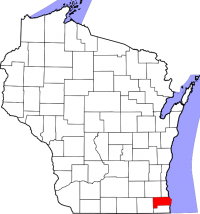
The Racine Unified School District is located in Racine, which is the seat of government for Racine County in southeastern Wisconsin. Racine County was home to 195,080 residents in 2015, according to the United States Census Bureau.[2]
Demographics
Higher education achievement
Racine County underperformed compared to Wisconsin as a whole in terms of higher education achievement between 2011 and 2015. The United States Census Bureau found that 23.7 percent of county residents aged 25 years and older had attained a bachelor's degree, compared to 27.8 percent for the state as a whole.[2]
Median household income
From 2011 to 2015, the median household income for Racine County was $55,584. During that same period, the median household income for Wisconsin was $53,357.[3]
Poverty rate
From 2011 to 2015, the poverty rate in Racine County was 12.4 percent. During that same time period, the poverty rate was 12.1 percent for the entire state.[2][3]
| Racial Demographics, 2015[2] | ||
|---|---|---|
| Race | Racine County (%) | Wisconsin (%) |
| White | 83.9 | 87.6 |
| Black or African American | 11.8 | 6.6 |
| American Indian and Alaska Native | 0.6 | 1.1 |
| Asian | 1.3 | 2.8 |
| Native Hawaiian and Other Pacific Islander | 0.1 | 0.1 |
| Two or More Races | 2.3 | 1.8 |
| Hispanic or Latino | 12.7 | 6.6 |
Note: Percentages for race and ethnicity may add up to more than 100 percent because respondents may report more than one race and the Hispanic/Latino ethnicity may be selected in conjunction with any race. Read more about race and ethnicity in the census here.
Superintendent
 |
This information is updated as we become aware of changes. Please contact us with any updates. |
Lolli Haws is the superintendent of the Racine Unified School District. She has served in the position since her appointment in 2013. Haws previously served as an administrator with District of Columbia Public Schools.[4][5] In December 2016, the school board voted 6-3 to extend Haws' contract through June 2018.[6]
School board elections
The Racine Board of Education consists of nine members elected to three-year terms. Members previously were elected at large, but the state budget passed in July 2015 included an amendment requiring Racine's school board members be elected by district from specific geographic areas. Each member receives $300 per month in compensation for board service.[7][8]
| Racine Board of Education | |||
|---|---|---|---|
| Member | District | Assumed office | Term ends |
| Michelle Duchow | 1 | 2016 | 2019 |
| Dennis Wiser | 2 | 2008 | 2020 |
| Michael Frontier | 3 | 2013 | 2020 |
| Julie McKenna | 4 | 1998 | 2021 |
| Jane Barbian | 5 | 2018 | 2021 |
| John Heckenlively | 6 | 2016 | 2021 |
| Brian O'Connell | 7 | 2017 | 2020 |
| Matthew Hanser | 8 | 2016 | 2019 |
| Robert Wittke | 9 | 2016 | 2019 |
| |
This officeholder information was last updated on April 1, 2020. Please contact us with any updates. | |
Governing majority
2017-2018
| Racine Board of Education, 2017-2018 |
|---|
| Michelle Duchow |
| Dennis Wiser |
| Michael Frontier |
| Julie McKenna |
| Steven Hooper |
| John Heckenlively |
| Brian O'Connell |
| Matthew Hanser |
| Robert Wittke |
The Racine Unified School District Board of Education voted unanimously on 89.04 percent of its votes between April 24, 2017, and November 20, 2017 (excluding roll call, adjournment, and procedural votes). The board approved 73 out of 73 of its motions during this time period. These votes were counted from special and regularly scheduled sessions and exclude committee meetings.[9]
There was no discernible governing majority or minority faction on the school board in 2017-2018 given the number of motions and the relatively small portion of motions approved without unanimous support.[9]
Absences
Steven Hooper was absent for 36.99 percent of votes cast by the board between April 24, 2017, and November 20, 2017, a higher absence rate than any other member. Brian O'Connell had the second-highest absence rate, missing 16.44 percent of all votes cast during that period.[9]
Issues
Fiscal and budgetary matters accounted for the highest percentage of issues the board voted on between April 24, 2017, and November 20, 2017, accounting for 54.8 percent of all votes tracked. See the bar chart below for further details.[9]
2016
| Racine Board of Education, 2016 |
|---|
| Michelle Duchow |
| Dennis Wiser |
| Michael Frontier |
| Julie McKenna |
| Steven Hooper |
| John Heckenlively |
| Don Nielsen |
| Matthew Hanser |
| Robert Wittke |
From January 2016 to December 2016, the Racine school board voted unanimously to approve 92.3 percent of the 130 motions brought forward by board members. There were two measures defeated in 2016, while eight measures were approved without unanimous support. These totals exclude motions to approve board minutes or procedural votes.
Five new board members joined the board following the general election on April 5, 2016. These members are bold in the table to the right. Michelle Duchow cast dissenting votes on four of six measures approved without unanimous support following the board election. Dennis Wiser cast five dissenting votes in 2016, joining Duchow on three occasions. John Heckenlively and Julie McKenna each cast three dissenting votes. There was no discernible governing majority on the school board in 2016 given the number of motions and the small portion of motions approved without unanimous support.
Votes on district procedures accounted for 47 motions or 36.2 percent of all motions brought before the board in 2016. These votes included approval of operational expectations and policies. Twenty-nine votes on budget issues accounted for 22.3 percent of all motions in 2016. The board voted on 28 motions related to board procedures in 2016. The remaining motions dealt with athletics, curriculum, disciplinary decisions, superintendent matters, and student conduct.
2015
| Racine Board of Education, 2015 |
|---|
| Dennis Wiser |
| Michael Frontier |
| Julie McKenna |
| Don Nielsen |
| Melvin Hargrove |
| Chuck Goodremote |
| Pamala Handrow |
| Kim Plache |
| John Koetz |
The Racine school board voted unanimously on 84.6 percent of its votes between January 1, 2015, and December 31, 2015. This percentage represented a 12.7 percent decrease from the previous year. The board approved 75 of 78 motions (96.1 percent) recorded in 2015, excluding procedural, roll call, and adjournment votes. These votes were counted from executive, special, and regularly scheduled sessions, and excludes committee meetings.
- When the board did not vote unanimously:
- Don Nielsen had the fewest "Yes" votes (50) of any board member who served the entirety of 2015 on the board
- Nielsen, Dennis Wiser, and Julie McKenna voted "No" together on seven of the 12 votes that were not unanimous. Michael Frontier joined this minority on four occasions.
- After John Koetz joined the board, he joined Melvin Hargrove, Pamala Handrow, Chuck Goodremote, and Kim Plache as the majority on all four divided votes at the board's special meeting on October 27, 2015.
The voting data indicated that Nielsen, Wiser, and McKenna represented a minority faction during board votes on district employment policies, salaries, and electoral reforms. Hargrove, Handrow, Goodremote, Plache, and Koetz represented the majority on these topics as 2015 ended.
2014
| Racine Board of Education, 2014 |
|---|
| Dennis Wiser |
| Michael Frontier |
| Julie McKenna |
| Don Nielsen |
| Melvin Hargrove |
| Chris Eperjesy |
| Pamala Handrow |
| Kim Plache |
| Wally Rendón |
The Racine school board voted unanimously on 97.3 percent of its votes between January 1, 2014, and August 1, 2014. Every vote recorded by the board passed.
- When the board did not vote unanimously:
- Julie McKenna and Kim Plache were the only board members who cast a "no" vote. Each cast a single "no" vote, but on different proposals.
- Chris Eperjesy, Michael Frontier, Pamala Handrow, Melvin Hargrove, Don Nielsen, Wally Rendón, and Dennis Wiser all voted together 100 percent of the time. None of them cast a single "no" vote.
- Handrow, McKenna, Rendón, and Wiser voted on every single proposal.
The voting data indicated that there was no clear governing majority or minority faction on the board. No individual board member's voting record differed significantly from that of the other board members.[10]
Election dates
Members of the Racine Board of Education are typically elected to three-year terms on a staggered basis. Four seats were up for election on April 1, 2014, as that election included a race for an unexpired one-year term. Three seats were up for election on April 7, 2015.
The July 2015 state legislation changing elections from at large to by district meant that the April 2016 election included all nine board seats. District 2, 3, and 7 were up for one-year terms, Districts 4, 5 and 6 were up for two-year terms, and Districts 1, 8, and 9 were up for three-year terms to facilitate staggered elections starting in 2017.[11]
Seats in Districts 2, 3, and 7 were up for election on April 4, 2017. Seats in Districts 4, 5, and 6 were up for election on April 3, 2018.
Public participation in board meetings
The Racine Board of Education does not maintain published guidelines regarding public participation in board meetings on its website.
Budget
From 1993 to 2013, the Racine Unified School District had an average of $204,567,429 in revenue and $203,647,714 in expenditures, according to the United States Census Bureau's survey of school system finances. The district had a yearly average of $64,475,095 in outstanding debt. The district retired $6,236,905 of its debt and issued $8,589,190 in new debt each year on average.[12]
Revenue
The table below separates the district's revenue into the three sources identified by the agency: local, state, and federal.
| Revenue by Source | |||||||||||
|---|---|---|---|---|---|---|---|---|---|---|---|
| Fiscal Year |
Local | State | Federal | Revenue Total | |||||||
| Total | % of Revenue | Total | % of Revenue | Total | % of Revenue | ||||||
| Click [show] on the right to display the revenue data for prior years. | |||||||||||
|---|---|---|---|---|---|---|---|---|---|---|---|
| 1993 | $66,238,000 | 47.68% | $66,487,000 | 47.86% | $6,190,000 | 4.46% | $138,915,000 | ||||
| 1994 | $72,312,000 | 49.45% | $67,549,000 | 46.19% | $6,383,000 | 4.36% | $146,244,000 | ||||
| 1995 | $69,121,000 | 45.46% | $76,077,000 | 50.03% | $6,850,000 | 4.51% | $152,048,000 | ||||
| 1996 | $65,959,000 | 42.26% | $82,991,000 | 53.17% | $7,133,000 | 4.57% | $156,083,000 | ||||
| 1997 | $48,584,000 | 30.28% | $103,911,000 | 64.76% | $7,967,000 | 4.97% | $160,462,000 | ||||
| 1998 | $50,445,000 | 30.29% | $107,518,000 | 64.57% | $8,553,000 | 5.14% | $166,516,000 | ||||
| 1999 | $48,748,000 | 28.49% | $113,943,000 | 66.59% | $8,428,000 | 4.93% | $171,119,000 | ||||
| 2000 | $52,435,000 | 29.01% | $118,691,000 | 65.68% | $9,595,000 | 5.31% | $180,721,000 | ||||
| 2001 | $57,318,000 | 29.74% | $122,061,000 | 63.33% | $13,352,000 | 6.93% | $192,731,000 | ||||
| 2002 | $56,157,000 | 28.25% | $126,408,000 | 63.58% | $16,255,000 | 8.18% | $198,820,000 | ||||
| 2003 | $51,536,000 | 24.77% | $138,344,000 | 66.50% | $18,168,000 | 8.73% | $208,048,000 | ||||
| 2004 | $57,519,000 | 27.35% | $137,107,000 | 65.19% | $15,697,000 | 7.46% | $210,323,000 | ||||
| 2005 | $63,939,000 | 29.28% | $138,827,000 | 63.58% | $15,590,000 | 7.14% | $218,356,000 | ||||
| 2006 | $60,922,000 | 27.59% | $144,035,000 | 65.24% | $15,829,000 | 7.17% | $220,786,000 | ||||
| 2007 | $67,720,000 | 29.28% | $147,152,000 | 63.62% | $16,429,000 | 7.10% | $231,301,000 | ||||
| 2008 | $68,761,000 | 28.88% | $150,031,000 | 63.02% | $19,291,000 | 8.10% | $238,083,000 | ||||
| 2009 | $73,881,000 | 29.21% | $138,889,000 | 54.91% | $40,150,000 | 15.87% | $252,920,000 | ||||
| 2010 | $79,994,000 | 30.50% | $148,708,000 | 56.70% | $33,572,000 | 12.80% | $262,274,000 |
| 2011 | $84,182,000 | 30.71% | $159,636,000 | 58.23% | $30,336,000 | 11.07% | $274,154,000 |
| 2012 | $87,061,000 | 33.92% | $144,484,000 | 56.30% | $25,094,000 | 9.78% | $256,639,000 |
| 2013 | $90,333,000 | 34.83% | $142,431,000 | 54.91% | $26,609,000 | 10.26% | $259,373,000 |
| Avg. | $65,388,810 | 32.73% | $122,632,381 | 59.71% | $16,546,238 | 7.56% | $204,567,429 |
Expenditures
The table below separates the district's expenditures into five categories identified by the agency:
- Instruction: operation expenditures, state payments on behalf of the district for instruction and benefits, and retirement system transfers
- Support Services: support services, food services, and retirement system transfers for support service staff
- Capital Spending: capital outlay expenditures (i.e., construction, land or facilities purchases, and equipment purchases)
- Debt & Gov. Payments: payments to state and local governments and interest on school system debt
- Other: all other non-K-12 programs, except food services
| Expenditures by Category | |||||||||||
|---|---|---|---|---|---|---|---|---|---|---|---|
| Fiscal Year |
Instruction | Support Services | Capital Spending | Debt & Gov. Payments | Other | Budget Total | |||||
| Total | % of Budget | Total | % of Budget | Total | % of Budget | Total | % of Budget | Total | % of Budget | ||
| Click [show] on the right to display the expenditure data for prior years. | |||||||||||
|---|---|---|---|---|---|---|---|---|---|---|---|
| 1993 | $86,988,000 | 61.15% | $48,503,000 | 34.09% | $3,997,000 | 2.81% | $2,563,000 | 1.80% | $208,000 | 0.15% | $142,259,000 |
| 1994 | $89,239,000 | 60.13% | $49,091,000 | 33.08% | $6,602,000 | 4.45% | $3,005,000 | 2.02% | $470,000 | 0.32% | $148,407,000 |
| 1995 | $92,932,000 | 61.96% | $49,620,000 | 33.08% | $3,593,000 | 2.40% | $3,439,000 | 2.29% | $409,000 | 0.27% | $149,993,000 |
| 1996 | $95,382,000 | 63.11% | $50,678,000 | 33.53% | $1,745,000 | 1.15% | $2,978,000 | 1.97% | $363,000 | 0.24% | $151,146,000 |
| 1997 | $94,965,000 | 61.29% | $53,253,000 | 34.37% | $3,579,000 | 2.31% | $2,601,000 | 1.68% | $557,000 | 0.36% | $154,955,000 |
| 1998 | $104,419,000 | 61.17% | $55,570,000 | 32.55% | $7,468,000 | 4.38% | $2,642,000 | 1.55% | $598,000 | 0.35% | $170,697,000 |
| 1999 | $101,555,000 | 60.10% | $57,927,000 | 34.28% | $6,300,000 | 3.73% | $3,118,000 | 1.85% | $84,000 | 0.05% | $168,984,000 |
| 2000 | $103,502,000 | 58.33% | $59,698,000 | 33.64% | $9,434,000 | 5.32% | $4,419,000 | 2.49% | $394,000 | 0.22% | $177,447,000 |
| 2001 | $108,475,000 | 59.04% | $62,891,000 | 34.23% | $8,070,000 | 4.39% | $3,739,000 | 2.04% | $545,000 | 0.30% | $183,720,000 |
| 2002 | $118,062,000 | 59.24% | $65,254,000 | 32.74% | $11,022,000 | 5.53% | $4,307,000 | 2.16% | $643,000 | 0.32% | $199,288,000 |
| 2003 | $127,320,000 | 57.73% | $71,052,000 | 32.22% | $17,355,000 | 7.87% | $3,791,000 | 1.72% | $1,009,000 | 0.46% | $220,527,000 |
| 2004 | $127,119,000 | 60.12% | $73,878,000 | 34.94% | $5,892,000 | 2.79% | $3,451,000 | 1.63% | $1,113,000 | 0.53% | $211,453,000 |
| 2005 | $130,768,000 | 60.73% | $73,788,000 | 34.27% | $5,859,000 | 2.72% | $3,559,000 | 1.65% | $1,350,000 | 0.63% | $215,324,000 |
| 2006 | $136,388,000 | 61.13% | $76,129,000 | 34.12% | $4,821,000 | 2.16% | $3,893,000 | 1.74% | $1,893,000 | 0.85% | $223,124,000 |
| 2007 | $140,015,000 | 60.94% | $78,885,000 | 34.34% | $4,106,000 | 1.79% | $4,143,000 | 1.80% | $2,598,000 | 1.13% | $229,747,000 |
| 2008 | $139,767,000 | 59.18% | $83,708,000 | 35.44% | $6,227,000 | 2.64% | $3,030,000 | 1.28% | $3,432,000 | 1.45% | $236,164,000 |
| 2009 | $151,108,000 | 59.98% | $87,029,000 | 34.54% | $7,052,000 | 2.80% | $2,189,000 | 0.87% | $4,561,000 | 1.81% | $251,939,000 |
| 2010 | $155,213,000 | 59.61% | $89,622,000 | 34.42% | $8,534,000 | 3.28% | $2,422,000 | 0.93% | $4,609,000 | 1.77% | $260,400,000 |
| 2011 | $169,278,000 | 59.08% | $94,186,000 | 32.87% | $14,851,000 | 5.18% | $2,699,000 | 0.94% | $5,495,000 | 1.92% | $286,509,000 |
| 2012 | $133,851,000 | 56.95% | $84,078,000 | 35.77% | $8,342,000 | 3.55% | $2,784,000 | 1.18% | $5,971,000 | 2.54% | $235,026,000 |
| 2013 | $137,183,000 | 52.87% | $90,684,000 | 34.95% | $20,785,000 | 8.01% | $2,890,000 | 1.11% | $7,951,000 | 3.06% | $259,493,000 |
| Avg. | $121,120,429 | 59.71% | $69,310,667 | 33.98% | $7,887,333 | 3.77% | $3,222,000 | 1.65% | $2,107,286 | 0.89% | $203,647,714 |
Debt
The table below shows the amount of debt retired, issued, and outstanding in the district for each year.
| Debt | |||
|---|---|---|---|
| Fiscal Year |
Retired | Issued | Outstanding |
| Click [show] on the right to display the debt data for prior years. | |||
|---|---|---|---|
| 1993 | $2,050,000 | $7,000,000 | $55,990,000 |
| 1994 | $2,780,000 | $0 | $61,010,000 |
| 1995 | $3,209,000 | $251,000 | $59,353,000 |
| 1996 | $3,068,000 | $96,000 | $54,481,000 |
| 1997 | $3,277,000 | $434,000 | $46,738,000 |
| 1998 | $4,100,000 | $3,038,000 | $42,676,000 |
| 1999 | $9,201,000 | $30,592,000 | $75,067,000 |
| 2000 | $6,784,000 | $5,706,000 | $73,889,000 |
| 2001 | $6,178,000 | $1,590,000 | $69,301,000 |
| 2002 | $3,623,000 | $11,080,000 | $74,657,000 |
| 2003 | $3,982,000 | $49,000 | $73,758,000 |
| 2004 | $2,992,000 | $585,000 | $75,128,000 |
| 2005 | $4,307,000 | $2,867,000 | $77,538,000 |
| 2006 | $2,773,000 | $2,992,000 | $77,780,000 |
| 2007 | $2,724,000 | $2,800,000 | $73,985,000 |
| 2008 | $5,410,000 | $1,728,000 | $67,757,000 |
| 2009 | $16,178,000 | $16,445,000 | $65,969,000 |
| 2010 | $11,434,000 | $13,114,000 | $63,356,000 |
| 2011 | $5,866,000 | $13,626,000 | $65,709,000 |
| 2012 | $16,673,000 | $6,875,000 | $27,611,000 |
| 2013 | $14,366,000 | $59,505,000 | $72,224,000 |
| Avg. | $6,236,905 | $8,589,190 | $64,475,095 |
Teacher salaries
The average salary for a teacher at Racine Unified School District during the 2015-2016 school year was $55,991. The minimum salary was $38,517, and the maximum salary was $72,538, according to the Wisconsin Department of Public Instruction.[13]
Unions
Teachers in the Racine Unified School District are represented by the Racine Education Association (REA). As of December 19, 2016, Angelina Cruz was the president of REA, and Ryan Knudson was the vice president.[14]
Schools in Racine Unified School District
Enrollment
The district served 19,819 K-12 students during the 2014-2015 school year. The district experienced a 7.9 percent decrease in enrollment between 2009 and 2015. The following chart details enrollment in the district between 2009 and 2015:[15]
| Total enrollment | ||
|---|---|---|
| Year | Enrollment | Year-to-year change (%) |
| 2009-2010 | 21,308 | - |
| 2010-2011 | 21,119 | -0.8 |
| 2011-2012 | 20,809 | -1.4 |
| 2012-2013 | 20,577 | -1.1 |
| 2013-2014 | 20,301 | -1.3 |
| 2014-2015 | 19,819 | -2.3 |
District schools
Racine Unified School District operates 35 K-12 schools, which are listed below in alphabetical order:[16]
Note: In the map below, click the box next to the district name to active the map legend.
| Racine Unified School District |
|---|
| Bull Fine Arts School |
| Case High School |
| Dr. Jones Elementary School |
| Fratt Elementary School |
| Giese Elementary School |
| Gifford Elementary School |
| Gilmore Middle School |
| Goodland Elementary School |
| Horlick High School |
| Janes Elementary School |
| Jefferson Lighthouse Elementary School |
| Jerstad-Agerholm Elementary School |
| Jerstad-Agerholm Middle School |
| Julian Thomas Elementary School |
| Knapp Elementary School |
| McKinley Middle School |
| Mitchell Elementary School |
| Mitchell Middle School |
| North Park Elementary School |
| Olympia Brown Elementary School |
| Park High School |
| Racine Alternative Education |
| Racine Civil Leaders Academy |
| REAL Charter High School |
| REAL Charter Middle School |
| Red Apple Elementary School |
| Roosevelt Elementary School |
| S.C. Johnson Elementary School |
| Schulte Elementary School |
| Starbuck Middle School |
| Wadewitz Elementary School |
| Walden III High School |
| Walden III Middle School |
| West Ridge Elementary School |
Academic performance
- See also: Public education in Wisconsin
The Wisconsin Department of Public Instruction administers annual Wisconsin Student Assessment System (WSAS) tests to students throughout the state. These tests assess proficiency in math and reading among students in grades three through eight as well as tenth grade. WSAS tests also evaluate proficiency in language arts, science and social studies at grades four, eight and ten. The Department of Public Instruction publishes results from WSAS tests as part of each district's Annual District Report Card.[17]
| Annual District Report Card grading scale[17] | |
|---|---|
| Designation | Score |
| Significantly Exceeds Expectations | 83-100 |
| Exceeds Expectations | 73-82.9 |
| Meets Expectations | 63-72.9 |
| Meets Few Expectations | 53-62.9 |
| Fails to Meet Expectations | 0-52.9 |
The Annual District Report Card compares district performance with state performance based on four criteria:[17]
- Student Achievement: This category compares reading and math performance by district students to state and national standards.
- Student Growth: This category compares year-to-year performance on reading and math sections in WSAS tests.
- Closing Gaps: This category compares test performance by low-performing groups in the district to similar cohorts across the state.
- On-Track and Postsecondary Readiness: This category uses benchmarks including ACT scores, graduation rate, attendance rate and math achievement to assess post-graduate preparedness.
Racine Unified School District achieved an overall score of 48.1 during the 2015-2016 school year, which led to a "Fails to Meet Expectations" designation from the Department of Public Instruction. The district received a "Meets Few Expectations" designation and an overall score of 62.1 for the 2013-2014 school year. The following tables compare district performance with state performance and detail the accountability ratings for schools in the district, according to the Annual District Report Cards for the 2013-2014 school year and the 2015-2016 school year.[17]
| Annual district report cards were not published for the 2014-2015 school year. The Wisconsin State Legislature passed SB 67, known as the pause bill, in May 2015 to stop the Wisconsin Department of Public Instruction from publishing annual district report cards and using the results for educator effectiveness assessments for the 2014-2015 school year.[18] The bill was passed due to concerns about how results from new assessments based on the Common Core State Standards Initiative would be applied. It was supported by Wisconsin Superintendent of Public Instruction Tony Evers and the Department of Public Instruction.[19] |
| Annual District Report Card grades[17] | |||||||||
|---|---|---|---|---|---|---|---|---|---|
| School year | Student achievement | Student growth | Closing gaps | On-track and postsecondary readiness | Overall score | ||||
| District | State | District | State | District | State | District | State | ||
| 2015-2016 | 41.2 | 67.5 | 26.1 | 66.0 | 60.8 | 60.8 | 74.4 | 86.6 | 48.1 |
| 2014-2015 | N/A | N/A | N/A | N/A | N/A | N/A | N/A | N/A | N/A |
| 2013-2014 | 47.0 | 66.4 | 57.0 | 62.4 | 69.6 | 66.3 | 74.8 | 85.3 | 62.1 |
| 2012-2013 | 47.3 | 66.1 | 53.8 | 60.6 | 69.4 | 66.8 | 74.1 | 84.9 | 61.2 |
| Accountability ratings for schools in the district[17] | ||||||||||
|---|---|---|---|---|---|---|---|---|---|---|
| School year | Significantly exceeds expectations | Exceeds expectations | Meets expectations | Meets few expectations | Fails to meet expectations | |||||
| Number of schools | Percent of schools | Number of schools | Percent of schools | Number of schools | Percent of schools | Number of schools | Percent of schools | Number of schools | Percent of schools | |
| 2015-2016 | 1 | 3.1% | 3 | 9.4% | 8 | 25.0% | 9 | 28.1% | 11 | 34.4% |
| 2014-2015 | N/A | N/A | N/A | N/A | N/A | N/A | N/A | N/A | N/A | N/A |
| 2013-2014 | 1 | 3.2% | 2 | 6.5% | 11 | 35.5% | 14 | 45.2% | 3 | 9.7% |
| 2012-2013 | 1 | 3.1% | 1 | 3.1% | 1 | 43.8% | 12 | 37.5% | 4 | 12.5% |
Mathematics and reading proficiency
The state's Annual District Report Card includes a review of district and state proficiency information in mathematics and reading for the previous five years. This review includes data from the Wisconsin Knowledge and Concepts Examination (WKCE) and the Wisconsin Alternate Assessment for Students with Disabilities (WAA-SwD) for students from grades three through eight and 10. The following tables compare the district's percentage of proficient and advanced proficient students with state levels from the 2008-2009 school year through the 2015-2016 school year:[17]
|
| ||||||||||||||||||||||||||||||||||||||||||||||||||||||||||||
Graduation rate
The table below details the district's four-year, five-year and six-year cohort graduation rates from school year 2009-2010 to school year 2014-2015.[20]
| Graduation rates, 2009-2015 | ||||||
|---|---|---|---|---|---|---|
| School year | Four-year cohort rate | Five-year cohort rate | Six-year cohort rate | |||
| District | State | District | State | District | State | |
| 2009-2010 | 66.1% | 85.7% | 72.1% | 89.5% | 73.1% | 90.4% |
| 2010-2011 | 68.0% | 87.0% | 72.3% | 90.4% | 73.2% | 91.3% |
| 2011-2012 | 69.8% | 87.5% | 74.0% | 90.8% | 75.1% | 91.5% |
| 2012-2013 | 72.4% | 88.0% | 75.4% | 91.3% | 73.2% | 91.3% |
| 2013-2014 | 78.0% | 88.6% | 75.4% | 91.3% | 75.1% | 91.5% |
| 2014-2015 | 74.3% | 88.4% | 81.2% | 91.6% | 76.7% | 92.1% |
Dropout rates
From the 2005–2006 school year to the 2014–2015 school year, Racine Unified School District had an average dropout rate of 3.9 percent. The chart and the table below detail the district's dropout rates during that period.[20]
| Dropout rates, 2005-2015 | ||
|---|---|---|
| School year | District | State |
| 2005-2006 | 1.9% | 0.9% |
| 2006-2007 | 3.8% | 1.6% |
| 2007-2008 | 4.7% | 1.7% |
| 2008-2009 | 3.9% | 1.6% |
| 2009-2010 | 4.6% | 1.6% |
| 2010-2011 | 4.6% | 1.5% |
| 2011-2012 | 4.8% | 1.4% |
| 2012-2013 | 3.7% | 1.4% |
| 2013-2014 | 3.8% | 1.3% |
| 2014-2015 | 3.9% | 1.3% |
Issues
Full-time resource officers approved for two schools
In August 2016, the Racine Board of Education unanimously approved placement of full-time resource officers in Horlick High School and Washington Park High School for the 2016-2017 school year. The district will continue to use 40 part-time resource officers in other schools. Deputy Superintendent Eric Gallian argued that full-time officers will build trust between students and police while creating stable learning environments. Racine Police Chief Art Howell noted that the additional officers will improve community relations and allow students to see the police as approachable.[21]
Purchase of Sturtevant Sportsplex
District officials completed the $5.2 million purchase of the Sturtevant Sportsplex in June 2016. This 7.6-acre property includes indoor soccer fields, basketball courses, and additional space for classrooms. The district announced a 10-year repayment plan for the loans used to acquire the building with supplementary revenue from rentals to sports teams. Racine Unified School District will use 35,000 square feet of unused space in the building to house the REAL Charter School starting in fall 2017. This move will allow the school to increase enrollment from 350 students in the 2015-2016 school year to a maximum of 600 students.[22]
Board clears way for $20 million in bonds
The school board voted 6-3 on March 22, 2016, to allow the district to borrow up to $20 million through general obligation bonds. This vote does not approve bonds but clears the path for district leaders to borrow money within a five-year window. District Chief Operations Officer (COO) Dave Hazen told The Journal Times that the vote was similar to a pre-approval from a bank for a future loan. The board's vote would allow borrowing for the purchase of the Sturtevant Sportsplex priced at $5.2 million and renovations at other schools not currently funded by tax levies or bonds.[23]
Dennis Wiser, Don Nielsen and Michael Frontier voted against the measure. Wiser criticized the measure for failing to provide specific uses for the new bonds. He noted that the board should indicate how borrowed money would be used if proposed projects like the Sportsplex purchase are not completed.[23]
Proposed changes to policy on gender and facilities use
In January 2016, Racine Unified School District proposed changes to its policies on bathroom use and official records for transgender students. If approved, the new policy would allow students to request private bathroom or changing room space from school officials if they are uncomfortable with using facilities provided based on their birth genders. The policy would also allow parents to request record changes to reflect students' preferred names and gender pronouns if different from official documentation. The district's proposals were presented to the school board on January 11, 2016, with a board vote on the policies pending as of February 3, 2016.[24]
Proposal to end year-round schooling at Janes Elementary School
District officials and parents with children at Janes Elementary School debated changes to the school's year-round schedule during a school board meeting on December 7, 2015. The district proposed a switch from the full-year calendar used by Janes since 1994 to the nine-month school calendar used elsewhere in the district. Janes Elementary School was the first school in Wisconsin to switch to a full-year calendar, which features month-long breaks in August, December and April. This proposal stemmed from a "meets few expectations" designation for the school by the Wisconsin Department of Public Instruction and a decline in enrollment. Deputy Superintendent Eric Gallien told meeting attendees that the district "need(s) to align our support for that school in a more meaningful way so that not only do the teachers have the support they need but the students have support so we can see achievement move forward."[25]
The proposal was received skeptically by parents and representatives of the Racine Education Association. "If this goes away, I fear that kids will not retain as much knowledge and the support they say they're going to give the school's, they're not going to give," said parent Leandra Cruz, who has a child with learning disabilities.[26] Racine Education Association Vice President Aaron Eick told The Journal Times that teachers were frustrated at the lack of consultations prior to the district's proposal to the board.[25]
Moody's maintains district bond rating
| Moody's Investor Services, Inc. Global Long-Term Rating Scale | |
|---|---|
| Rating | Description from Moody's |
| Aaa | "Obligations rated Aaa are judged to be of the highest quality, subject to the lowest level of credit risk." |
| Aa | "Obligations rated Aa are judged to be of high quality and are subject to very low credit risk." |
| A | "Obligations rated A are judged to be upper-medium grade and are subject to low credit risk." |
| Baa | "Obligations rated Baa are judged to be medium-grade and subject to moderate credit risk and as such may possess certain speculative characteristics." |
| Ba | "Obligations rated Ba are judged to be speculative and are subject to substantial credit risk." |
| B | "Obligations rated B are considered speculative and are subject to high credit risk." |
| Caa | "Obligations rated Caa are judged to be speculative of poor standing and are subject to very high credit risk." |
| Ca | "Obligations rated Ca are highly speculative and are likely in, or very near, default, with some prospect of recovery of principal and interest." |
| C | "Obligations rated C are the lowest rated and are typically in default, with little prospect for recovery of principal or interest." |
| Source: Moody's Investor Services, "Rating Symbols and Definitions," March 2015 | |
On November 23, 2015, Moody's Investors Services announced it was maintaining the Aa3 rating for school building and improvement bonds issued by the Racine Unified School District. The Aa rating is the second-highest rating issued by the firm.[27]
The company described the district as having a "satisfactory financial profile with improved liquidity, sizeable tax base with concentration in manufacturing, and below average debt burden with modest exposure to unfunded pension liabilities."[27]
Moody's concluded that the district's bond rating could improve if the tax base grows or enrollment increases to attract a higher tax base. The report also determined that a shrinking tax base, declining liquidity and lower enrollment could reduce the bond rating.[27]
District staff recertify union for 2016
Teachers, education assistants and facilities staff in the district voted to recertify their unions in November 2015. The Wisconsin Employment Relations Commission determined that 1,381 of 1,675 eligible teachers (82.4 percent) voted to recertify the Racine Education Association for 2016. The Racine Educational Assistants Association was recertified with a 97.1 percent vote of eligible members, while maintenance workers approved representation by the Service Employees International Union Local 152 with only one member voting no. Wisconsin's Act 10 restricts collective bargaining to base wages, though unions remain involved in organizing teachers during elections.[28]
Board deadlocked on vacant seat
School board members were divided as they tried to fill the vacant seat left by Lisa Parham's resignation in June 2015. The board was unable to select a replacement after 24 rounds of anonymous voting during a meeting on July 2, 2015. The board's secret vote was found to be counter to a legal opinion issued by former Wisconsin Attorney General Bronson La Follette in 1976.[29] Board members said secret ballots had been used for years, and they had never realized the process was not legal. “Since I’ve been on the board, whenever we’ve had to fill a vacancy or when we’ve done board elections, it’s always been secret ballot,” said Board President Melvin Hargrove.[29][30]
Another 11 rounds of voting were unable to select Parham's replacement on July 7, 2015. The ballots included board member names to comply with the aformentioned legal opinion. Board minutes from July 7 showed a board divided between supporters of John Koetz and former board member Wally Rendón with neither candidate earning approval from a majority of the board.[31]
State law provided no remedy for Racine's deadlock until the signing of Assembly Bill 325 by Gov. Scott Walker (R) on October 23, 2015. This legislation, introduced by State Sen. Van Wanggaard (R) and State Rep. Thomas Weatherston (R), allowed the board president to fill vacant seats if the board cannot select a replacement in the 60-day period following the vacancy's creation. The law expired on April 12, 2016, and included a provision requiring districts to develop their own policies for filling vacancies by July 1, 2016.[32]

Board President Melvin Hargrove used the power created by Assembly Bill 325 to appoint Koetz to the vacant seat on October 26, 2015. Hargrove said that the public's frustration with the board deadlock and the need for a full board to deal with district issues led to his appointment of Koetz.[33] Naomi Baden of the Racine Education UniServ Council criticized the appointment in an interview with The Journal Times. "It’s a sad day for democracy when a school board president gets to stack the deck on the Board of Ed...The only real solution to this kind of autocracy is for the citizens of Racine to elect a new school board in April," said Baden.[33]
On June 20, 2016, the board voted 7-0 to develop a new policy for ending stalemates when filling vacancies. The new policy keeps the board president from voting on candidates to fill vacancies unless the other eight board members are deadlocked. This policy also states that if no applicant for a vacant seat receives a majority of board votes, the top two recipients advance to a final vote.[34]
Changes to school board elections
The district's school board elections shifted from at-large to by district starting in 2016 due to a state law passed in July 2015. All nine board seats were up for election in 2016 with each seat located in a newly created geographic district. State Sen. Wanggaard (R) and State Rep. Weatherston (R) wrote the legislation specifically for Racine with language requiring by-district elections for cities with populations between 75,000 and 100,000 residents encompassing at least two villages. This legislation was written in the wake of an effort by nearby communities to break away from the district. State Assembly Speaker Robin Vos (R) argued that the bill would provide equal representation to all parts of the city. State Rep. Cory Mason (D) opposed the measure as "an assault on local control" that invalidated previous election results.[7][35]


In August 2015, school board members debated how to create board districts by the state's deadline of November 1, 2015. Dennis Wiser proposed hiring an outside firm to draw the boundaries for board approval. He argued that an outside firm could simplify the drafting process by reviewing the community's needs. Wiser's proposal was defeated in a 4-3 vote and the board voted 5-2 to create a seven-member Apportionment Committee to propose boundaries for district seats. Melvin Hargrove, Chuck Goodremote, Pamala Handrow, Kim Plache and Julie McKenna voted for the committee proposal while Wiser and Michael Frontier opposed the measure. Hargrove concluded that the committee would be more transparent than an outside firm. This committee consisted of three board members, one attorney, one district employee and two community members.[36]

The committee submitted two maps to the board and public review of the proposals began at an October 5 school board meeting. Each board seat represents approximately 15,450 residents. All nine seats are slated for elections in 2016, though three seats will have one-year terms and three seats will have two-year terms to facilitate staggered elections starting in 2017. Both maps included five seats for the City of Racine with the Villages of Caledonia and Mount Pleasant each representing a majority of the population for one seat. Each proposal had two board seats representing sections of the city where minority residents are a majority of the population. The city's chapter of the National Association for the Advancement of Colored People lobbied for three districts referred to as majority-minority districts.[37] During a special board meeting on October 27, 2015, the board voted 5-4 to approve the Proposal 5 map. Chuck Goodremote, Melvin Hargrove, Pamala Handrow, John Koetz and Kim Plache voted for the map, while Dennis Wiser, Don Nielsen, Michael Frontier and Julie McKenna voted for an alternate proposal.[11]
Union members refuse to attend meeting
In the middle of conflicts over the employee handbook and a raise dispute, four union members failed to attend a Board of Adjustments meeting that was tasked with finding $1 million in healthcare savings for the district. The Board of Adjustments is made up of half district administrators and half union members, but the union members refused to join the meeting due to disagreements about who could attend and when it was scheduled. Because they did not attend, the meeting was unable to vote on a solution to save on healthcare costs.[38]
Naomi Baden, executive director of the Racine Education Uni-serve Council, a group that coordinates efforts made by both the district's teachers' union and its educational assistants' union, said the unions involved with the board wanted eight members to attend, but the district only allowed four members to be released from work. She said the unions would have been happy to meet after school hours in order to work a full day and allow all members to attend, but that the meeting had not been scheduled that way. Because not all union members could attend, none of them did.[38]
Hazen said he would also have preferred an after-school meeting. He said could not postpone the meeting, however, as he had invited a speaker from the Minneapolis area to give a presentation.[38]
District and unions at odds on employee raises
In the midst of a conflict on employee handbook changes, the district and its unions became at odds once again, this time over employee raises. Due to funding cuts from the state, district administrators set up a plan to merge the 1.62 percent cost-of-living raise with the previously separate "steps and levels" raise accounted for by the district's salary schedule. Administrators said this plan will keep the district competitive, but union leaders said the system will leave employees with less money.[39]
To merge the two raises, the district plans to administer the cost-of-living raise through the steps and levels system. This would leave employees who have reached the top of the salary schedule without a cost-of-living raise. In order to combat a salary freeze for those individuals, the district asked the board for $650,000 to give those employees a 1 percent raise.[39]
Naomi Baden, director of the Racine Education UniServe Council, said the unions have requested information on the district's overall budget. “We all think there are high-priority things to spend on — it’s that they are saying there is not enough money in the budget to give both steps and (levels) and cost-of-living and we know that’s not true,” said Baden.[39]
According to the district's Chief Operations Officer David Hazen, the next step in the process is for the unions to present their offer to the district. Under Act 10, the unions can only negotiate how to distribute the cost-of-living raise. All other raises must be given at the district's discretion. Hazen said the district hoped to set the salary schedule before the 2015-2016 school year began. Before the plans were presented to the board, the unions urged school board members to delay any votes on the raises.[39]

The district budget was discussed at the regular board meeting on August 17, 2015, but the rest of the meeting could not be held due to a lack of quorum. With one vacant seat and two members on vacation, the board was left with six members for a required quorum of five. Members Dennis Wiser and Julie McKenna, however, did not attend the meeting. Without a quorum, the remaining board members were not allowed to discuss items on the meeting agenda, which included the district raises and changes to the employee handbook.[40][41]
Wiser and McKenna again left a special meeting on August 20, 2015, when the district's raise plan was brought to a vote. Both members made motions to remove that agenda item, but were voted down. Instead of being forced to vote on the raise plan, the members left the meeting. McKenna said a district administrator had told her they were working on a better raise plan, and she did not want to vote on the plan until those changes were made. She also said the board should not have brought the plan to a vote without waiting for the two board members to return from vacation.[41]
The remaining board members voiced frustration over the two canceled meetings. Board members Melvin Hargrove, Chuck Goodremote and Kim Plache noted that aspects of the raise plan could not legally be negotiated with the unions. Plache said she was disappointed Wiser and McKenna were not willing to complete the business before the board.[41]
The unions revealed their counteroffer to the district's proposal in a press conference on September 14, 2015. Instead of merging the cost-of-living raise with the "steps and levels" raise, the unions proposed keeping them both in place and increasing the steps and levels raise. Baden said the district could use any unexpected aid it gets from the state or part of its “healthy” reserve funds to pay for the raises. “This board needs to do the right thing and give a fair raise to all educators of this district,” said Aaron Eick, vice president of the Racine Education Association.[42]
“The RUSD leadership team is committed to doing everything we can to support our teachers," Hazen said in a press release. He said the district's compensation is "competitive with other districts."[42] The press conference occurred days after union members refused to attend a Board of Adjustments meeting that was trying to save $1 million in healthcare costs for the district.[38]
Board member resigns
The Racine Unified Board of Education unanimously accepted the resignation of member Lisa Parham on June 9, 2015. The resignation was accepted one day after Board President Melvin Hargrove announced in a press conference that Parham would no longer be able to serve due to personal reasons. Those reasons were rumored to be a prior felony conviction for forgery under a different name. In Wisconsin, no one convicted of a felony can hold public office.[43][44]
Parham's votes on the board since she was elected in April 2015 were considered valid as she was considered a qualified member at the time of the those votes, according to Gib Berthelsen, legal counsel for the district. “She is treated as ‘a de facto’ board member. So the actions taken by the board while she was present and before any of this became known are lawful and in place,” said Berthelsen.[43]
Changes to employee handbook
In April 2015, Superintendent Lolli Haws proposed several changes to the employee handbook and garnered negative feedback from unions associated with the district. The unions' biggest criticism was that Haws had talked to local media before she had discussed the proposed changes with the school board or staff.[45]
The president of the Racine Education Association called Haws' actions "truly shocking," and said they showed "complete disregard for RUSD educators and our elected officials."[45]
Haws said that district administration was sincerely seeking input on the recommended changes. "My goal is always to be open and transparent with our School Board, our staff and our community,” she said.[45]

Haws tried to discuss the suggested changes with the board the same day she spoke to local media, but the board delayed the discussion until members were given more time to review the recommendations.[46] None of the board members criticized Haws for talking to the media before they had a chance to review the changes.[45]
“I think it’s a great starting point and I hope the unions can sit down and seriously look at it,” board member Don Nielsen said.[45]
The suggested changes included removing advantages for senior applicants when filling open positions, implementing a standard, flat hourly wage for any extra work teachers do beyond their normal work hours to replace the current practice of using salary percentages, offering more personal days each year and increasing financial penalties for teachers who leave their jobs before the school year ends.[46]
Haws said employees would be able to give feedback on the changes but that the changes could no longer be negotiated.[46] “We don’t believe that this handbook and the language in the handbook should be subjected to any mediated, negotiated, union-like, [before] Act 10 kind of process,” said Haws.[45]
In May 2015, the board voted to down a motion to remove a section of the handbook that outlined the process of changing it, which included seeking advice from all employees who wished to weigh in. The motion was brought by Board President Melvin Hargrove and was voted down 5-4, with new member Lisa Parham casting the last no vote.[47]
More than 200 people attended the board meeting to hear the vote, and many cheered Parham as she decided the motion. Hargrove introduced the motion by saying the current process was likely illegal under Act 10 and that it was irresponsible to keep it on the books. He also said there should be a process to allow non-union employees to weigh in on changes to the handbook.[47]
“We are the board, we control the handbook. Nothing gets done with that handbook unless we say so. So what is the harm with cooperating with people and asking for their opinion?” asked board member Don Nielsen.[47]
That vote left the handbook unchanged. The board tried to discuss further changes to the handbook in August 2015, but two members did not attend the regularly scheduled meeting. Because two other members were on vacation at the time, this move left the board without a quorum and unable to meet.[48]
The Racine Education Association called on board members to skip the meeting so the changes could not be discussed or voted on. Dennis Wiser and Julie McKenna did that, but maintained they made their decisions independent of the union. Wiser and McKenna said they were unhappy with how the proposed changes to the handbook had moved forward. In a published statement, they said the proposed changes had not been reviewed by the Governance Committee, which would have been the proper procedure. They also said that by not attending the meeting, they were giving district officials more time to come up with a better solution.[48]
Due to the lack of quorum, other agenda items could not be discussed. Those items included approving new hires and setting up a committee to draw up school board districts, which was dictated by law in the state budget passed in July 2015. Wiser said he considered attending the meeting just to vote on those items, but decided against it. He thought he would be "trapped" into voting on the handbook as well.[48]
A special board meeting was scheduled for August 20, 2015, to discuss the unresolved items on the agenda. Wiser and McKenna, however, left that meeting before the board could vote on the handbook changes or on changes to employee raises. Both members made motions to strike the raise issue from the agenda or to postpone it to the end of the meeting. Those motions were voted down, and the members decided to leave the meeting rather than be forced to discuss those issues. McKenna said she emailed her fellow board members prior to the meeting, asking that those items be struck from the agenda in order to discuss the new hires and school board district boundaries. She said when that did not happen, her only choice was to leave the meeting.[41]
School busing dispute

The Racine Unified School District and Renaissance Schools, a local voucher school, resolved a busing dispute that had Racine Unified threatening to stop busing 44 fourth-and-fifth grade students due to liability issues. Before arrangements were made for the district to continue busing the voucher school's students, the Wisconsin Institute for Law and Liberty (WILL) promised to file a complaint against the district for Renaissance Schools and the families affected.[49][50]
The conflict started when Racine Unified said it would be ending bus services for students attending Renaissance Schools on February 1, 2015, though it had been busing those students since the beginning of the 2014-2015 school year. District officials said the reason behind stopping the bus service was that the leaders of the voucher school had deceived them. The Racine Unified bus service dropped off students at their school in Mount Vernon, but Renaissance Schools would later transport those students to a different school in Kenosha.[49]
“Not only was the District misled in order to meet the needs of this private school, but Renaissance School administration also caused liability issues for the District,” said Racine Unified spokeswoman Stacy Tapp. She further explained that the district is only required to drop off students at their school of attendance, but that the district could still be held liable for students' safety while they are transported from Mount Vernon to Kenosha.[49]
“The school district has a legal obligation to transport these children to our school and we intend to hold them to that obligation,” founder of Renaissance Schools Frank Trecroci said.[49]
During negotiations between the two parties, Racine Unified extended its deadline to end busing services to February 27, 2015, and offered $150 to each family affected by the busing situation to help find new transportation. WILL asserted that the district was legally obligated to bus students through the end of the school year.[49]
On February 20, 2015, Racine Unified and Renaissance Schools came to an agreement without going to court. Racine Unified agreed to continue busing the students for the rest of the 2014-2015 school year, and Renaissance Schools agreed to assume liability for students getting transported between campuses.[50]
Nearby communities vote to split from district
On April 7, 2015, the villages of Caledonia and Sturtevant took to the polls to have their say on whether or not they would like to secede from the Racine Unified School District and create their own school district. The results, however, indicated the communities were evenly divided on the issue. In Caledonia, 49.85 percent of voters were in favor of pursing a separate district while 47.66 percent were not. Similarly in Sturtevant, 47.50 percent were for the move while 46.69 percent opposed it.[51] The vote was a nonbinding, advisory referendum.[52][53]

Mount Pleasant, another nearby village, did not put the advisory referendum on the ballot. Village Administrator Kurt Wahlen explained that they did not pursue the referendum because current state law prohibits them from leaving the Racine Unified School District.[52] The law allows school districts to veto any secessions, but supporters of a split also pursued state legislation that would eliminate that veto power. State Sen. Van Wanggaard (R-21) attended Caledonia's village meeting to put the referendum on the ballot and said he plans to help introduce that legislation into a bill.[53]
Putting the advisory referendum on the ballot did not cost the villages any additional tax money because they added it to the regularly scheduled spring municipal and school board elections.[53] Village leaders planned to conduct a study to find out how feasible it would be to create a new school district, but the motion to fund the study was voted down in July 2015. Caledonia Village President Bob Bradley had said such a study would not exceed $30,000. Citizens in favor of the separation began raising money on their own. As of August 12, 2015, $9,000 had been raised.[54]
A committee of officials from Caledonia, Mount Pleasant and Sturtevant was formed in August 2015 to plan a study of what a separation would entail and to estimate how much it would cost.[54] If the village does decide to create its own school district, the Racine Unified School District would have to sign off on it.[52][55][56]
In response to the breakaway votes, state legislators from Racine added a proposal to the then in-progress state budget in May 2015. The proposal changed the way the Racine school district conducts elections, requiring its nine members be elected from nine different geographic districts instead of at-large. The proposal was added in hopes that it would help outlying communities in the school district to no longer feel ostracized.[57] The proposal was passed as part of the budget and signed into law on July 12, 2015.[7][58]
“I see this as a better solution than busting Unified up with Caledonia, Sturtevant and Mount Pleasant leaving it,” said State Representative Thomas Weatherston (R-62).[57]
Complaint against superintendent proven unsubstantiated
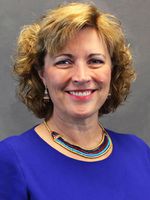
Lolli Haws, superintendent of Racine Unified School District, was under investigation after a complaint was filed against her. The complaint was related to an undisclosed incident that occurred when Haws was substitute teaching at Knapp Elementary School in April 2014. Haws explained that she had substituted in order to gain a better understanding of how the administration and the community can support teachers. After experiencing a few difficult moments in the classroom, Haws said she sees the need for proper staffing levels and manageable class sizes.[59][60][61]
The investigation into the incident was conducted by Kenosha County Division of Children and Family Services, in order to avoid any conflict of interest between Knapp Elementary School, Racine Unified School District and Racine County. After concluding their investigation in June 2014, county officials determined the complaint against Haws was unsubstantiated.[59][62]
Contact information

Racine Unified School District
3109 Mt. Pleasant St.
Racine, WI 53404
Phone: (262) 635-5600
Email: info@rusd.org
See also
| Wisconsin | School Board Elections | News and Analysis |
|---|---|---|
 |
 |
 |
External links

- Racine Unified School District
- City of Racine, Wisconsin
- Wisconsin Department of Public Instruction
- Wisconsin Association of School Boards
- Racine Education Association
Footnotes
- ↑ U.S. Department of Education, National Center for Education Statistics, "Common Core of Data, file ccd_lea_052_1414_w_0216161a, 2014-2015," accessed November 16, 2016
- ↑ 2.0 2.1 2.2 2.3 United States Census Bureau, "Racine County, Wisconsin," accessed December 19, 2016
- ↑ 3.0 3.1 United States Census Bureau, "State & County QuickFacts: USA," accessed July 6, 2015
- ↑ Racine Unified School District, "Superintendent," accessed February 5, 2014
- ↑ Journal Times, "No. 8: Lolli Haws hired to lead Unified," December 24, 2013
- ↑ The Journal Times, "Board votes 6-3 to extend Superintendent Haws' contract," December 19, 2016
- ↑ 7.0 7.1 7.2 Journal Times, "Legislature approves budget proposals affecting Racine," July 9, 2015
- ↑ Racine Unified School District, "Board Governance Policy," accessed February 5, 2014
- ↑ 9.0 9.1 9.2 9.3 Racine Unified School District, "Board of Education Meetings," accessed March 2, 2018
- ↑ Racine Unified School District, "Board of Education Meetings," accessed August 28, 2014
- ↑ 11.0 11.1 Racine Unified School District, "Official Proceedings," October 27, 2015
- ↑ United States Census Bureau, "Public School System Finances: Historical Data," accessed December 1, 2015
- ↑ Wisconsin Department of Public Instruction, "School Staff: Salary, Position & Demographic Reports," accessed December 19, 2016
- ↑ Racine Education Association, "About Us," accessed December 19, 2016
- ↑ Cite error: Invalid
<ref>tag; no text was provided for refs namedcohort - ↑ Racine Unified School District, "Our Schools," accessed September 11, 2015
- ↑ 17.0 17.1 17.2 17.3 17.4 17.5 17.6 Wisconsin Department of Public Instruction, "Report Cards," accessed February 5, 2014
- ↑ Wisconsin Department of Public Instruction, "School Accountability for 2014-2015: Five Things You Need To Know," June 15, 2015
- ↑ Wisconsin Department of Public Instruction, "Superintendent Evers’ statement on Assembly passage of SB 67," May 13, 2015
- ↑ 20.0 20.1 Cite error: Invalid
<ref>tag; no text was provided for refs namedgrad - ↑ CBS 58, "New Policing Strategy Coming to Racine Schools," August 17, 2016
- ↑ Racine County Eye, "Racine Unified Buys Sturtevant Sportsplex," June 22, 2016
- ↑ 23.0 23.1 The Journal Times, "Unified board OKs $20 million in potential borrowing," March 22, 2016
- ↑ The Journal Times, "Unified proposes new transgender policies," January 12, 2016
- ↑ 25.0 25.1 The Journal Times, "Racine Unified proposal would end year-round schooling at Janes Elementary," December 7, 2015
- ↑ CBS 58, "Parents upset over RUSD's decision to end year-round calendar at Janes Elementary," December 7, 2015
- ↑ 27.0 27.1 27.2 Moody's, "Moody's assigns Aa3 to Racine Unified School District, WI's $28.1M GO Bonds," November 23, 2015
- ↑ The Journal Times, "Racine Unified employees vote to keep unions," November 24, 2015
- ↑ 29.0 29.1 The Journal Times, "Racine Unified secret ballot vote was apparent violation of state law," July 17, 2015
- ↑ The Journal Times, "Unified School Board will again try to pick a new member," July 6, 2015
- ↑ Racine Unified School District, "Official Proceedings: July 7, 2015," July 7, 2015
- ↑ CBS 58, "Walker signs bill allowing Racine School District President to fill Board Vacancies," October 23, 2015
- ↑ 33.0 33.1 The Journal Times, "Tiebreaker: Hargrove Appoints John Koetz to School Board," October 26, 2015
- ↑ The Journal Times, "Unified School Board approves policy for filling board vacancies," June 25, 2016
- ↑ The Journal Times, "State legislature eyes changing Unified board, related to separation movement," May 20, 2015
- ↑ The Journal Times, "Committee to draw Racine Unified voting boundaries," August 31, 2015
- ↑ The Journal Times, "Proposals carve Racine Unified into nine voting areas," October 3, 2015
- ↑ 38.0 38.1 38.2 38.3 The Journal Times, "Unions skip meeting as conflict with Unified continues," September 10, 2015
- ↑ 39.0 39.1 39.2 39.3 The Journal Times, "Unions pan Unified raise change proposal," August 16, 2015
- ↑ The Journal Times, "RUSD budget ins and outs," August 22, 2015
- ↑ 41.0 41.1 41.2 41.3 The Journal Times, "School board members dash out of meeting before vote on teacher wages," August 20, 2015
- ↑ 42.0 42.1 The Journal Times, "Unions call on Racine Unified to give more raises to employees," September 14, 2015
- ↑ 43.0 43.1 Racine County Eye, "Racine Unified Board Accepts Lisa Parham’s Resignation," June 10, 2015
- ↑ Racine County Eye, "Lisa Parham Resigns As School Board Member," June 8, 2015
- ↑ 45.0 45.1 45.2 45.3 45.4 45.5 Journal Times, "Union leaders slam Haws for how proposed handbook changes were released," April 15, 2015
- ↑ 46.0 46.1 46.2 Journal Times, "RUSD: Changes to help students, teachers," April 14, 2015
- ↑ 47.0 47.1 47.2 The Journal Times, "5-4 vote to maintain unions' role in school handbook process," May 18, 2015
- ↑ 48.0 48.1 48.2 The Journal Times, "School board members shun meeting, prevent voting," August 17, 2015
- ↑ 49.0 49.1 49.2 49.3 49.4 Journal Times, "Busing issue between Renaissance Schools, Unified may go to court," February 17, 2015
- ↑ 50.0 50.1 Journal Times, "Agreement reached in school busing dispute," February 23, 2015
- ↑ Racine County, "2ND UNOFFICIAL ELECTION RESULTS 04-07-15," accessed April 7, 2015
- ↑ 52.0 52.1 52.2 The Journal Times, "Caledonia, Sturtevant looking to ask voters’ opinion on leaving Unified," January 24, 2015
- ↑ 53.0 53.1 53.2 The Journal Times, "Caledonia schools vote a go," January 26, 2015
- ↑ 54.0 54.1 The Journal Times, "Committee begins planning study of separation from Racine Unified," August 12, 2015
- ↑ ABC 2, "Caledonia ready for next steps to split from Racine Unified School District," April 8, 2015
- ↑ Fox 6 Now, "Caledonia board votes down study on separating from RUSD; some taking matters into their own hands," July 12, 2015
- ↑ 57.0 57.1 The Journal Times, "State legislature eyes changing Unified board, related to separation movement," May 20, 2015
- ↑ Milwaukee Journal Sentinel, "Gov. Scott Walker's budget message, veto summary," July 12, 2015
- ↑ 59.0 59.1 620TMJ4 Wisconsin's Radio Station, "Racine Unified's superintendent under investigation," May 19, 2014
- ↑ CBS58 News, "Racine school superintendent under investigation," May 19, 2014 (dead link)
- ↑ WISN.com, "Racine Unified superintendent under investigation," May 19, 2014
- ↑ The Journal Times, "Investigation concludes complaint against superintendent is unsubstantiated," June 20, 2014
| |||||
 |
State of Wisconsin Madison (capital) |
|---|---|
| Elections |
What's on my ballot? | Elections in 2025 | How to vote | How to run for office | Ballot measures |
| Government |
Who represents me? | U.S. President | U.S. Congress | Federal courts | State executives | State legislature | State and local courts | Counties | Cities | School districts | Public policy |


