Public policy made simple. Dive into our information hub today!

Steven Wendelin

From Ballotpedia
Revision as of 19:16, 17 November 2025 by Jaclyn Beran (contribs)
(diff) ← Older revision | Latest revision (diff) | Newer revision → (diff)
Jump to: navigation, search
Steven Wendelin
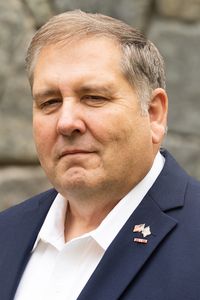
Image of Steven Wendelin

Candidate, U.S. House West Virginia District 2

Elections and appointments
Next election

May 12, 2026

Education

High school

San Mateo High School

Bachelor's

California Maritime Academy, 1990

Graduate

National Defense University, 2014

Military

Service / branch

U.S. Navy

Years of service

1984 - 2023

Personal
Birthplace
San Mateo, Calif.
Religion
United Methodist
Profession
Military officer
Contact

Steven Wendelin (Democratic Party) is running for election to the U.S. House to represent West Virginia's 2nd Congressional District. He declared candidacy for the Democratic primary scheduled on May 12, 2026.

Wendelin completed Ballotpedia's Candidate Connection survey in 2025. Click here to read the survey answers.

Biography

Steven Wendelin was born in San Mateo, California. He served in the U.S. Navy from 1984 to 2023. He graduated from San Mateo High School. He earned a bachelor's degree from the California Maritime Academy in 1990, a graduate degree from the Marine Corps University in 2007, and a graduate degree from the National Defense University in 2014.[1][2]

Wendelin has been affiliated with the following organizations:[1]

  • Veterans of Foreign Wars
  • Blacksmiths Guild of the Potomac
  • Artist-Blacksmith’s Association of North America
  • Free and Accepted Masons

Elections

2026

See also: West Virginia's 2nd Congressional District election, 2026

General election

The primary will occur on May 12, 2026. The general election will occur on November 3, 2026. General election candidates will be added here following the primary.

General election for U.S. House West Virginia District 2

Christopher Whitcomb (Independent) is running in the general election for U.S. House West Virginia District 2 on November 3, 2026.

Candidate
Christopher Whitcomb (Independent)

Candidate Connection = candidate completed the Ballotpedia Candidate Connection survey.
If you are a candidate and would like to tell readers and voters more about why they should vote for you, complete the Ballotpedia Candidate Connection Survey.

Do you want a spreadsheet of this type of data? Contact our sales team.

Democratic primary

Democratic primary for U.S. House West Virginia District 2

Ahsan Parsi (D) and Steven Wendelin (D) are running in the Democratic primary for U.S. House West Virginia District 2 on May 12, 2026.


Candidate Connection = candidate completed the Ballotpedia Candidate Connection survey.
If you are a candidate and would like to tell readers and voters more about why they should vote for you, complete the Ballotpedia Candidate Connection Survey.

Do you want a spreadsheet of this type of data? Contact our sales team.

Republican primary

Republican primary for U.S. House West Virginia District 2

Incumbent Riley Moore (R) is running in the Republican primary for U.S. House West Virginia District 2 on May 12, 2026.

Candidate
Image of Riley Moore
Riley Moore

Candidate Connection = candidate completed the Ballotpedia Candidate Connection survey.
If you are a candidate and would like to tell readers and voters more about why they should vote for you, complete the Ballotpedia Candidate Connection Survey.

Do you want a spreadsheet of this type of data? Contact our sales team.

Endorsements

Ballotpedia is gathering information about candidate endorsements. To send us an endorsement, click here.

2024

See also: West Virginia's 2nd Congressional District election, 2024

West Virginia's 2nd Congressional District election, 2024 (May 14 Republican primary)

West Virginia's 2nd Congressional District election, 2024 (May 14 Democratic primary)

General election

General election for U.S. House West Virginia District 2

Riley Moore defeated Steven Wendelin in the general election for U.S. House West Virginia District 2 on November 5, 2024.

Candidate
%
Votes
Image of Riley Moore
Riley Moore (R)
 
70.8
 
268,190
Image of Steven Wendelin
Steven Wendelin (D) Candidate Connection
 
29.2
 
110,775

Total votes: 378,965
Candidate Connection = candidate completed the Ballotpedia Candidate Connection survey.
If you are a candidate and would like to tell readers and voters more about why they should vote for you, complete the Ballotpedia Candidate Connection Survey.

Do you want a spreadsheet of this type of data? Contact our sales team.

Democratic primary election

Democratic primary for U.S. House West Virginia District 2

Steven Wendelin advanced from the Democratic primary for U.S. House West Virginia District 2 on May 14, 2024.

Candidate
%
Votes
Image of Steven Wendelin
Steven Wendelin Candidate Connection
 
100.0
 
39,832

Total votes: 39,832
Candidate Connection = candidate completed the Ballotpedia Candidate Connection survey.
If you are a candidate and would like to tell readers and voters more about why they should vote for you, complete the Ballotpedia Candidate Connection Survey.

Do you want a spreadsheet of this type of data? Contact our sales team.

Republican primary election

Republican primary for U.S. House West Virginia District 2

Riley Moore defeated Joseph Earley, Chris Walker, Dennis Cain, and Alexander Gaaserud in the Republican primary for U.S. House West Virginia District 2 on May 14, 2024.

Candidate
%
Votes
Image of Riley Moore
Riley Moore
 
45.0
 
47,033
Image of Joseph Earley
Joseph Earley Candidate Connection
 
20.3
 
21,176
Image of Chris Walker
Chris Walker Candidate Connection
 
14.5
 
15,203
Image of Dennis Cain
Dennis Cain Candidate Connection
 
13.0
 
13,625
Image of Alexander Gaaserud
Alexander Gaaserud
 
7.1
 
7,453

Total votes: 104,490
Candidate Connection = candidate completed the Ballotpedia Candidate Connection survey.
If you are a candidate and would like to tell readers and voters more about why they should vote for you, complete the Ballotpedia Candidate Connection Survey.

Do you want a spreadsheet of this type of data? Contact our sales team.

Withdrawn or disqualified candidates

Endorsements

Ballotpedia is gathering information about candidate endorsements. To send us an endorsement, click here.

Campaign themes

2026

Ballotpedia survey responses

See also: Ballotpedia's Candidate Connection

Candidate Connection

Steven Wendelin completed Ballotpedia's Candidate Connection survey in 2025. The survey questions appear in bold and are followed by Wendelin's responses. Candidates are asked three required questions for this survey, but they may answer additional optional questions as well.

Expand all | Collapse all

I’m Commander Steven Wendelin, United States Navy, Retired. After nearly 39 years of active and reserve service—including deployments to Iraq and Afghanistan—I retired to Lost River, West Virginia, planning for a quiet life in the most beautiful place in the world. But over the past decade, I’ve grown frustrated watching Congress be hijacked by billionaires, lobbyists, and extremist agendas. This is no longer about Democrats vs. Republicans or left vs. right—it’s about democracy vs. oligarchy, freedom vs. tyranny. That’s why I’m running for West Virginia’s 2nd Congressional District in 2026. Our incumbent, Riley Moore, has sold out West Virginia to the super-wealthy and to Heritage Foundation extremists who would strip us of our rights and our future. I believe in common sense, service before self, and a government that works for all of us—not just the powerful few. With your support, I’ll help restore the rule of law, defend our freedoms, and fight for a better, brighter future for every West Virginian.
  • They’re Making Us Sicker — I’ll Fight Back

    o Affordable healthcare for every West Virginian. o No cuts to Medicaid. No closing of rural hospitals.

    o Take on Big Pharma and greedy insurance companies.
  • They’re Making Us Poorer — I’ll Stand Up for Working Families o No more tax giveaways to billionaires while working families struggle. o Protect and strengthen Social Security — remove the income cap so it’s there for the next generation. o Strong, free public schools so every child can succeed. o Stop burying our kids under trillions in national debt for the 1%’s short-term gain.
  • They’re Stealing Our Rights — I’ll Defend Our Democracy o Restore the rule of law — no one above it, no one beneath it. o Keep politicians out of your personal healthcare decisions. o End gerrymandering, protect voting rights, expand ballot access. o Get big money out of politics — put people first.
A balanced budget needs to be the law of the land.

A complete overhaul of the tax code needs to be completed to ensure everyone pays their fair share.
Ensure every person’s right to privacy and to not have our personal information bought and sold as a commodity.
Guarantee affordable healthcare and childcare as essential parts of promoting the general welfare.
Ensure that medical decisions are between an individual and their medical provider and should NEVER be legislated at any level of government.
Reform the election finance system to remove undue influence. One voice, one vote. Corporations are NOT individuals.

Reform the immigration system to ensure the process is humane while protecting the integrity of our Nation's border
Two of the American leaders I look up to most are Franklin D. Roosevelt and Theodore Roosevelt. Both men led with courage, optimism, and a deep sense of duty to the American people. They weren’t perfect—but they grew through adversity, and that growth shaped their leadership.

Theodore Roosevelt embodied the idea of service, strength, and civic responsibility. He fought corruption, broke up monopolies, and believed that wealth and privilege carried an obligation to serve the public good. He also championed conservation—recognizing that protecting our natural resources was an act of patriotism.

FDR, on the other hand, led with extraordinary empathy and resolve. He guided our nation through the Great Depression and World War II by restoring hope when Americans needed it most. His belief that government should be a tool for the common good, not a weapon for the powerful, is something I still believe today.

I also look up to several great naval leaders who shaped my own understanding of leadership and integrity. Admiral James Stockdale and Senator John McCain showed unimaginable courage and moral strength as prisoners of war—proving that character is tested not in comfort, but in crisis. Admiral Chester Nimitz demonstrated calm, strategic brilliance under immense pressure during World War II, while Commander Ernest E. Evans of the USS Johnston exemplified valor in the face of impossible odds, charging into battle to defend his fellow sailors.

All of these men shared a common thread: they led with purpose, humility, and conviction. They faced adversity without flinching, put others before themselves, and never stopped believing in the promise of this country. That’s the kind of leadership I aspire to—steady in crisis, driven by principle, and guided always by service before self.
Character. If you are unethical, you are unfit for office.

Critical thinking and the ability to learn from mistakes.

Empathy and Compassion.
To uphold the Constitution of the United States. To be accessible and responsible to their constituents and not to the lobbyists and special interests.
I already have a legacy that I’m proud of. I have three wonderful adult children who have grown into responsible, compassionate citizens, and three grandchildren who will carry forward our family’s tradition of working toward a more perfect union. Along the way, I’ve also had the privilege of shaping the lives of many sailors I served with—and even a few Afghans whose futures were changed by our presence and partnership. Those experiences mean more to me than any title or rank ever could.

That said, my work isn’t finished. We’re standing at a crossroads in American history—one as consequential as the Civil War or World War II. And though we aren’t at war in the traditional sense, we are in the midst of an existential struggle for the very soul of our democracy. We must decide whether our constitutional republic will endure—whether individual freedoms still matter, and whether a government “of the people, by the people, and for the people” will continue to thrive.

My legacy, I hope, will be more than personal. I want to leave behind a country that still believes in self-government, still honors the Constitution, and still trusts that ordinary citizens can rise to meet extraordinary challenges. I will continue to fight for that vision—for democracy, for accountability, and for the promise that America belongs to all of us, not just the powerful few.
One of my earliest memories of a national event was seeing President Nixon on television. I was too young to fully understand what was happening at the time, but I remember the sense that something serious and historic was unfolding. Looking back, it was probably during the Watergate hearings or around the time of his resignation.

I also recall watching one of the Apollo launches—likely one of the later missions, Apollo 16 or 17. Seeing that rocket lift off captured the spirit of possibility that defined that era. It was a time when Americans still believed we could do anything if we worked together.

But the event I remember most vividly was the Bicentennial in 1976. My hometown went all out—painting the fire hydrants to look like Revolutionary soldiers and Founding Fathers. There were parades, flags on every porch, and a genuine feeling of pride in being an American. For a kid growing up then, it left a lasting impression of unity, optimism, and what this country could be when we remember who we are.
My first proper job was as a stock boy and delivery driver for a local hardware store. I had it for about a year. My boss had just bought a brand-new delivery van to replace the old, beat-up one I’d been driving. Right in front of me, he put it in reverse and backed straight into a parking bollard, putting a small dent in the bumper. Then he got out, handed me the keys, and said, “There—now I don’t have to worry about putting the first scratch on it. Just be safe.”

He was a great boss—taught me responsibility, patience, and that a little humility goes a long way. I’d had a few odd jobs before that, but the hardware store was my first real one.
Just one? That’s a tough question. I read every day, and different books have shaped me in different ways.

I regularly read from the Stoics—Marcus Aurelius and Epictetus in particular. Their writings serve as a grounding point for me, a daily reminder to focus on what I can control, to live with integrity, and to meet adversity with calm and purpose. In both life and leadership, those lessons are timeless.

Mornings on Horseback by David McCullough is another favorite. It’s a powerful biography of a young Theodore Roosevelt—how he overcame illness and physical weakness through sheer will and determination. It’s a testament to resilience and personal growth, qualities I deeply admire.

More recently, The Personal Memoirs of Ulysses S. Grant has become a favorite. It’s an extraordinary firsthand account of the Civil War—honest, unflinching, and deeply human. Grant’s humility and sense of duty shine through, reminding me that true leadership is rooted in character, not ego.
If I could be any fictional character, I’d choose Captain Jack Aubrey from Patrick O’Brian’s Master and Commander series. Though war itself is anything but romantic, Captain Aubrey represents the kind of leader and person I admire—courageous, loyal, and deeply human.

Set during the Napoleonic Wars, Aubrey commands in what was then the greatest navy the world had ever seen, yet his story isn’t just about battles at sea. It’s about duty, friendship, and moral conviction in the face of chaos. He’s a man who leads from the front, inspires confidence in his crew, and carries both the weight of command and the humility to admit his flaws.

As someone who spent nearly four decades in the Navy, I relate to that balance—the mix of grit, humor, and humanity it takes to serve well. Captain Aubrey reminds us that leadership isn’t about glory; it’s about responsibility, perseverance, and love of country.
One of the biggest struggles in my life has been figuring out who I am and where I fit in the world. As a child of divorce and the youngest of five siblings, I grew up pretty feral by modern standards—a Gen X kid who mostly learned by doing and making mistakes along the way. I didn’t have much guidance early on, so I just had to “fake it till I made it.”

I had a learning disability that made school a challenge, and eventually, I dropped out of high school. At the time, I didn’t see much of a future for myself. But life has a way of teaching you lessons the classroom can’t. I joined the Navy, and that decision changed everything. The discipline, structure, and sense of purpose I found in service gave me direction—and the belief that I could always grow, no matter where I started.

In the years that followed, I built a rich and rewarding career, earned two master’s degrees, and even had the honor of teaching at the U.S. Naval Academy. The struggle to find myself didn’t hold me back—it shaped me. It taught me humility, persistence, and that the measure of a person isn’t where they begin, but how they rise after they stumble.
What makes the U.S. House of Representatives unique is that it’s the people’s house—designed to be closest to the citizens it serves. Members of the House are elected every two years, which means they have to stay in touch with their constituents, listen to their concerns, and answer for their votes.

The House works best when its members remember that their first duty isn’t to a party or a donor—it’s to the people back home. A good representative listens, applies common sense, and acts in the best interests of their district—always. That’s how our system was meant to work: frequent accountability, practical problem-solving, and service before self.
Experience in government can be helpful, but it’s not the only kind of experience that matters. What truly counts is a record of service—of leading, following, and putting the mission ahead of yourself.

During my nearly 39 years in the U.S. Navy, I learned that leadership isn’t about titles—it’s about responsibility. I led sailors in combat zones and followed great leaders when the situation called for it. In both cases, the lessons were the same: listen to your people, think critically, make decisions based on facts, and always take care of your team.

Understanding how the federal budget and fiscal cycle work can certainly help shorten the learning curve in Congress—but what’s even more important is having the judgment and discipline to spend taxpayer dollars wisely. Congress needs more people who know how to manage resources, lead under pressure, and serve with integrity—not just career politicians who know how to play the game.
The greatest challenge facing our nation over the next decade is restoring our Constitutional Republic to a state of integrity, stability, and trust. For too long, we’ve watched political extremists, billionaires, and lobbyists divide us—turning neighbor against neighbor and corroding faith in the institutions that once held this nation together. Here in West Virginia, we know the value of community and hard work, and we can lead the way in healing those divides.

Restoring our democracy starts with returning government to the people it was meant to serve—not the ultra-wealthy, not the special interests, and not the unprincipled politicians who’ve sold out their own constituents. We need leaders guided by common sense and service before self, not by ideology or greed.

At the same time, we must rebuild an economy that rewards work, not wealth. In towns from Weirton to Martinsburg, families deserve to know that their effort and talent can still build a good life. That’s not a handout—that’s the American promise.

Our mission must be to restore faith in both our democracy and our economy, proving once again that America—and West Virginia—work best when they work for everyone. Only then can we secure a future worthy of our people and our flag.
Yes, absolutely. The two-year term is exactly what keeps the U.S. House of Representatives accountable to the people. Our founders designed it that way for a reason: the House is the people’s chamber—the branch of government meant to stay closest to everyday Americans.

That short term forces representatives to listen, to stay in touch, and to earn the public’s trust over and over again. It’s not supposed to be a lifetime job or a comfortable career. It’s meant to be a constant reminder that this seat belongs to the people, not the politician who occupies it.

The Senate may move slower and think long-term, but the House is built to be responsive—to act when families, workers, and communities need help. That’s not a flaw; it’s a feature of our democracy. When done right, those two years ensure that representatives never forget who they serve and who sent them there.
I support term limits—plain and simple. When politicians stay in Washington too long, they stop listening to the people back home and start serving themselves. It’s time to end the era of career politicians and return power to the people where it belongs.
There are several public servants whose example I deeply admire—leaders who stood by their convictions even when it wasn’t politically easy or personally advantageous.

John Lewis embodied moral courage. He risked his life for civil rights and later brought that same spirit to the U.S. House, reminding all of us that “good trouble” is sometimes necessary to move our country forward.

Adam Kinzinger and Liz Cheney—though from the other side of the aisle—showed uncommon bravery by standing up for truth and the Constitution when their party turned away from both. That kind of integrity transcends partisanship.

From my home state, I also look to Robert C. Byrd and Harley O. Staggers, Sr. as examples of what it means to serve West Virginia with depth and principle. Byrd began his career in the House before becoming the longest-serving member of Congress in U.S. history, mastering the legislative process and fiercely defending the Constitution. Staggers chaired the powerful House Committee on Interstate and Foreign Commerce, where he championed consumer protection, transportation safety, and the creation of Amtrak.

All of them—Democrat or Republican—shared one essential quality: the courage to put country over politics. That’s the kind of leadership I aspire to bring to Congress.
A woman approached me who was raising her grandchild because the child's biological parents had passed. If she adopted the child, they would lose the social security benefits, but by not adopting the child the grandmother could not add the child to her health insurance. Putting these dilemmas on families is a way to common occurrence.
Compromise isn’t a dirty word—it’s how democracy works. Out here in West Virginia, we know that if neighbors can’t find common ground, nothing gets built and nothing gets fixed. The same should be true in Washington.

We all have a few principles that we won’t bend on—and that’s fine—but those should be the exception, not the rule. I believe 80% of West Virginians—and 80% of Americans—agree on most of what really matters: good jobs, fair wages, quality schools, affordable healthcare, and safe communities. For the rest, we can work it out the same way folks do here at home—by talking to each other, not past each other.

The real danger comes from the small minority who refuse to compromise and hold the rest of the country hostage to their extreme views. It’s time to bring back some West Virginia common sense—roll up our sleeves, listen more than we shout, and get things done for the people.
The Constitution gives the House the power to originate all bills for raising revenue because it’s the chamber closest to the people—the one meant to protect working Americans from being exploited by the powerful. If elected, I would use that power to help rebuild the American middle class and restore some basic fairness to our economy.

For too long, Congress has written tax laws that reward the ultra-wealthy and giant corporations while shifting the burden onto working families. Every loophole for billionaires and every offshore tax dodge comes at the expense of the teachers, miners, nurses, and small business owners who actually keep this country running.

We need a tax code that rewards work, not wealth; innovation, not manipulation. When the middle class is strong, America is strong—a rising tide really does lift all boats. My goal is simple: level the playing field, close the unfair loopholes, and make sure every West Virginian who works hard has a fair shot at building a decent life and a secure future.
The investigative power of the U.S. House is one of the most important tools Congress has to ensure accountability and uphold the Constitution. It was never meant to be used for political theater—it was designed to uncover the truth, root out corruption, and keep every branch of government honest, including our own.

Before Congress can demand integrity from others, it must first police itself. Transparency and ethical conduct in the House are essential to restoring public trust in government. Oversight should focus on facts, not partisan gain—and when wrongdoing is found, it must be addressed swiftly and fairly.

The Constitution makes clear that no one is above the law. Impeachment applies not just to presidents but to all civil officers, including judges and justices, who serve only “during good behavior.” Congress has both the authority and the duty to investigate corruption wherever it occurs—executive, legislative, or judicial—and to defend the rule of law on behalf of the American people.
I’ve heard so many powerful and personal stories from West Virginians, but one in particular stays with me. It was from a grandmother raising her young granddaughter. One of the child’s parents is in jail, and the other passed away from a drug overdose. This grandmother—already on a fixed income—is doing everything in her power to give that little girl a stable, loving home.

But she’s trapped in an impossible situation. If she legally adopts her granddaughter, she’ll lose the Social Security survivor benefits that help keep food on the table. Yet without adoption, she can’t add the child to her health insurance. She’s forced to choose between her granddaughter’s financial security and her access to healthcare—an unthinkable decision no caregiver should ever have to make.

It’s stories like hers that fuel my determination to serve. We need leaders who will stop talking in sound bites and start fixing the systems that punish people for doing the right thing. West Virginians deserve better, and I intend to fight for policies that reflect both common sense and compassion.
I’m proud to be the father of three, the grandfather of three, and the loving husband of my incredible wife. Add in a 39-year career in the U.S. Navy, and I’d say I’m on a pretty good run.
Artificial intelligence is one of the most powerful tools humanity has ever created—but like any powerful tool, it must be handled responsibly. The federal government has a clear role to play in ensuring AI develops in a way that benefits people, not just corporations or foreign adversaries.

We’ve seen this story before. In the 1920s, no one could have predicted how the automobile would reshape our economy, our environment, and even our way of life. AI will have the same kind of second- and third-order effects—many of which we can’t yet fully see. That’s why regulation isn’t about stifling innovation; it’s about protecting the public interest, ensuring transparency, and preventing abuse.

We also have to recognize the physical footprint of AI. Large data centers—the backbone of artificial intelligence—require enormous amounts of electricity, water, and land. Without proper oversight, these facilities could strain local resources, increase energy costs, and harm rural communities already struggling to balance economic opportunity with environmental stewardship. West Virginians know what happens when outside industries come in, extract what they need, and leave towns behind. We can’t afford to repeat that mistake in the digital age.

AI should be treated as a tool—not a replacement for human creativity, ethics, or hard work. It can help us solve big problems, from medicine to infrastructure, but it must never replace human judgment or moral responsibility. The government’s job is to set the guardrails: to protect privacy, defend workers, safeguard our environment, and make sure this technology serves the many, not the few.
We need to expand ballot access while ensuring the integrity of our elections. Voting is both a sacred right and a civic duty, and Congress should make it easier—not harder—for every eligible American to participate.

The federal government already partners with the states to maintain “Real ID” standards for driver’s licenses and identification cards. Those same secure, verified systems could—and should—be used to streamline voter registration and identification at polling places. If we can use Real ID to board an airplane or enter a federal building, there’s no reason we can’t use it to protect the integrity of our elections.

At the same time, we should modernize how Americans are registered to vote. Every U.S. citizen—native-born or naturalized—should be automatically registered on their 18th birthday, with the default status being No Party Affiliation (NPA). From there, individuals can freely choose a political party or remain independent, but no one should be left out of the process because of red tape, lost paperwork, or outdated systems. Additionally, the Social Security Administration should be required to notify each state’s Secretary of State when a registered voter passes away, so that individual can be promptly and accurately removed from the voter rolls. Maintaining clean, up-to-date voter lists is essential for both security and public confidence.

Though it would ultimately be up to the individual states, I would also like to see party affiliations removed from candidates’ names on general election ballots. Listing a party beside a candidate’s name encourages voters to rely on party labels instead of learning who the candidates are and what they actually stand for. Removing those labels would encourage a more informed and engaged electorate—one that votes for people, not parties.

Election reform should also include better funding for state election offices, uniform ballot standards, and mandatory paper backups for all voting systems. Transparency, accountability, and accessibility must go hand in hand. The goal isn’t partisan advantage—it’s restoring faith in the fairness of our democracy and ensuring that every eligible American, regardless of party or zip code, can cast a ballot and have it counted.

Note: Ballotpedia reserves the right to edit Candidate Connection survey responses. Any edits made by Ballotpedia will be clearly marked with [brackets] for the public. If the candidate disagrees with an edit, he or she may request the full removal of the survey response from Ballotpedia.org. Ballotpedia does not edit or correct typographical errors unless the candidate's campaign requests it.


2024

Candidate Connection

Steven Wendelin completed Ballotpedia's Candidate Connection survey in 2023. The survey questions appear in bold and are followed by Wendelin's responses. Candidates are asked three required questions for this survey, but they may answer additional optional questions as well.

Expand all | Collapse all

I am Commander Steven M. Wendelin, United States Navy, Retired. After serving our country for more than 39 years I was planning on having a nice quiet retirement in the most beautiful place in the world, Lost River, West Virginia. However, as I got closer to retirement, I became more and more frustrated with the political process over the past decade. Our Federal Government, particularly Congress, has been hijacked by the 1% and special interests. Therefore, I decided that I need to be part of the solution and bring back common sense to the U.S. House of Representatives. If elected, I will strive to ensure that our government works for all of us, not just the super wealthy and their lobbyists.
  • West Virginians deserve better representation in Congress.
  • Until we reform our campaign finance system by removing soft and dark money, the interests of the individual citizen will not be properly represented.
  • As individuals we cannot spend more money than we earn. The Federal Government needs to be held to the same standard. A balanced budget needs to be the law of the land and waste, fraud, and abuse need to be rooted out. With a balanced budget the citizens can have a government that works for them and not for just the plutocrats.
A balanced budget needs to be the law of the land.

A complete overhaul of the tax code needs to be completed to ensure we all pay our fair share, to include the 1%.
Ensure every person’s right to privacy and to not have our personal information bought and sold as a commodity.
Guarantee affordable healthcare and childcare as essential parts of promoting the general welfare.
Ensure that medical decisions are between an individual and their medical provider and should NEVER be legislated at any level of government.
Reform the election finance system to remove undue influence. One voice, one vote. Corporations are NOT individuals.

Reform the immigration system to ensure the process is humane while protecting the integrity of our Nation's borders.
Oh, there are so many. As a lay-historian I have many heroes from history. The one person I keep coming back to is Teddy Roosevelt. He was a person of strong convictions and moral fortitude and I find it fascinating how he tackled tough issues and continuously learned and improved.
The Bully Pulpit: Theodore Roosevelt, William Howard Taft, and the Golden Age of Journalism
by Doris Kearns Goodwin. The book chronicles how a small group like-minded individuals can reform institutionalized injustices and tear down the status quo.
Character. If you are unethical, you are unfit for office.

Critical thinking and the ability to learn from mistakes.

Empathy and Compassion.
Accessibility, humility, a sense of humor, and decisiveness, informed by the benefit of broad world experience.
To listen to his or her constituency, apply common sense and act in their best interest. ALWAYS.
A Nation that is united and stronger that it has ever been and a true beacon of hope to the rest of the world and a flourishing State of West Virginia which has unlocked all of its potential.
Watergate and President Nixon resigning. I was 8 years old and though I did not understand the significance of it, I remember how everyone around me was very disappointed in the President and that he needed to be held accountable for his actions that under-mined the trust of the American people.
I started work as a carpenter’s helper at age 14, but the real turning point of my life was when I enlisted into the United States Naval Reserve at the age of 18.
Catch-22 by Joseph Heller. When you are fighting the system, Catch-22 makes you feel less lonely.
Hub McCann (Played by Robert Duvall) in the 2003 movie "Secondhand Lions". Hub McCann fought for justice with passion and defined what a hero should be.
Country Roads. Seriously, I put it on every time I turn onto the road leading to my home in Lost River.
Did I mention that I served 39 years in Navy?
Okay, how about being a father of two teenaged girls while deployed for a year in Afghanistan?
It is the people’s house. The House, by design, is volatile and reactionary. That is why from its inception members were elected directly from the citizens and why the Representatives are only elected for two years at a time. It is the most accountable public office in the land. However, with the injection of soft money and dark money, the institution has lost most of its accountability to the people.
A history of service to the public is informative, but appropriate skills depend on the individual. The world has become a considerably more complex place than the 1800's. Knowing how the fiscal cycle works will help with the learning curve, but it is not essential. That said you do need to possess critical thinking skills.
There have always been lies, fear mongering, and misinformation, but now it travels at the speed of light. If we keep infighting among ourselves, our enemies win without firing a shot. Our world and our country have some serious challenges that must be met and until we re-learn to hang together, we will certainly hang separately. It's fine to trust in God, but until we take E Pluribus Unum to heart the future will be bleak.
YES! It is the how the people keep the House accountable.
I agree with term limits. As demonstrated in Congress, without term limits you end up with a class of career politicians who end up losing touch with their constituency.
John Lewis, Adam Kinzinger, and John McCain all fought for what they thought was right and stood by their convictions even when it was not advantageous for them to do so.
COVID was hard, but the small business owners that were flexible and innovative made it through. I look forward to meeting as many different people from the 27 counties that comprise the 2nd Congressional District of West Virginia as I ramp up my campaign to be the next Representative to West Virginia.
I'm a Sailor- I'm not sure you really want me to answer this question.
YES! I believe that 80% of us can agree on 80% of the issues, the other 20% of the issues can be dealt with by compromising and being pragmatic. As for the extreme 10% on either side of the spectrum, they are welcome to join the conversation, but they are not allowed to hold the rest of us hostage.
We must completely rebuild our tax code. The current system is innately unjust putting all the burden on the middle/working class. Until we reform our tax code and demand a balanced budget, we cannot move forward as a nation.
Sparingly. Its primary role is to finance our Nation. Only when the constituency demands an investigation should the House act.

Note: Ballotpedia reserves the right to edit Candidate Connection survey responses. Any edits made by Ballotpedia will be clearly marked with [brackets] for the public. If the candidate disagrees with an edit, he or she may request the full removal of the survey response from Ballotpedia.org. Ballotpedia does not edit or correct typographical errors unless the candidate's campaign requests it.

Campaign website

Wendelin’s campaign website stated the following:

The Issues
With the right leadership in Washington, West Virginia can enjoy better:

  • Healthcare
  • Tax reform
  • Federal budget management
  • High-speed internet and cellphone coverage
  • Immigration reform
  • Solutions to reverse climate change
  • Student debt solutions
  • Job opportunities
  • Solutions to the opioid crisis
  • Campaign finance reform and transparency
  • Online privacy
  • Term limits for the House and Senate

I believe in…
Healthcare Reform
People shouldn’t have to choose between going to the doctor or paying the rent. The United States is one of the wealthiest countries in the world, yet most of us are only one major accident or illness away from financial ruin. We need to control escalating costs by capping prices of medical procedures, prescriptions, and malpractice insurance.

Reversing Climate Change
Let’s keep West Virginia wild and wonderful forever. 2023 was the hottest year on record. It’s time to stop debating the obvious and come together to fix the problem. We did it in the 1940s when fascism threatened democracy and our country emerged as the strongest and richest nation in the world. We need to show that kind of global leadership again for ourselves and our children.

Pro-Choice
Mountaineers should always be free to choose. West Virginians are fiercely independent. We want to be left alone to live our lives as we see fit. Why should politicians dictate what we can and cannot do with our bodies? This includes women’s health issues and end of life decisions for the terminally ill. These are choices we should be allowed to make free from government interference.

A Balanced Budget
On time, every time or Congress doesn’t get paid. The Constitution makes Congress responsible for managing the country’s finances, but it constantly fails. The last budget passed on time was in 1997. The last balanced budget was in 2001. I propose members of Congress be required to forfeit their pay when they don’t do their job. It’s time our elected officials lived by the same rules the rest of us do.

Ending Partisan Politics
Congress needs to work together to serve the people. Being an obstructionist doesn’t get the job done. Brinksmanship with the country’s finances is irresponsible. If you’re not part of the solution, you’re part of the problem. There’s way too much power in the Speakership. It’s time to bring back floor amendments and get Congress back to work.

Tax Reform
No loopholes for the rich at the expense of working folks. The graduated income tax system is broken beyond repair. We all need to pay the same tax rate, whether it’s for money earned at a job or from investments. If we do this without exception, the tax burden will be dramatically reduced for all of us.

High-speed Internet and Cell Coverage
Let’s make West Virginia competitive in jobs and education. An important key to that is increasing internet and cell coverage. But our beautiful geography makes building that infrastructure expensive. If we’d counted on for-profit corporations to bring electricity to the back country in the 1900s, some of us would still be living in the dark. That’s why government and private industry must partner, just like they did to bring light to the deepest holler.

Campaign Finance Reform
Stop the selling of politicians to the highest bidder. Running for office in our current system requires big money. This forces even the most well-meaning candidates to put all their time into fundraising. It also gives special interest groups unfair influence. Citizens United was a bad ruling because it gave corporations the same rights as citizens and defined money as free speech. It’s time to reverse that ruling.

Reversing Globalization
Stop corporations from selling our personal data. Anyone who uses a computer or cell phone leaves a digital trail online. It includes our demographics, buying habits, and personal data. This information is valuable and it’s being sold, but we don’t see any of the money. Instead, our personal data is used to deliver targeted news, encourage us to buy products, and even send us dangerous misinformation. Corporations must be regulated and forced to respect our privacy.

Digital Privacy
Bring jobs home to the hollers and hills and stop putting money into the pockets of multinational corporations. West Virginia’s biggest export has always been its wealth. First, it was timber being shipped out to build the cities. Then, it was coal to fuel the nation. Now, it’s our talented citizens leaving for better opportunities. We must reverse this by bringing tech, manufacturing, and service jobs into our state.

Reducing Poverty and Homelessness
West Virginians take care of their neighbors. A wealthy nation like ours shouldn’t have citizens suffering in poverty. The Veterans Administration has the resources it needs to end veteran homelessness, but vets can’t connect with those services. I hear small business owners say they can’t find workers and I hear people the next town over say they can’t find work. We need to bring people and opportunities together. That’s what responsible government does[3]

—Steven Wendelin’s campaign website (2024)[4]

Campaign finance summary


Note: The finance data shown here comes from the disclosures required of candidates and parties. Depending on the election or state, this may represent only a portion of all the funds spent on their behalf. Satellite spending groups may or may not have expended funds related to the candidate or politician on whose page you are reading this disclaimer. Campaign finance data from elections may be incomplete. For elections to federal offices, complete data can be found at the FEC website. Click here for more on federal campaign finance law and here for more on state campaign finance law.


Steven Wendelin campaign contribution history
YearOfficeStatusContributionsExpenditures
2026* U.S. House West Virginia District 2Candidacy Declared primary$837 $807
2024* U.S. House West Virginia District 2Lost general$31,924 $31,664
Grand total$32,761 $32,471
Sources: OpenSecretsFederal Elections Commission ***This product uses the openFEC API but is not endorsed or certified by the Federal Election Commission (FEC).
* Data from this year may not be complete

See also


External links

Footnotes

  1. 1.0 1.1 Information submitted to Ballotpedia through the Candidate Connection survey on September 1, 2023
  2. Information submitted to Ballotpedia through the Candidate Connection survey on October 31, 2025
  3. Note: This text is quoted verbatim from the original source. Any inconsistencies are attributable to the original source.
  4. Wendelin for Congress, “The Issues,” accessed March 10, 2024


Senators
Representatives
District 1
District 2
Republican Party (4)