Jeffrey Sossa-Paquette

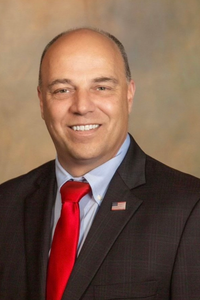
Jeffrey Sossa-Paquette (Republican Party) ran for election to the U.S. House to represent Massachusetts' 2nd Congressional District. He did not appear on the ballot for the Republican primary on September 3, 2024.
Elections
2024
See also: Massachusetts' 2nd Congressional District election, 2024
Massachusetts' 2nd Congressional District election, 2024 (September 3 Democratic primary)
General election
General election for U.S. House Massachusetts District 2
Incumbent Jim McGovern defeated Cornelius Shea in the general election for U.S. House Massachusetts District 2 on November 5, 2024.
Candidate | % | Votes | ||
| ✔ |  | Jim McGovern (D) | 68.6 | 251,441 |
 | Cornelius Shea (Unenrolled)  | 31.1 | 114,065 | |
| Other/Write-in votes | 0.2 | 822 | ||
| Total votes: 366,328 | |||
| = candidate completed the Ballotpedia Candidate Connection survey. | ||||
| If you are a candidate and would like to tell readers and voters more about why they should vote for you, complete the Ballotpedia Candidate Connection Survey. | ||||
Do you want a spreadsheet of this type of data? Contact our sales team. | ||||
Democratic primary election
Democratic primary for U.S. House Massachusetts District 2
Incumbent Jim McGovern advanced from the Democratic primary for U.S. House Massachusetts District 2 on September 3, 2024.
Candidate | % | Votes | ||
| ✔ | | Jim McGovern | 99.6 | 56,343 |
| Other/Write-in votes | 0.4 | 225 | ||
| Total votes: 56,568 | |||
| = candidate completed the Ballotpedia Candidate Connection survey. | ||||
| If you are a candidate and would like to tell readers and voters more about why they should vote for you, complete the Ballotpedia Candidate Connection Survey. | ||||
Do you want a spreadsheet of this type of data? Contact our sales team. | ||||
Republican primary election
No Republican candidates ran in the primary.
Withdrawn or disqualified candidates
Endorsements
Ballotpedia did not identify endorsements for Sossa-Paquette in this election.
2022
See also: Massachusetts' 2nd Congressional District election, 2022
General election
General election for U.S. House Massachusetts District 2
Incumbent Jim McGovern defeated Jeffrey Sossa-Paquette in the general election for U.S. House Massachusetts District 2 on November 8, 2022.
Candidate | % | Votes | ||
| ✔ | | Jim McGovern (D) | 66.2 | 180,639 |
 | Jeffrey Sossa-Paquette (R) | 33.7 | 91,956 | |
| Other/Write-in votes | 0.1 | 276 | ||
| Total votes: 272,871 | |||
| = candidate completed the Ballotpedia Candidate Connection survey. | ||||
| If you are a candidate and would like to tell readers and voters more about why they should vote for you, complete the Ballotpedia Candidate Connection Survey. | ||||
Do you want a spreadsheet of this type of data? Contact our sales team. | ||||
Democratic primary election
Democratic primary for U.S. House Massachusetts District 2
Incumbent Jim McGovern advanced from the Democratic primary for U.S. House Massachusetts District 2 on September 6, 2022.
Candidate | % | Votes | ||
| ✔ | | Jim McGovern | 99.7 | 69,839 |
| Other/Write-in votes | 0.3 | 216 | ||
| Total votes: 70,055 | |||
| = candidate completed the Ballotpedia Candidate Connection survey. | ||||
| If you are a candidate and would like to tell readers and voters more about why they should vote for you, complete the Ballotpedia Candidate Connection Survey. | ||||
Do you want a spreadsheet of this type of data? Contact our sales team. | ||||
Republican primary election
Republican primary for U.S. House Massachusetts District 2
Jeffrey Sossa-Paquette advanced from the Republican primary for U.S. House Massachusetts District 2 on September 6, 2022.
Candidate | % | Votes | ||
| ✔ | | Jeffrey Sossa-Paquette | 99.4 | 22,675 |
| Other/Write-in votes | 0.6 | 140 | ||
| Total votes: 22,815 | |||
| = candidate completed the Ballotpedia Candidate Connection survey. | ||||
| If you are a candidate and would like to tell readers and voters more about why they should vote for you, complete the Ballotpedia Candidate Connection Survey. | ||||
Do you want a spreadsheet of this type of data? Contact our sales team. | ||||
Withdrawn or disqualified candidates
- Nicholas Barassi (R)
2018
Sossa-Paquette dropped out of the race prior to the filing deadline.
Campaign themes
2024
Ballotpedia survey responses
See also: Ballotpedia's Candidate Connection
Jeffrey Sossa-Paquette did not complete Ballotpedia's 2024 Candidate Connection survey.
2022

Jeffrey Sossa-Paquette completed Ballotpedia's Candidate Connection survey in 2022. The survey questions appear in bold and are followed by Sossa-Paquette's responses.
| Collapse all
- Stopping Human Trafficking
- American Energy Independence
- Bring Back Our Manufacturing
Note: Ballotpedia reserves the right to edit Candidate Connection survey responses. Any edits made by Ballotpedia will be clearly marked with [brackets] for the public. If the candidate disagrees with an edit, he or she may request the full removal of the survey response from Ballotpedia.org. Ballotpedia does not edit or correct typographical errors unless the candidate's campaign requests it.
Campaign website
Sossa-Paquette's campaign website stated the following:
| “ |
Spending & Debt “It can’t be done” isn’t in my vocabulary. I’ve spent most of my life doing things that “can’t be done.” Thus, I have no sympathy for the politicians who spend out of control. Republicans and Democrats alike give lip service to balancing the budget, but their actions don’t even come close. I not only support a Balanced Budget Amendment to the Constitution, but if necessary to stop the red ink, I will refuse to go along with giving the Government any more borrowing authority. We are saddled with a $29 trillion national debt because the Federal government spends too much. It’s really just that simple. It’s not because we are under-taxed. While Congress jumps ineffectively from one day’s “crisis” to the next, they stubbornly refuse to deal with what may very well be the single greatest threat to the economy, our children’s futures, and in fact, our national security. They refuse to stop the deficit spending. If cutting up the credit card is what it takes, then that is what we must do.
Parents must be empowered to choose the right education for their children. Not bureaucrats. Not teachers unions. School Choice, funding that follows the child — not the school district, and fewer federal mandates will allow us to prepare our young people for the economies of today and tomorrow, rather than the 1950’s. The Federal Department of Education was created almost 40 years ago. It has spent hundreds of billions of our tax dollars, and managed to extend its bureaucratic reach into every corner of the American classroom. What it has NOT done is improve education for our kids. To the contrary, the U.S. has fallen behind many other nations, with consequences that endure for generations. Control of education must be returned to the local and state levels, and we need to get the bureaucrats out of the way of the innovation, investment and freedom that will return the U.S. to its rightful leadership in the quality of education our young people deserve and need.
Civil Rights & Discrimination In Congress, my voice will be one in support of steady, responsible progress toward removing discrimination in all its forms. Government’s most basic responsibility is to protect its citizens from harm, regardless of race, religion, or sexual orientation — and I know from personal experience that discrimination IS harm, whether it be denying an individual the opportunity of a job, a place to live, the chance to adopt a child who needs a home, or the rights granted to married couples. As has happened many times throughout our history, the government is struggling to eliminate deeply-held prejudices from our laws and policies. It is, unavoidably, a painful process.
Medical decisions are the most personal decisions any person faces, and we must always be very cautious about involving the government in the difficult choices life can present. As the father of two adopted children, I am deeply troubled when abortion becomes a matter of personal or social convenience. There are alternatives, and I believe we should offer support — not judgement — for those who find themselves dealing with the most difficult of choices. That is especially true when a pregnancy results from rape or incest, or seriously threatens a woman’s life or health. Roe v. Wade has been the law of the land for decades, and is likely to remain so for the foreseeable future. While reasonable people holding deeply-held beliefs can disagree, that decision establishes certain rights and limitations regarding abortion — and is today the legal framework within which policies and laws must be enacted. That’s how our system works. As medical advances occur and our understanding of viability changes, we must deal with them in a civil, respectful manner.
The opioid crisis facing Massachusetts and America requires Congress to act with reform measures that include block grants to the states, allowing them to provide greater treatment options, not jails. The opioid crisis is a personal one to me. My son’s birth mother was addicted to opioids. Just two years ago, I lost a cousin to an overdose of opioids. I watched my son fight to breathe through the first 3 ½ years of his life while his young lungs recovered from the damage the opioids caused him while in his mother’s womb. Much like big tobacco, drug manufacturers responsible for the lies to Congress, the FDA and medical providers that opioids were not addictive must be held accountable. They must pay fines in the hundreds of billions of dollars, with the funds directed to the states to help deal with their opioid crises. In Massachusetts, where are opioid crisis is double the national average, we have had over 18,000 opioid deaths just in the short life of my teenage daughter. The U.S. Attorney General must investigate and explain to the American people why the pharmaceutical industry, their lobbyists, the FDA and the politicians have been allowed to create a deadly crisis. We need a responsible government to pay attention to the hundreds of thousands of lives lost across our country due to the opioid epidemic created by drug manufacturers. The drug cartels could not produce all the heroin or synthetic drugs if drug manufacturers didn’t create the market in the first place while the government turned a blind eye. Virtually every American family and business has experienced the opioid crisis. It’s time for business leaders and the American people to stand up and hold their politicians and drug manufacturers accountable. No more deaths. If it is found that drug manufacturers lied or withheld information about the addictive nature of opioids, those responsible should be prosecuted and sent to jail. After all, tens of thousands of American citizens have had their lives destroyed, gone to jail and had their employment opportunities devastated by criminal records due to addictions that began with a prescribed drug. Massachusetts in 2015 prescribed 240 million opioid pills. We only have 6.4 million residents. It has to stop. The federal government’s most basic responsibility is to protect us from harm. Block grants will help states develop prevention, intervention, and treatment programs. The federal government and the states must work together to implement all available options for not sending the addicted to jail, but helping them enter comprehensive treatment programs which will offer recovery rather than criminal records. An addict trying to recover will be more successful when they don’t carry the burden of having to face the employment and personal consequences of a criminal record. This is a fight we can win in Massachusetts and across this great nation. We as American citizens must demand that our federal government and the criminal justice system hold the drug manufacturers and the FDA accountable for the deaths that are on their hands. For those nonviolent victims who have already been convicted of addiction-related crimes, The President and the nation’s Governors should pardon them.
As an owner-operator of an Early Education and Care Center, I’ve watched for years as the EEC requires new regulations and places burdens upon Childcare Providers with no regard to cost or student population, nor differences from program to program. EEC follows a one-size-fits-all attitude. These challenges with the government begin with the simple fact that the bureaucrats don’t understand the realities of Early Education and Care. Early Education and Care studies focus on proving that certain models work, rather than looking at our widely varying types of staffing and student populations. Studies of Perry and Abecedarian programs come up with a per-student cost of $22,000 per year, compared to the reality of less than $7000 per student in most programs. Bad information such as this, however, is too often used to create the regulations forced upon Early Childhood and Care Centers, and Daycare providers – regardless of size or actual per-student costs. Grover J “Russ” Whitehurst of the Brookings Institution concluded that extrapolating studies of Perry and Abecedarian programs is like a TV spokesperson for Weight Watchers demonstrating the impact of joining a diet program. Studies such as those of Boston pre-school programs and Chicago Child Parent Centers are widely cited and used, but employed questionable standards — and didn’t track students over time. The Head Start Impact Study (HSIS) of Federal Head Start Programs was one of the most ambitious, methodologically rigorous and expensive federal studies ever, costing $8.5 billion. Drawing from sample size of 2600 students and 23 states, HSIS found modest gains in math, reading and some positive effects on social behaviors from Head Start. However, a 2016 study by the Hamilton Project at the Brookings Institution and others found children in these controlled groups leveled out to be at roughly the same levels by the end of kindergarten as children with no Pre-School. (Reference: Cato Institute) The billions of dollars the Federal and State Government spends on Early Education and Care do not need to be cut. However, the WAY those dollars are spent needs to change dramatically. Agencies like EEC must work better with actual program providers and daycare providers. Programs need to meet local community needs, not a one-size-fits-all approach from the Federal and State Governments. Agencies like EEC should be working with local schools’ K-3 and local Early Education and Care programs to meet the unique needs and challenges of individual communities. Some communities need help with non-English-speaking students, and need tools to teach English in the 2.9-5 year-old age group. Other communities’ needs are very different. EEC and other agencies must have the staff and flexibility to be effective partners with those communities. My commitment to all Daycare providers and Early Education and Care providers is simple: An open line of communication, including state-of-the-art tools such as online forums, quarterly reports on progress, and direct avenues for your valued input. It will not be easy to take on entrenched government bureaucracies and special interest groups that will do everything to try and stop me. But I have never shied away from taking on bureaucracies.
“Peace Through Strength” was more than a slogan. It was — and remains — the key to the security of not only the United States, but the free world. Our military must be unequaled, both in strength and technology. At the same time, it is time that we take a hard look at nation-building and military interventions that lack clear justification or even objectives. If it doesn’t make us safer, then we must ask: “Why are we doing it?”. The lives of our military servicemen and women are too precious to put at risk for anything other than making us more secure.
We are blessed to live in a nation founded upon the notion that individuals enjoy fundamental rights and freedoms. But no one said it would be easy to protect — and balance — those freedoms. One of the most precious of our rights, embodied in the very First Amendment to the Constitution, is that of religious freedom. Our right to believe what we believe and to exercise our faiths is, truly, foundational. But as with all individual rights, religious freedom is not a license to do harm to others. Nor do civil rights somehow negate religious freedoms. The key, as is often the case, is a common sense balance. At times in our history, religion has been invoked to justify discrimination against many groups, including Jews, Catholics, people of color, and yes, members of the LGBT community. Decades ago, Members of Congress stood in the House Chamber and justified laws banning interracial marriage on scriptural grounds. But as with all individual rights, religious freedom is not a license to do harm to others. Nor do civil rights somehow negate religious freedoms. Over time, legislatures, Congress, and the Courts have largely eliminated — at least in law — those excesses, those instances when religious freedom was used to discriminate. In short, a balance was achieved. In state capitals and courtrooms across the nation, the effort to find that balance is again playing out in debates and lawsuits about whether a business is legally required to sell goods or services that may conflict with the business owner’s religious beliefs. Specifically, the question has arisen: Does a bakery or photography service have to serve a same-sex wedding, even if the business owner or employee holds beliefs that do not accept such marriages? It’s not an easy question. On one hand, there are literally hundreds of years of precedent and law suggesting that, when a business opens its doors to the public, that business enters into an “implied contract” to serve ALL the public. This notion of public accommodation is firmly established, and is basic to many anti-discrimination laws in states and municipalities across the nation. Our right to believe what we believe and to exercise our faiths is, truly, foundational. On the other hand, no law can negate our most basic First Amendment rights, including religious beliefs. Personally, as a gay, married man, I cannot imagine ever wanting to patronize a business whose owner didn’t “approve” of me or my marriage. And I personally wouldn’t want to use the force of government to require anyone to defy his or her religious beliefs. It is my hope that the Supreme Court will succeed in finding that elusive balance between religious freedom and discrimination.
Securing our border is critical to the sovereignty of our nation. Yet, there are more than 10 million undocumented immigrants living in the U.S. today. That’s unacceptable. We know that the vast majority of these individuals are good people and mean no harm to the United States. In fact, the majority didn’t even cross the border illegally. For many different reasons, they came here legally — and just stayed. How do we solve the problem with compassion, while adhering to our laws. To me it’s simple. Provide adequate funds to secure our borders and points of entry. Allow eligible “DACA” immigrants to gain legal status and apply for citizenship through the same process available to all legal immigrants and permanent residents. They are the most vetted population in America. We know who they are, and how they came to be here. Change our Immigration Laws to speed up legal immigration, while insuring our safety. Merit based immigration is important. It’s simply not fair to ask Americans to pay the bills for immigrants coming to America, other than those true refugees for whom we have a long tradition of providing temporary assistance. All remaining undocumented immigrants should have 1 year to come out of the shadows and follow a process similar to that of Dreamers. They must follow the same path. After 10 years of legal status and maintaining a clean record, they would be eligible to apply for Citizenship under the normal process. For those who willingly come forward and prove themselves, there is no reason to permanently foreclose the opportunity to become citizens. When they have paid their dues as legal participants in our economy and society, the American Dream and its promise should be available. Immigrants are vital to America, and their contributions should be recognized — including the opportunity to vote, pay taxes and otherwise enjoy the privileges of citizenship. Reasonable fees for applying for legal status should be established. Punitive “fines” will only serve to discourage undocumented immigrants from coming out of the shadows and achieving legal status.
The Second Amendment means what it says. Law-abiding Americans have the right to keep and bear arms.
There is no excuse for failing our veterans. In recent years, we have seen far too many instances of failure in the Federal government’s treatment of our veterans. There is no excuse for such failure. Our veterans deserve the best medical care, emotional and family support, and employment assistance we can provide. The bureaucracy has failed our veterans, and it must be fixed. Now. Accountability, flexibility in hiring, and greater access to private medical care are all reforms that must be enacted immediately.
Climate change is real, and denial of it is not a policy. But, man-made causes of climate change don’t recognize borders, and neither do the impacts. The United States cannot bear the burden alone of reducing emissions, transitioning to cleaner technologies and finding solutions. Nations such as China and India cannot be allowed to shirk their responsibilities at our competitive expense. Likewise, we cannot fall into the convenient trap of treating CO2 emissions as the only contributing factor. Forest management in the U.S. is a disgrace. Ocean dumping by irresponsible players around the globe is killing reefs. Deforestation is robbing us of the ability to let nature and the atmosphere heal itself. There are many steps we can take, from placing modest taxes on plastics to fund recycling to holding our trading partners responsible for their contributions to climate change. But we can’t take them alone. Energy independence must be a priority, not just for the environment, but for our national security. Waging wars across the globe because we are held hostage to oil supplies must be a thing of the past. Policies that simply shift energy production from the U.S. to other, less responsible, nations do nothing to slow climate change — or to improve the quality of life for our own people.[1] |
” |
| —Jeffrey Sossa-Paquette's campaign website (2022)[2] | ||
Campaign finance summary
 Note: The finance data shown here comes from the disclosures required of candidates and parties. Depending on the election or state, this may represent only a portion of all the funds spent on their behalf. Satellite spending groups may or may not have expended funds related to the candidate or politician on whose page you are reading this disclaimer. Campaign finance data from elections may be incomplete. For elections to federal offices, complete data can be found at the FEC website. Click here for more on federal campaign finance law and here for more on state campaign finance law.
See also
2024 Elections


External links
|
Candidate U.S. House Massachusetts District 2 |
Personal |
Footnotes
- ↑ Note: This text is quoted verbatim from the original source. Any inconsistencies are attributable to the original source.
- ↑ Jeffrey Sossa-Paquette for Congress, “Issues,” accessed August 23, 2022