

Alabama Supreme Court elections, 2018: Difference between revisions
mNo edit summary |
m (Updating 2018-09-11 elections district pages with new APIWidgets) |
||
| Line 96: | Line 96: | ||
[[category:State supreme court elections, 2018]] | [[category:State supreme court elections, 2018]] | ||
[[category:Alabama elections, 2018]] | [[category:Alabama elections, 2018]] | ||
[[Category:Marquee]] | [[Category:Marquee, election in progress, 2018]] | ||
Revision as of 00:31, 12 September 2018
- General election: Nov. 6
- Voter registration deadline: Oct. 22
- Early voting: N/A
- Absentee voting deadline: Postmark Nov. 5
- Online registration: Yes
- Same-day registration: No
- Voter ID: Photo ID required
- Poll times: 7:00 a.m. to 7:00 p.m.
| 2018 election dates | |
|---|---|
| Deadline to file candidacy | |
| February 9, 2018
June 5, 2018 | |
| Primary election | |
| June 5, 2018 | |
| General election | |
| November 6, 2018 | |
| 2018 State Judicial Elections | |
|---|---|
2019 »
« 2017
| |
 | |
| Overview | |
| Supreme Courts Overview | |
| Appellate Courts Overview | |
| View judicial elections by state: | |
The terms of five Alabama Supreme Court justices expired on January 13, 2019. These justices must stand for election by voters in 2018 in order to remain on the bench.
In the Republican primary for chief justice, incumbent Lyn Stuart (R) was unseated by Associate Justice Tom Parker (R). Click here for more information.


June 5 Republican chief justice primary
Ballotpedia identified the June 5, 2018, Republican primary for chief justice as a Battleground primary. For more on the Republican primary for chief justice, click here.
| Alabama Supreme Court Chief Justice, Republican Primary Election, 2018 | ||
|---|---|---|
| Candidate | Vote % | Votes |
| Lyn Stuart Incumbent | 48.1% | 243,653 |
 Tom Parker Tom Parker |
51.9% | 262,429 |
| Total Votes (2,149/2,169 precincts reporting) | 506,082 | |
| Source: AL.com | ||
The race for Alabama Supreme Court chief justice was called "a clear choice between chamber of commerce Republicans and lifestyle conservatives" by former professor Jess Brown.[1] Incumbent Chief Justice Lyn Stuart (R) faced a successful challenge in her bid for a full term from Justice Tom Parker (R). Parker received 51.6 percent of the vote to Stuart's 48.4 percent.
Stuart was named as acting chief justice following the suspension of Roy Moore (R) in May 2016. At the time, she was partway through her third six-year term, having first been elected in 2000. She had previously served as a judge at the circuit and district court levels and as a prosecutor. On the campaign trail, Stuart emphasized her legal experience and argued that in her time so far as chief justice, "I’ve restored I think a sense of security to the trial courts. ... An employee of the court system said ‘Thank you Chief Justice Stuart, you’ve brought quiet stability back to the Alabama Supreme Court.'"[2] She was backed by business groups including the Alabama Retail Association and the Business Council of Alabama.
Parker, who was described as "a long-time ally of Roy Moore" by the Associated Press, has served on the Alabama Supreme Court since the 2004 elections. Before his election to the court, he worked as an attorney in private practice and as a prosecutor. Parker highlighted his conflicts with groups including the Southern Poverty Law Center, saying, "The courts are the battleground today. We need judges who will stand strong for the values we hold dear and the things that have made this country great."[2]
Candidates
 Lyn Stuart
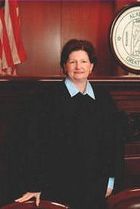
Stuart was first named as acting chief justice in May 2016 following the suspension of former Chief Justice Roy Moore (R) and was selected to complete Moore's term after the rejection of his appeal in April 2017. She was first elected to the Alabama Supreme Court in 2000 and was re-elected in 2006 and 2012. She had previously served as a judge at the circuit and district court levels. Prior to that, Stuart worked as an assistant district attorney and as an assistant attorney general.
In her October 2017 announcement that she would seek a full term as chief justice, Stuart said that she was running "because we need to continue making Alabama a place where justice is served and the law is evenly applied to all parties...We need a judicial system where our justices follow the law, not make the law. And we need justices who strictly interpret the constitution."[3]
Stuart was endorsed by the Alabama Civil Justice Reform Committee.
Tom Parker
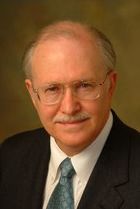
Parker was first elected to the Alabama Supreme Court in 2004 and was re-elected in 2010 and 2016. Prior to his election to the state Supreme Court, Parker worked at the law firm of Parker & Kotouc, P.C. Before joining the firm, Parker worked as an assistant attorney general and as the state's deputy administrative director of courts, where he was responsible for the management of the Alabama Judicial College.
In his April 2017 announcement that he would challenge Stuart for the chief justice position, Parker said that he was running because "Alabama is a conservative state...We revere the Constitution and the Rule of Law. And I believe our courts are the battleground for our God-given rights as free people."[4]
See more
- See full primary coverage here: Alabama Supreme Court Chief Justice election, 2018 (June 5 Republican primary)
Candidates
Chief justice
General election
■ Robert S. Vance
■ Tom Parker
Primary election
■ Chief Justice Lyn Stuart (i)
■ Robert S. Vance 
■ Tom Parker
Place 1
General election
Runoff
■ Brad Mendheim (i)
■ Sarah Stewart
Primary election
■ Brad Mendheim (i) 
■ Debra H. Jones
■ Sarah Stewart
Place 2
General election
■ Tommy Bryan (i)
Primary election
■ Tommy Bryan (i)
Place 3
General election
■ William Sellers (i)
Primary election
■ William Sellers (i)
Place 4
General election
■ Donna Wesson Smalley
■ Jay Mitchell
Primary election
Note: Justice James Allen Main did not file for re-election.
■ Donna Wesson Smalley
■ John Bahakel
■ Jay Mitchell
About the Alabama Supreme Court
- See also: Alabama Supreme Court
The Alabama Supreme Court is composed of nine justices who are elected in state-wide partisan elections. A full term on the court is six years. Judicial elections take place during Alabama's general elections, which are held every two years in even-numbered years.
Political composition
This was the political composition of the supreme court heading into the 2018 election. Justices on the Alabama Supreme Court are elected to their seats, and replacements are appointed by the governor in the case of midterm vacancies. Justice William Sellers was appointed by Gov. Kay Ivey (R) to fill a vacancy. The remaining eight justices were elected to their current terms.[5]
| ■ Lyn Stuart | Elected in 2000 | |
| ■ Michael Bolin | Elected in 2004 | |
| ■ Tom Parker | Elected in 2004 | |
| ■ Greg Shaw | Elected in 2008 | |
| ■ Kelli Wise | Elected in 2010 | |
| ■ Tommy Bryan | Elected in 2012 | |
| ■ James Allen Main | Appointed by Bob Riley (R) in 2011, elected in 2012 | |
| ■ William Sellers | Appointed by Kay Ivey (R) in 2017 | |
| ■ Brad Mendheim | Appointed by Kay Ivey (R) in 2018 |
Selection
- See also: Partisan election of judges
All justices on the Alabama Supreme Court are elected for six-year terms in partisan elections.[6] The composition of the court consists of eight associate justices and one chief justice. Vacancies, which can occur when a justice dies, resigns, retires, or is removed from office, are filled through appointments by the governor of Alabama. The justice must run for the seat in the general election at least one year after being appointed.[6]
Qualifications
To be considered a candidate for the supreme court, the person must:
- Be licensed to practice law in Alabama.
- Have lived in Alabama for at least one year.
- Be 70 years of age or younger at the time of candidacy.[7]
Selection of the chief justice
The chief justice of the Alabama Supreme Court is elected by popular vote.[8]
Pivot Counties
- See also: Pivot Counties by state
Pivot Counties are counties that voted for Barack Obama (D) in 2008 and 2012 and for Donald Trump (R) in 2016. Altogether, the nation had 206 Pivot Counties, with most being concentrated in upper midwestern and northeastern states. No counties in Alabama are Pivot Counties.
In the 2016 presidential election, Donald Trump (R) won Alabama with 62.1 percent of the vote. Hillary Clinton (D) received 34.4 percent. In presidential elections between 1900 and 2016, Alabama voted Democratic 53.33 percent of the time and Republican 40 percent of the time. In the five presidential elections between 2000 and 2016, Alabama voted Republican all five times.
See also


External links

Footnotes
- ↑ AL.com, "10 Alabama statewide races to watch," February 12, 2018
- ↑ 2.0 2.1 Associated Press, "Stuart, Parker compete in chief justice primary," May 30, 2018
- ↑ Alabama Political Reporter, "Appointed Chief Justice Lyn Stuart to run for a full term," October 24, 2017
- ↑ AL.com, "Justice Tom Parker announces run for Alabama chief justice," April 26, 2017
- ↑ Chief Justice Lyn Stuart was elected as an Associate Justice. Stuart was appointed Chief Justice by Gov. Kay Ivey on April 26, 2017, to fill a vacancy.
- ↑ 6.0 6.1 Alabama Unified Judicial System, "Qualifications of Judges," accessed July 30, 2014
- ↑ Alabama Unified Judicial System, "Alabama Appellate Courts," accessed July 30, 2014
- ↑ American Judicature Society, "Methods of Judicial Selection: Alabama," archived October 2, 2014

Federal courts:
Eleventh Circuit Court of Appeals • U.S. District Court: Northern District of Alabama, Middle District of Alabama, Southern District of Alabama • U.S. Bankruptcy Court: Northern District of Alabama, Middle District of Alabama, Southern District of Alabama
State courts:
Alabama Supreme Court • Alabama Court of Civil Appeals • Alabama Court of Criminal Appeals • Alabama Circuit Courts • Alabama District Courts • Alabama Juvenile Courts • Alabama Municipal Courts • Alabama Probate Courts • Alabama Small Claims Courts
State resources:
Courts in Alabama • Alabama judicial elections • Judicial selection in Alabama

