
Amanda Hollowell
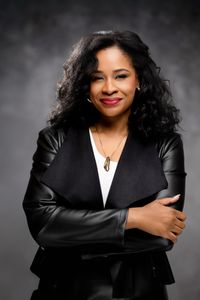
Amanda Hollowell (Democratic Party) is running for election to the U.S. House to represent Georgia's 1st Congressional District. She declared candidacy for the Democratic primary scheduled on May 19, 2026.[source]
Hollowell completed Ballotpedia's Candidate Connection survey in 2025. Click here to read the survey answers.
Biography
Amanda Hollowell was born in Palm Springs, California. She earned a high school diploma from Palm Springs High School and a bachelor's degree from the University of California, Berkeley in 2001. Her career experience includes working as a political organizer. Hollowell has been affiliated with At Color Of Change, When We All Vote, 9to5 Savannah, the Savannah, GA Chapter of The Links, Inc., League of Women Voters of Coastal Georgia, and Savannah Federation of Democratic Women.[1]
Elections
2026
See also: Georgia's 1st Congressional District election, 2026
General election
The primary will occur on May 19, 2026. The general election will occur on November 3, 2026. Additional general election candidates will be added here following the primary.
General election for U.S. House Georgia District 1
Dylan Castillo is running in the general election for U.S. House Georgia District 1 on November 3, 2026.
Candidate | ||
| Dylan Castillo (Socialist Labor Party) | ||

| ||||
 = candidate completed the Ballotpedia Candidate Connection survey. = candidate completed the Ballotpedia Candidate Connection survey. | ||||
| If you are a candidate and would like to tell readers and voters more about why they should vote for you, complete the Ballotpedia Candidate Connection Survey. | ||||
Do you want a spreadsheet of this type of data? Contact our sales team. | ||||
Democratic primary election
Democratic primary for U.S. House Georgia District 1
The following candidates are running in the Democratic primary for U.S. House Georgia District 1 on May 19, 2026.
Candidate | ||
 | Defonsio Daniels | |
 | Amanda Hollowell | |
 | Michael McCord | |
 | Joseph Palimeno | |
| Sharon Stokes-Williamson | ||
 | Randy Zurcher | |
| ||||
| = candidate completed the Ballotpedia Candidate Connection survey. | ||||
| If you are a candidate and would like to tell readers and voters more about why they should vote for you, complete the Ballotpedia Candidate Connection Survey. | ||||
Do you want a spreadsheet of this type of data? Contact our sales team. | ||||
Republican primary election
Republican primary for U.S. House Georgia District 1
The following candidates are running in the Republican primary for U.S. House Georgia District 1 on May 19, 2026.
Candidate | ||
| Matt Day | ||
 | Patrick Farrell | |
| James Kingston | ||
| Eugene Monte | ||
| Brian Montgomery | ||
 | Krista Penn | |
 | Kandiss Taylor | |
 | Eugene Yu | |
| ||||
| = candidate completed the Ballotpedia Candidate Connection survey. | ||||
| If you are a candidate and would like to tell readers and voters more about why they should vote for you, complete the Ballotpedia Candidate Connection Survey. | ||||
Do you want a spreadsheet of this type of data? Contact our sales team. | ||||
Endorsements
Ballotpedia is gathering information about candidate endorsements. To send us an endorsement, click here.
Campaign themes
2026
Ballotpedia survey responses
See also: Ballotpedia's Candidate Connection

Amanda Hollowell completed Ballotpedia's Candidate Connection survey in 2025. The survey questions appear in bold and are followed by Hollowell's responses.
| Collapse all
Amanda has been recognized by Essence, Forbes, USA Today, and Black Enterprise, and honored by Georgia Trend Magazine, Delta Sigma Theta Sorority, Inc., and the Savannah Business Journal.
In Savannah, she has served more than a decade on the Black Heritage Festival Committee and on the boards of Reform Georgia, the League of Women Voters of Coastal Georgia, and the Georgia Alliance for Social Justice. She is a member of The Links, Incorporated, and a graduate of the Georgia WIN List Leadership Academy.
A UC Berkeley graduate, Amanda is also a mother and full-time caregiver to her veteran father. These experiences shape her priorities: fully funded schools, affordable healthcare, higher wages, climate resilience, and stronger democracy. She is running to put people, not politics, first in Southeast Georgia.- Every person who works in Georgia’s 1st Congressional District should be able to live and thrive here. Families are being priced out by rising housing costs, low wages, and lack of investment in our communities. I will fight to raise wages, expand affordable housing, and ensure federal resources flow directly into Southeast Georgia. Our economy should center working families, not just corporations, and every worker deserves a fair chance to build stability where they live and work. Affordable living means dignity, security, and the ability to put down roots in the place we call home.
- Every child deserves a quality education that leads to opportunity. From early learning to high school, college, or technical training, we must invest in our children and prepare them for good-paying jobs right here at home. In Congress, I will fight to fully fund public schools, support teachers, expand universal pre-K, and strengthen apprenticeships and workforce development programs. Education is the foundation of strong communities and a strong economy, and I will work to ensure every student in Georgia’s 1st District has the tools to succeed.
- In Georgia’s 1st District, cuts to funding and resources are putting a strain on care for families, seniors, and veterans. Too many residents struggle with long waits, high costs, or limited access to doctors close to home. I will fight to expand Medicaid, strengthen veteran services, and lower out-of-pocket costs so healthcare is affordable and accessible for every family in Southeast Georgia. No one should have to leave their community or risk financial ruin to get the care they need. Healthcare is a human right, and I will work to protect it.
For me, that means staying rooted in the everyday realities of the people of Georgia’s 1st District. Families here want the same things: good schools, affordable healthcare, fair wages, and the ability to build stability in the communities where they live and work. An elected official should champion policies that make that possible. That requires courage to challenge systems that favor corporations over workers, and the vision to create legislation that reduces poverty, strengthens the middle class, and expands opportunity.
I also believe humility and accessibility are critical. Leaders should be present in their districts, open to feedback, and willing to adjust course when policies are not serving people well. Democracy works best when elected officials see themselves as servants, not gatekeepers.
A representative must also legislate responsibly, advancing policies that strengthen the economy, expand opportunity, and improve quality of life. For Georgia’s 1st District, that means fighting for fully funded schools, affordable healthcare, living wages, investments in the Port of Savannah, and protections for our coastal communities from climate change. Federal legislation should reflect the values and priorities of the people it impacts, and it is the duty of an elected official to make sure our region’s concerns are at the center of those decisions.
Another core responsibility is oversight, holding federal agencies accountable for delivering services effectively and ensuring taxpayer dollars are used wisely. From supporting veterans to protecting Social Security and Medicare, members of Congress must guard the programs that working families rely on.
I hope my legacy shows that leadership is not about titles, but about lifting others up, making sure a child in a rural county has access to a quality education, that a veteran can get the healthcare they need without barriers, that working families can afford to live in the communities they serve, and that every person’s right to vote is protected.
I also want to leave a legacy of breaking barriers. Just as Shirley Chisholm and Barbara Jordan paved the way, I hope my service as the first Black woman elected to represent Georgia’s 1st Congressional District will inspire the next generation to lead with courage, clarity, and conviction.
For me, Parable of the Sower is not just a work of fiction, it is a call to think boldly about the challenges ahead while staying grounded in the struggles people face today. It reminds me that leadership means preparing for the future, even when the present feels overwhelming, and that hope and vision are powerful tools for creating change.
The House also holds the constitutional power of the purse, giving it a central role in shaping the federal budget and determining how taxpayer dollars are invested. That responsibility makes the House critical in ensuring funding priorities reflect the needs of working families, whether it’s public schools, healthcare, veterans’ services, or infrastructure.
My own career reflects this balance. I have worked outside of elected office as a strategist and organizer, leading national and local campaigns that have pressured government and corporate leaders to act. That outsider perspective is valuable because it keeps the focus on accountability, transparency, and putting people—not politics—first. At the same time, my leadership at organizations like Color Of Change and When We All Vote has given me deep experience navigating policy, building coalitions, and turning bold ideas into action.
The challenge will be ensuring that the economy works for everyone, not just the wealthiest Americans. That means protecting the middle class, creating pathways out of poverty, and ensuring wages, housing, and healthcare remain accessible. It will also require reframing the tax code so that corporations and the ultra-wealthy pay their fair share, while working families can build security and stability.
A two-year cycle often cripples freshman members of Congress, who spend their first year just learning procedures, building relationships, and setting up their offices. By the time they are ready to fully legislate, they are already back in campaign mode. This structure creates an overreliance on senior members for influence and power, while keeping newer representatives in a perpetual cycle of fundraising and re-election.
Extending the term to four years would allow members to focus more on governing and less on constant campaigning. It would create space for deeper policy work, stronger constituent services, and more deliberate oversight of federal agencies. It could also strengthen voter engagement, since constituents would know their representative had more time to deliver results, and the role would be seen as carrying greater stability and responsibility.
That’s why I support a limit of six terms in the U.S. House of Representatives. One term is too short to create lasting change, and even a few terms may not provide enough time to fully see through legislation or deliver the federal investments our communities deserve. At the same time, no member of Congress should serve indefinitely. After a certain point, staying too long can create a disconnect from the people and an overreliance on seniority or entrenched interests.
Barbara Jordan is another figure I admire deeply. As the first Black woman elected to Congress from the South, she broke barriers and opened doors for future generations. Her extraordinary speaking skills, bold actions, and unwavering commitment to justice remind me that leadership requires not only vision but also the ability to communicate that vision with clarity and conviction. I am motivated by her trailblazing path as I seek to become the first Black woman elected to represent Georgia’s 1st Congressional District.
I also see inspiration in current leaders like Maxwell Frost, whose work reflects a vision for the future. His energy, creativity, and ability to connect with younger generations show the importance of bringing new voices and fresh ideas into Congress. He represents a reminder that the fight for progress is ongoing and that leadership must continually evolve to meet the challenges of today and tomorrow.
I have listened to parents share the heartbreak of struggling to afford healthcare for their children, workers speak out about unsafe conditions on the job, and seniors describe the fear of choosing between medicine and rent. Each story carries its own weight, but together they form a powerful reminder of why leadership matters.
For me, the impact comes from the act of storytelling itself, the boldness it takes for someone to share their lived experience in the hope of creating change. That kind of bravery fuels movements, shifts public opinion, and shapes legislation. As a candidate and future representative, I carry those voices with me. They remind me that policy is never abstract; it is about real people, real lives, and the struggles and hopes of our communities.
I believe compromise should be about putting people first. It should be the tool that allows us to bring different voices to the table, find common ground, and move bold ideas forward. The goal of compromise should not be to delay progress but to make sure progress is real, durable, and reflective of the needs of everyday Americans.
If elected, I would use this constitutional authority to help reframe the tax code around fairness and equity. That means ensuring the ultra-wealthy and large corporations contribute proportionately, while easing the burden on the middle class and creating pathways out of poverty. It also means protecting programs like Social Security, Medicare, and Medicaid, which working families have paid into and depend on.
We have seen too many moments in recent history where this responsibility has been ignored or undermined. The failure to fully investigate the networks of power and influence surrounding Jeffrey Epstein left serious questions about accountability unanswered. We have also seen how the Department of Justice and other agencies have, at times, been pressured or politicized, raising concerns about whether they are serving justice or political interests. And we continue to see the long shadow of appointees from the Trump administration, many of whom made decisions that undermined democratic norms and weakened public trust.
Today, he is a college graduate and student-athlete—a reflection not only of his dedication but also of the journey we took together. Watching him earn his degree was one of the proudest moments of my life, because it symbolized the resilience, discipline, and hope that carried us forward.
The dangers of AI are clear: job displacement, algorithmic bias that leads to discrimination, privacy and data security risks, the spread of disinformation and deepfakes, environmental harm from massive energy consumption, sophisticated cyber threats, and even potential existential risks if powerful systems develop without proper controls. Left unchecked, these dangers could widen inequality, erode trust, and destabilize communities.
These risks can be mitigated through ethical development, strong human oversight, and intentional regulation. The government must set standards for transparency, accountability, and fairness, while also investing in job training and workforce transitions so that workers are not left behind. AI should be used to expand opportunity and innovation, not to exploit people or undermine democracy.
That’s why I believe efforts like the John R. Lewis Voting Rights Advancement Act are so critical. This legislation would restore the full protections of the Voting Rights Act by requiring federal review of voting changes in places with a history of discrimination. Without that safeguard, we’ve seen new restrictions passed that disproportionately impact voters of color, rural communities, and young people. Reestablishing those protections is about making sure our democracy works equally for everyone.
I also support the Freedom to Vote Act, which would set national standards for voting access by expanding early voting, strengthening vote-by-mail, and cracking down on partisan gerrymandering. This kind of reform would ensure that voters in Georgia’s 1st District have the same opportunities to cast their ballot as voters anywhere else in the country.
And I believe in expanding access for communities that are often left out entirely. Legislation like the Native American Voting Rights Act and the Unhoused VOTE Act is essential because they tackle the real barriers faced by people who may not have a fixed address, reliable transportation, or easy access to polling places. These bills remind us that voting is not a privilege for the few, it is a right guaranteed to all.
Note: Ballotpedia reserves the right to edit Candidate Connection survey responses. Any edits made by Ballotpedia will be clearly marked with [brackets] for the public. If the candidate disagrees with an edit, he or she may request the full removal of the survey response from Ballotpedia.org. Ballotpedia does not edit or correct typographical errors unless the candidate's campaign requests it.
Campaign finance summary
 Note: The finance data shown here comes from the disclosures required of candidates and parties. Depending on the election or state, this may represent only a portion of all the funds spent on their behalf. Satellite spending groups may or may not have expended funds related to the candidate or politician on whose page you are reading this disclaimer. Campaign finance data from elections may be incomplete. For elections to federal offices, complete data can be found at the FEC website. Click here for more on federal campaign finance law and here for more on state campaign finance law.
See also
2026 Elections


External links
Footnotes
- ↑ Information submitted to Ballotpedia through the Candidate Connection survey on September 10, 2025
.svg.png)

