Eric Olson (Minnesota)

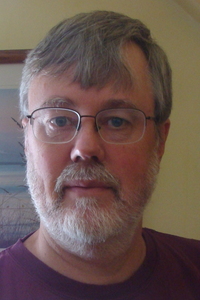
Eric Olson (Democratic Party) ran for election to the Minnesota House of Representatives to represent District 11B. He lost in the general election on November 5, 2024.
Olson completed Ballotpedia's Candidate Connection survey in 2024. Click here to read the survey answers.
Biography
Eric Olson was born in Rush City, Minnesota. He earned a high school diploma from Pine City High School and a bachelor's degree from Concordia College in 1990. As of 2024, Olson was retired but had previously worked as a technology consultant, teacher, and park ranger. He has been affiliated with A Place For You homeless shelter and Redeemer Lutheran Church in Pine City.[1][2]
Elections
2024
See also: Minnesota House of Representatives elections, 2024
General election
General election for Minnesota House of Representatives District 11B
Incumbent Nathan Nelson defeated Eric Olson in the general election for Minnesota House of Representatives District 11B on November 5, 2024.
Candidate | % | Votes | ||
| ✔ |  | Nathan Nelson (R) | 68.6 | 16,047 |
 | Eric Olson (D)  | 31.3 | 7,320 | |
| Other/Write-in votes | 0.1 | 20 | ||
| Total votes: 23,387 | |||
| = candidate completed the Ballotpedia Candidate Connection survey. | ||||
| If you are a candidate and would like to tell readers and voters more about why they should vote for you, complete the Ballotpedia Candidate Connection Survey. | ||||
Do you want a spreadsheet of this type of data? Contact our sales team. | ||||
Democratic primary election
The Democratic primary election was canceled. Eric Olson advanced from the Democratic primary for Minnesota House of Representatives District 11B.
Republican primary election
The Republican primary election was canceled. Incumbent Nathan Nelson advanced from the Republican primary for Minnesota House of Representatives District 11B.
Campaign finance
Endorsements
Ballotpedia did not identify endorsements for Olson in this election.
2022
See also: Minnesota House of Representatives elections, 2022
General election
General election for Minnesota House of Representatives District 11B
Incumbent Nathan Nelson defeated Eric Olson in the general election for Minnesota House of Representatives District 11B on November 8, 2022.
Candidate | % | Votes | ||
| ✔ | | Nathan Nelson (R) | 68.4 | 12,136 |
| Eric Olson (D) | 31.6 | 5,603 | |
| Other/Write-in votes | 0.1 | 13 | ||
| Total votes: 17,752 | |||
| = candidate completed the Ballotpedia Candidate Connection survey. | ||||
| If you are a candidate and would like to tell readers and voters more about why they should vote for you, complete the Ballotpedia Candidate Connection Survey. | ||||
Do you want a spreadsheet of this type of data? Contact our sales team. | ||||
Democratic primary election
The Democratic primary election was canceled. Eric Olson advanced from the Democratic primary for Minnesota House of Representatives District 11B.
Republican primary election
The Republican primary election was canceled. Incumbent Nathan Nelson advanced from the Republican primary for Minnesota House of Representatives District 11B.
Campaign themes
2024
Ballotpedia survey responses
See also: Ballotpedia's Candidate Connection

Eric Olson completed Ballotpedia's Candidate Connection survey in 2024. The survey questions appear in bold and are followed by Olson's responses.
| Collapse all
Education: I am the son of teachers and spent time as a teacher myself, including some time at Pine City High School. I believe that education is core to our future. It prepares the people who will lead us and draws new members to our communities. Environment: My first work was as a Park Ranger for the National Park Service on the St. Croix. This taught me that we must balance our use and enjoyment of our natural resources with the need to leave them unimpaired for future generations. As our population and our capability grow, this balance becomes ever more critical.
Science and Technology: I have degrees in Physics and Math and value thinking objectively. The two greatest assets of human character are the strength to hold firm to the truth and the humility to acknowledge it and change when logic proves our beliefs are wrong. I spent most of my career working for a startup computer software company that was among the fastest growing businesses in Minnesota for several years until we were purchased by a much larger company. This gives me experience working with the technology that drives and connects the world in the new economy. I have done workfor many of the world’s largest corporations. These skills are needed more than ever in our legislature.- It used to be that 4 1/2% ofthe taxes paid to the State were returned to local governments. That has shrunk to about 1 1/4%. This leaves us short of money to repair streets, manage water and sewer, housing, and the other things that our local governments do. Second, it forces local governments to raise property taxes to make up the gap. Property and sales taxes are paid disproportionately by lower income people when compared to the income tax where the wealthy and corporations pay more of their fair share. Perhaps worst of all, this breaks the connection between people and government. This disconnect leads to much of the anger that we see too much of in politics today. I advocate strongly for restoring the distribution to the older level.
- Very similarly, Minnesota used to adjust school funding by property values. Why? Schools need to maintain buildings and have similar expenses that are not proportional to the number of students. As local governments, they can only raise that money by raising property taxes. In a district with low property values (like ours), those taxes must be raised by a lot to bring in the same amount as a much smaller raise in a wealthier district. A very large part of the property tax levies that we see for schools is to compensate for the loss of that adjustment. We all know that schools need to be funded across the state so this adjustment should be restored to remove the conflict between a quality education for all and property taxes.
- Climate Change is here now and we need to adapt. Any Minnesotan who sees our shorter, warmer winters, the longer dry times, and the heavier rains when they come know that climate change is here today and that it is already hurting us. Adapting to this is the greatest challenge of our time and calls for us to work together. The good news is that there is funding available. We need to ensure that funding is spent locally and responsibly on things that will make a difference. To help that, I believe that we should implement Energy Districts like those done in Iowa. Energy Districts guide people who want to take action to the funding and tax breaks available, provide an unbiased source of information.
Three words sum up my political philosophy:
Diversity (including racial/ethnic, gender, and religious, but also geographical, ideological, and economic) gives us the broadest pool of ideas to draw from and makes our solutions more resilient.
Respect for the expertise, knowledge, and life experience of others is critical to a functioning society and government. There are people who know much more than I do about almost any specific topic and the voices of those specialists must be heeded.
Second, we have far too much partisan anger in politics today. This places a responsibility on all elected officials to not only hear the words spoken by the other side, but to listen to the concerns behind them.
Education and workforce development is a critical issue. Minnesota is changing demographically and we need to ensure that we continue to have a strong, well educated workforce that can support the next generation of businesses.
Note: Ballotpedia reserves the right to edit Candidate Connection survey responses. Any edits made by Ballotpedia will be clearly marked with [brackets] for the public. If the candidate disagrees with an edit, he or she may request the full removal of the survey response from Ballotpedia.org. Ballotpedia does not edit or correct typographical errors unless the candidate's campaign requests it.
2022
Eric Olson completed Ballotpedia's Candidate Connection survey in 2022. The survey questions appear in bold and are followed by Olson's responses.
| Collapse all
- I believe strongly in local control and development. Minnesota had an unused surplus in the last session that we could not agree how to spend because it became too contentious. We should be increasing the share of revenue returned to towns and counties through increased Local Government/County Aid and increased funding of education. Local governments can then choose more clearly where to invest those funds whether that be in infrastructure such as street or water system repair, local employees such as police and teachers, community development, or simply reduction of property taxes. We will learn from the experimentation in each community. Such decisions will be less high stakes and politicized, and improve our civility.
- I believe that climate change is a vital problem and that our district will need to adapt if we are to maintain the place that we love. Climate Change is too big a problem for one size fits all. No one knows all the answers so people on the ground need to choose what works. What we do must be market-driven so it works economically and is sustainable. I advocate for the establishment of Energy Districts, akin to Soil and Water Conservation Districs. Energy Districts would provide local expertise to help businesses and individuals that want to take action and would ensure that funding is delivered locally where it can have the greatest impact.
- Schools are key parts of our communities. The education that we provide will determine the future of our district and our state. I believe strongly in the full funding of education. Specifically, we need to address the funding mechanism for special education, paying for that from a central pool. This will establish consistent funding for small districts, providing more consistent services. We have issues with teacher retention. Beyond basic funding, we can improve this by shifting our focus away from standardized testing. This will allow educators more flexibility to reach students where they are improving outcomes and providing a more satisfying experience for both students and teachers.
I believe that climate change is a vital problem and that our district will need to adapt if we are to maintain the place that we love. Climate Change is too big a problem for one size fits all. No one knows all the answers so people on the ground need to choose what works. What we do must be market-driven so it works economically and is sustainable. I believe that Energy Districts can provide the local expertise so that people can make informed choices, learning from others. Further they can ensure that funding is delivered locally to willing businesses and individuals where it can have the greatest impact.
Note: Ballotpedia reserves the right to edit Candidate Connection survey responses. Any edits made by Ballotpedia will be clearly marked with [brackets] for the public. If the candidate disagrees with an edit, he or she may request the full removal of the survey response from Ballotpedia.org. Ballotpedia does not edit or correct typographical errors unless the candidate's campaign requests it.
Campaign finance summary
 Note: The finance data shown here comes from the disclosures required of candidates and parties. Depending on the election or state, this may represent only a portion of all the funds spent on their behalf. Satellite spending groups may or may not have expended funds related to the candidate or politician on whose page you are reading this disclaimer. Campaign finance data from elections may be incomplete. For elections to federal offices, complete data can be found at the FEC website. Click here for more on federal campaign finance law and here for more on state campaign finance law.
See also
2024 Elections


External links
Footnotes