

Kansas City, Missouri

| Kansas City, Missouri | |
 | |
| General information | |
 | |
| Mayor: | Quinton Lucas |
| Mayor party: | Nonpartisan |
| Last mayoral election: | 2023 |
| Next mayoral election: | 2027 |
| Last city council election: | 2023 |
| Next city council election: | 2027 |
| City council seats: | 13 |
| City website | |
| Composition data | |
| Population: | 467,007 |
| Gender: | Female 51.5% |
| Race: | White 54.9% African American 29.9% Asian 2.5% Two or More Races 3.2% |
| Ethnicity: | Hispanic or Latino 10.0% |
| Median household income: | $45,150 |
| High school graduation rate: | 87.1% |
| College graduation rate: | 30.9% |
| Related Kansas City offices | |
| Missouri Congressional Delegation Missouri State Legislature Missouri state executive offices | |
Kansas City is a Missouri city spanning portions of Jackson, Clay, Platte, and Cass counties. As of 2013, its population was 467,007.[1]
City government
- See also: Council-manager government
The city of Kansas City utilizes a council-manager system. In this form of municipal government, an elected city council—which includes the mayor and serves as the city's primary legislative body—appoints a chief executive called a city manager to oversee day-to-day municipal operations and implement the council's policy and legislative initiatives.[2]
City manager
The city manager is the city's chief executive. The responsibilities of the city manager include overseeing the city's day-to-day operations, planning and implementing the city's operating budget, and appointing departmental directors and other senior-level positions.[3]
Mayor
The mayor presides over city council meetings and official city ceremonies. The mayor also represents the city on the state, national and international levels. Quinton Lucas is the current mayor of Kansas City.[2]
City council
The Kansas City City Council is the city's primary legislative body. It is responsible for adopting the city budget, approving mayoral appointees, levying taxes, and making or amending city laws, policies and ordinances.[2]
Membership
The Kansas City City Council is made up of thirteen members, including the mayor. Six are elected by the city's six districts, while the other six members and the mayor are elected at large.[2]
A current list of council members can be found here.
Council Committees
The Kansas City City Council features eight standing committees that focus on individual policy and legislative issues. Generally, the drafting of city legislation begins with the committees.[4]
A current list of Kansas City City Council committees can be found here.
Boards and commissions
A series of advisory boards and commissions that are made up of non-elected citizens, whom city council members have appointed and approved, advises the Kansas City City Council. The roles of these boards and commissions are to review, debate, and comment upon city policies and legislation and to make recommendations to the city council.[5]
For a full list of Kansas City boards and commissions, see here.
Mayoral partisanship
Kansas City has a Democratic mayor. As of January 2026, 67 mayors in the largest 100 cities by population are affiliated with the Democratic Party, 22 are affiliated with the Republican Party, one is affiliated with the Libertarian Party, three are independents, five identify as nonpartisan or unaffiliated, and two mayors' affiliations are unknown. Click here for a list of the 100 largest cities' mayors and their partisan affiliations.
Mayoral elections are officially nonpartisan in most of the nation's largest cities. However, many officeholders are affiliated with political parties. Ballotpedia uses one or more of the following sources to identify each officeholder's partisan affiliation: (1) direct communication from the officeholder, (2) current or previous candidacy for partisan office, or (3) identification of partisan affiliation by multiple media outlets.
Elections
2020
- See also: June 2, 2020 ballot measures in Missouri
City voters decided one local ballot measure on June 2, 2020. Click here to learn more about the city ballot question.
2019
City voters also decided five local ballot measures on November 5, 2019. Click here to learn more about the city ballot questions.
2017
While no regular municipal elections were scheduled in 2017, there were multiple special ballot measure elections.
2015
The city of Kansas City, Missouri, held nonpartisan elections for mayor and city council on June 23, 2015. A primary election took place on April 7, 2015. The filing deadline for candidates who wished to run in this election was January 13, 2015. All 12 city council seats were up for election.[6][7]
Budget
The citywide business plan is the primary driving force behind the budgeting process. The city budget division works with city departments and public input to develop the annual budget. Kansas City's fiscal year runs from May 1 to April 30.[8]
2017-2018
Kansas City's adopted operating budget for the 2017-18 fiscal year was $1.59 billion. The budget increased by 3.9 percent from the previous fiscal year.[9]
Highlights from the budget included:
| “ |
|
” |
2016-2017
Kansas City's adopted operating budget for the 2016-17 fiscal year was $1.53 billion.[11]
Click here to see the sources of government revenue in the 100 largest cities in America by population in fiscal year 2017.
2015-2016
Kansas City's adopted operating budget for the 2015-16 fiscal year was $1.47 billion.[12]
2014-2015
Kansas City's adopted operating budget for fiscal year 2015 was $1.4 billion.[13]
Contact information
Office of the Mayor
29th Floor City Hall
414 E. 12th St.
Kansas City, MO 64106
Phone: (816) 513-3500
City Council
414 E. 12th St.
Kansas City, MO 64106
Phone: (816) 513-1313
To contact individual council members, see here.
Ballot measures
- See also: Jackson County, Missouri ballot measures
The city of Kansas City is in Jackson County. A list of ballot measures in Jackson County is available here.
Lobbying
In 2013, Kansas City's federal lobbying-related expenses amounted to approximately $160,000.[14] The issues for which the city filed in 2013, as well as the number of reports, can be seen in the box below. The issues column lists the generic issues that lobbyists working for local governments are required by law to disclose on quarterly federal disclosure forms.[15][16] The reports column gives the number of reports lobbyists filed in regards to each generic issue. To learn more about the details of the specific issues for which Kansas City filed reports, read the federal disclosure forms by clicking the "Issues" links in the box below.
| Federal Lobbying Issues, 2013 | |||
|---|---|---|---|
| Reports | Issues | ||
| 4 | Government Issues | ||
Issues in the city
Demonstrations, protests, and curfews following the death of George Floyd
During the weekend of May 29-31, 2020, demonstrations and protests took place in cities nationwide, including Kansas City, following the death of George Floyd. Events in Kansas City, Missouri began on Friday, May 29, 2020, at the J.C. Nichols Foundation before moving to the Country Club Plaza.[17] On May 30, Gov. Mike Parsons (R) declared a state of emergency, which allowed the Missouri National Guard to join local police.[18] Members were deployed to the city following a request made by Kansas City Police Chief Rick Smith.[19] On May 31, Mayor Quinton Lucas (D) issued a curfew.[20]
Nondiscrimination laws
In July 2015, the Movement Advancement Project described Kansas City, Missouri, as a city or county that prohibited discrimination in employment on the basis of gender identity via ordinances that apply to public and private employers. At that time, a total of 71 of America's largest 100 cities prohibited private employers from discriminating on the basis of sexual orientation, while 69 of those cities also prohibited discrimination based on gender identity. This did not include those jurisdictions that prohibited discrimination based on sexual orientation or gender identity for government employees.[21]
Nondiscrimination laws can cover a variety of areas, including public employment, private employment, housing, and public accommodations. Such laws may be enacted at the state, county, or city level.
City website evaluation
 B- B- |
|
|---|---|
| Budget |  |
| Meetings | |
| Elected Officials | |
| Administrative Officials | |
| Permits, zoning | |
| Audits | |
| Contracts |  |
| Lobbying |  |
| Public Records | |
| Local Taxes | |
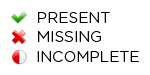 | |
| Transparency grading process | |
- Main article: Evaluation of Missouri city websites
Last rated on Jan. 30, 2012
The good
- Budgets are posted.[22]
- City Council meeting schedules, agendas, and minutes are posted on the city clerk's website.[23]
- City Councilors and the Mayor are listed with contact information.
- Information on building permits[24] and zoning/development[25] posted.
- City contracts are posted,[26] as well as information and documents on how to bid on city contracts.[27]
- Contact information is provided for individual departments.[28]
- Audits are posted.[22]
- Information on taxes is posted.[22]
The bad
- There is no information on whether or not the city lobbies or is a member of lobbying organizations.
- There is an online form for public records request, but no information on what information is available, citizens' rights under the law, or other useful information.
- Full contracts are not posted.
See also

- Cities in Missouri
- Jackson County, Missouri ballot measures
- Jackson County, Missouri
- Largest cities in the United States by population
External links
Footnotes
- ↑ U.S. Census Bureau, "State and County Quick Facts," accessed October 22, 2014
- ↑ 2.0 2.1 2.2 2.3 City of Kansas City, "City Officials," accessed October 22, 2014
- ↑ City of Kansas City, "City Manager's Office," accessed October 22, 2014
- ↑ City of Kansas City, "Committees," accessed October 22, 2014
- ↑ City of Kansas City, "Boards," accessed October 22, 2014
- ↑ Missouri Secretary of State, "2015 Missouri Election Calendar," accessed September 19, 2014
- ↑ Kansas City Board of Elections, "Home," accessed January 23, 2015
- ↑ City of Kansas City, "Budget Division," accessed June 25, 2017
- ↑ City of Kansas City, "Department of Finances," accessed June 25, 2017
- ↑ Note: This text is quoted verbatim from the original source. Any inconsistencies are attributable to the original source.
- ↑ City of Kansas City, "FY 2016-17 Adopted Budget," accessed June 25, 2017
- ↑ City of Kansas City, "City Manager, Mayor submit FY2015-16 Budget to Council," February 12, 2015
- ↑ City of Kansas City, "Department of Finances," accessed October 22, 2014
- ↑ Open Secrets, "City of Kansas City, MO," accessed October 22, 2014
- ↑ U.S. House of Representatives: Office of the Clerk, "Lobbying Disclosure Act Guidance," accessed November 11, 2014
- ↑ Open Secrets, "Methodology," accessed November 11, 2014
- ↑ KSHB, "KC's 'passionate' protest of George Floyd's killing moves to Plaza," May 30, 2020
- ↑ Fox 4, "Missouri Highway Patrol and National Guard arrives in Kansas City to aid police during protests," May 30, 2020
- ↑ KCTV News 5, "Protests turn violent in Kansas City as demonstrators throw rocks, water bottles," June 2, 2020
- ↑ KY3, "Curfew issued for some parts of Kansas City after protests turn violent Saturday," May 31, 2020
- ↑ Movement Advancement Project, "Local Employment Non-Discrimination Ordinances," accessed July 7, 2015
- ↑ 22.0 22.1 22.2 City of Kansas City, "Finance Documents," accessed October 22, 2014
- ↑ City of Kansas City, "City Clerk," accessed October 22, 2014
- ↑ City of Kansas City, "Building Permits," accessed October 22, 2014
- ↑ City of Kansas City, "City Development," accessed October 22, 2014
- ↑ City of Kansas City, "Contracts," accessed October 22, 2014
- ↑ City of Kansas City, "Bidding," accessed October 22, 2014
- ↑ City of Kansas City, "Departments," accessed October 22, 2014
 |
State of Missouri Jefferson City (capital) |
|---|---|
| Elections |
What's on my ballot? | Elections in 2026 | How to vote | How to run for office | Ballot measures |
| Government |
Who represents me? | U.S. President | U.S. Congress | Federal courts | State executives | State legislature | State and local courts | Counties | Cities | School districts | Public policy |

