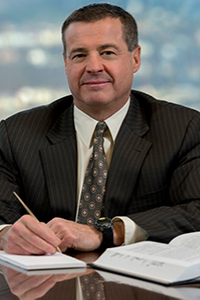
David N. Wecht
David Wecht (Democratic Party) is a judge of the Pennsylvania Supreme Court. He assumed office on January 7, 2016. His current term ends on December 31, 2035.
Wecht (Democratic Party) ran for re-election for judge of the Pennsylvania Supreme Court. He won in the retention election on November 4, 2025.
Wecht first became a member of the Pennsylvania Supreme Court through a partisan election. He was first elected to the court in 2015. To read more about judicial selection in Pennsylvania, click here.
In 2020, Ballotpedia published Ballotpedia Courts: State Partisanship, a study examining the partisan affiliation of all state supreme court justices in the country. As part of this study, we assigned each justice a Confidence Score describing our confidence in the degree of partisanship exhibited by the justices' past partisan behavior, before they joined the court.[1] Wecht received a confidence score of Strong Democrat.[2] Click here to read more about this study.
Biography
David Wecht received a B.A. in 1984 and a J.D. in 1987 from Yale University.[3][4] Prior to joining the Pennsylvania Supreme Court, he was a judge on the Pennsylvania Superior Court from 2012 to 2015 and Allegheny County Court of Common Pleas from 2003 to 2012. Before his judicial service, he was a register of wills & clerk of Orphans' Court in Allegheny County from 1998 to 2003 and an attorney in private practice from 1989 to 2003.[3]
2025 battleground election
Ballotpedia identified the November 4 general election as a battleground race. The summary below is from our coverage of this election here
Three Pennsylvania Supreme Court justices — Christine Donohue (D), Kevin M. Dougherty (D), and David N. Wecht (D) — were retained in three elections held on November 4, 2025.
WHYY's Carmen Russell-Sluchansky wrote, "State judicial elections typically garner little attention, but Pennsylvania’s 2025 state Supreme Court races are shaping up to be the next major political battleground."[5]
The state court had a 5-2 Democratic majority.[6] At the time of the election, the court had been controlled by Democrats since 2015, when Donohue, Dougherty, and Wecht won election to their seats.[7]
Pennsylvania used partisan elections to select a justice for an initial 10-year term, and used a retention election to determine whether to keep them. If a justice was retained, they would serve another 10-year term. At the time of the election, Pennsylvania was one of eight states to use partisan elections for the initial selection of a justice and one of 22 to use retention elections for the renewal of a term.
According to Pennsylvania's Code of Judicial Conduct, justices were limited in their ability to campaign.[8] Both the Democratic and Republican parties said they would be involved in this race. The Republican State Leadership Committee ran ads on social media asking voters to vote against retaining the justices, which said, "In 2024, we voted by mail and flipped Pennsylvania red. This year, radical liberal judges are trying to secure another decade of power. We need you to stop them, show up again, vote 'no' in November."[9] The Democratic National Committee announced on September 25 that they would invest six figures in the final weeks of the race, and Democratic politicians including Gov. Josh Shapiro (D), Sen. Elissa Slotkin (D-Mich.), and Rep. Chris Deluzio (D) campaigned in favor of retention.[10][11]
Since retention elections were established in 1968, only one Pennsylvania justice, Russell Nigro (D) in 2005, was not retained.[12] Since 2020, in 102 elections, 100 justices (98%) won retention. The most recent justice in the U.S. to not win retention was Yvonne Kauger in Oklahoma in 2024.
Elections
2025
See also: Pennsylvania Supreme Court elections, 2025
Pennsylvania Supreme Court, Seat 3 - David Wecht
David Wecht was retained to the Pennsylvania Supreme Court on November 4, 2025 with 61.5% of the vote.
Retention Vote |
% |
Votes |
|||
| ✔ | Yes |
61.5
|
2,209,781 | ||
No |
38.5
|
1,385,673 | |||
Total Votes |
3,595,454 | ||||
|
|
Endorsements
Ballotpedia did not identify endorsements for Wecht in this election.
2015
- See also: Pennsylvania judicial elections, 2015
Pennsylvania's judicial elections included a primary on May 19, 2015, and a general election on November 3, 2015. The filing deadline for candidates was March 11, 2015.
| Pennsylvania Supreme Court, Three seats, General Election, 2015 | ||||
|---|---|---|---|---|
| Party | Candidate | Vote % | Votes | |
| Democratic |  Kevin M. Dougherty Kevin M. Dougherty |
18.5% | 1,079,835 | |
| Democratic | David N. Wecht |
18.4% | 1,070,568 | |
| Democratic | Christine Donohue |
18.2% | 1,059,167 | |
| Republican | Judith Olson | 15.2% | 887,409 | |
| Republican | Michael A. George | 13.6% | 796,124 | |
| Republican | Anne Covey | 13.6% | 795,330 | |
| Independent Judicial Alliance | Paul P. Panepinto | 2.5% | 144,403 | |
| Write-in votes | 0% | 0 | ||
| Total Votes | 5,832,836 | |||
| Source: Pennsylvania Department of State, "Unofficial General Election Results," November 3, 2015 | ||||
| Pennsylvania Supreme Court, Three seats, Democratic Primary, 2015 | ||
|---|---|---|
| Candidate | Vote % | Votes |
| David N. Wecht |
22.1% | 256,761 |
| Kevin M. Dougherty |
22.0% | 256,048 |
| Christine Donohue |
21.4% | 248,325 |
| Anne Lazarus | 16.3% | 189,127 |
| Dwayne D. Woodruff | 11.7% | 136,127 |
| John H. Foradora | 6.6% | 76,190 |
| Write-in votes | 0% | 0 |
| Total Votes | 1,162,578 | |
| Source: Pennsylvania Department of State, "2015 Municipal Primary Unofficial Results," May 19, 2015 | ||
Recommendation
Wecht was highly recommended by the Pennsylvania Bar Association based in part on his "forward-thinking approach to the law, unquestioned legal ability, integrity and judicial temperament."[13]
Race background
Three open seats were up for election on the Pennsylvania Supreme Court in 2015. Going into the primary, there were 12 candidates running for the court. One open seat was the result of the retirement of Chief Justice Ronald Castille in December 2014. The other two seats were made vacant by resignations. In May 2013, Justice Joan Orie Melvin resigned after her conviction for campaign corruption. The second resignation occurred in October 2014, when Justice Seamus P. McCaffery left the court due to both his implication in an FBI investigation involving the exchange of referral fees between his wife and several law firms, and his involvement in a scandal wherein sexually explicit emails were forwarded from his personal email account to court employees.
Justice Correale Stevens was appointed to the bench by Governor Tom Corbett (R) in June 2013 to replace Joan Orie Melvin. He ran unsuccessfully in 2015 to keep his seat on the court.[14]
Campaign finances in the primary
May reporting period
The candidates for the May 19 primary had $2,127,498.74 in cash on hand as of the last pre-primary reporting period. Michael A. George (R) had the most cash on hand at $497,325.16, while Rebecca L. Warren (R) had the lowest total at $2,574.97. The biggest contribution during this reporting period was $50,000 from Ronald Caplan, president of PMC Property Group, to Democratic candidate Kevin M. Dougherty.
| Pre-primary campaign finance, May 2015[15] | ||||
|---|---|---|---|---|
| Candidate | Party | Cash on hand ($) | Highest contribution ($) | Contributor(s) |
| Michael A. George |  Republican Republican |
497,325.16 | 5,000 | Friends of Rich Alloway |
| David N. Wecht |  Democratic Democratic |
450,877.64 | 20,000 | Fairness PA |
| Kevin M. Dougherty | Democratic |
422,421.91 | 50,000 | Ronald Caplan, President, PMC Property Group |
| Anne Lazarus | Democratic |
224,663.64 | 5,000 | Fairness PA, Alan Ominsky |
| Anne Covey | Republican |
149,229.72 | 25,000 | Anthony & Catherine Misitano |
| John H. Foradora | Democratic |
137,130.66 | 10,000 | Monica Mitchell |
| Judith Olson | Republican |
111,688.92 | 25,000 | PA Future Fund |
| Christine Donohue | Democratic |
53,299.01 | 10,000 | Carpenters PAC of Philadelphia & Vicinity |
| Dwayne D. Woodruff | Democratic |
42,129.39 | 5,000 | Franco Harris, Former player, Pittsburgh Steelers Football Club |
| Correale Stevens | Republican |
18,777.49 | 20,000 | Alan H. Potamkin |
| Cheryl Lynn Allen | Republican |
17,380.23 | 10,000 | Fairness PA |
| Rebecca L. Warren | Republican |
2,574.97 | 500 | John Kasha |
April reporting period
Three candidates reported campaign receipts exceeding $500,000 in finance reports filed on April 7. Kevin M. Dougherty (D) took the cash-on-hand lead with $584,666.22 in the bank, followed by David N. Wecht (D) at $546,220.24 and Michael A. George (R) at $508,459.63. Eight of the nine remaining primary candidates totaled approximately $898,000 on hand by early April, with Rebecca L. Warren (R) having a negative cash balance. The fundraising advantage through March rested with Democratic candidates, who totaled $1.94 million on hand compared to $595,000 for Republican candidates.[16]
| Pre-primary campaign finance, April 2015[17] | ||||
|---|---|---|---|---|
| Candidate | Party | Cash on hand ($) | Highest contribution ($) | Contributor(s) |
| Kevin M. Dougherty | Democratic |
584,666.22 | 100,000 | Local Union #98 I.B.E.W. Committee On Political Education |
| David N. Wecht | Democratic |
546,220.24 | 25,000 | Daniel Berger, Attorney |
| Michael A. George | Republican |
508,459.63 | 500,000 | Gary Lowenthal, Founder, Boyds Bears |
| John H. Foradora | Democratic |
391,074.05 | 100,000 | John H. Foradora |
| Anne Lazarus | Democratic |
262,093.08 | 75,000 | Anne Lazarus |
| Christine Donohue | Democratic |
184,727.00 | 5,000 | Commonwealth Heritage PAC, I.B.E.W. Local 5, Obermayer Rebmann Maxwell & Hippel and 13 individual donors |
| Anne Covey | Republican |
56,540.38 | 25,000 | PA Future Fund |
| Correale Stevens | Republican |
44,101.58 | 5,000 | Pennsylvania Society of Physicians Assistants, Gillespie, Miscavige, Ferdinand & Baranko LLC and four individual donors |
| Dwayne D. Woodruff | Democratic |
29,514.80 | 5,000 | Arthur J. Rooney II, President, Pittsburgh Steelers Football Club |
| Cheryl Lynn Allen | Republican |
17,135.00 | 10,000 | Eldora Ellison, Retired |
| Judith Olson | Republican |
842.06 | 1,000 | Carl G. Grefenstette, Director, Hillman Foundation |
| Rebecca L. Warren | Republican |
-2,668.35 | 5,000 | Rebecca L. Warren |
April 8 candidate forum
A candidate forum at the Free Library of Philadelphia on April 8 showcased candidate concerns over the influence of money in judicial elections. Five candidates participated in the forum: Anne Lazarus (D), John H. Foradora (D), David N. Wecht (D), Dwayne D. Woodruff (D) and Cheryl Lynn Allen (R). All of the candidates at the forum argued that more campaign cash presented issues for judicial races, though none believed that eliminating elections would be the right solution. Foradora argued that campaign cash potentially damages the court's integrity, while Woodruff suggested that higher finance requirements presented a barrier to entry for qualified candidates. Allen advocated for nonpartisan elections as a counterweight to increasing partisanship on the court.[18]
Failed nominations
In February 2015, Governor Tom Wolf (D) nominated both Ken Gormley, a law professor for the Duquesne University School of Law, and Judge Thomas Kistler of the Centre County Court of Common Pleas. However, after a Christmas email sent by Kistler and a halt to confirm Gormley, Wolf said he planned no further nominations to the Pennsylvania Supreme Court.[19]
Kistler asked that his nomination be withdrawn after a report surfaced of a racially insensitive e-greeting sent out by Kistler to friends in 2013. The e-greeting depicted a black couple, with the male wearing prison garb behind a glass window and his female visitor speaking to him via a jailhouse phone. The caption attached to the e-greeting said, "Merry Christmas from the Johnsons," and Kistler sent the greeting with a subject heading of "Best Christmas card ever."[20]
Gormley's nomination came under scrutiny when reports of harassment complaints filed in 2006 against Gormley were circulated among the Senate Judiciary Committee. An internal Duquesne University report, which had been cited in a lawsuit filed against Gormley, recommended that Gormley not supervise women because he had shared "an unsubstantiated rumor" regarding a female professor. The suit was later settled by the female professor and the university.[20]
2011
- See also: Pennsylvania judicial elections, 2011
Wecht ran for a seat on the Pennsylvania Superior Court in 2011. He ran unopposed in the Democratic primary on May 17 and defeated Vic Stabile in the general election, winning 54.6 percent of the vote.[21][22]
Judicial philosophy: recusals
During the 2011 campaign, The Patriot-News newspaper asked candidates for the statewide races when it would be appropriate for a judge to recuse herself or himself from a case. In response, Wecht said, "My approach is to be overly transparent and abundantly cautious if there is any sign of a conflict of interest."[23]
Bar rating
Wecht was rated as Highly Recommended by the Pennsylvania Bar Association.[24]
Endorsements
- Pennsylvania Democrats[25]
- Fraternal Order of Police
- Pennsylvania AFL-CIO
- Pittsburgh Police
- Steel City Stonewall Democrats
- United Mine Workers of America
- District Council 47 AFSCME
- Pennsylvania State Building and Construction Trades Council
- Gertrude Stein Political Club of Greater Pittsburgh
- Pennsylvania Fraternal Order of Police
- Pennsylvania National Organization For Women
- Allegheny County Labor Council
- Council 13 AFSCME
- International Association of Fire Fighters - Local 22
- Service Employees International Union
- U.S. Sen. Bob Casey[26]
Campaign themes
2025
Ballotpedia survey responses
See also: Ballotpedia's Candidate Connection
David Wecht did not complete Ballotpedia's 2025 Candidate Connection survey.
2015
Wecht’s campaign website stated the following:
| “ |
1. Absolute ban on all gifts to judges The opportunity to serve as a judge is a solemn responsibility and a public trust. It should not include an opportunity to reap profit from others through the receipt of gifts. The exchange of favors has no place in the judicial process. Gifts to judges, be they golf junkets or trinkets, should be banned completely. 2. Tightened Anti-Nepotism Policy; Sunset Employment of Judges’ Relatives Pennsylvania’s Code of Judicial Conduct was finally revised in 2014 to ban longstanding and shameful practices of nepotism. However, while the Code bans judges from hiring their relatives in the future, it says (and does) nothing about the fact that many judges already have their relatives on the public payroll, and that this nepotism continues unchecked. This has to stop. Our Supreme Court should impose a reasonable sunset period (perhaps five years) to allow judges’ family members to find other work -- work outside the chambers and courtrooms of their judicial kin. 3. Require judges to rule on the record or in writing on all motions for recusal Pennsylvania’s Code of Judicial Conduct calls for judges to recuse themselves in circumstances where their impartiality can reasonably be questioned. The Code should be revised to require judges whose recusal is sought to state on the record their reasons for granting or denying the motion, so all circumstances can be viewed in the light of day, both by the reviewing court and by the public as a whole. 4. Mandated ethics courses for all judicial candidates We entrust our judges with tremendous power over the lives of others. Recent events have shown that those to whom this power is granted can go seriously astray. Before further abuses occur, it is critical that all who seek judicial office be required to complete a course in judicial ethics. It is not too much to ask judicial candidates to acquire a basic familiarity with best practices in the essential area of proper conduct. 5. Television broadcast of court proceedings Citizens have an interest, and indeed a right, in knowing what transpires in the courtrooms that they pay for and where justice is done in their name. All proceedings in every Pennsylvania court are presumptively open, and this openness mandated by our Constitution should include television access so that the openness is real. All Pennsylvanians should have the opportunity to view proceedings wherever they may be. Technology allows for such broadcasting to be performed unobtrusively and without distraction. Judges should be afforded the discretion to close proceedings to television in appropriate circumstances, such as cases involving child abuse, certain sexual offenses, matters requiring a measure of confidentiality, and other special situations. [27] |
” |
| —Wecht 2015 (2015)[28] | ||
Campaign finance summary
Ballotpedia currently provides campaign finance data for all federal- and state-level candidates from 2020 and later. We are continuously working to expand our data to include prior elections. That information will be published here as we acquire it. If you would like to help us provide this data, please consider donating to Ballotpedia.
Analysis
Ballotpedia Courts: State Partisanship (2020)
Last updated: June 15, 2020
In 2020, Ballotpedia published Ballotpedia Courts: State Partisanship, a study examining the partisan affiliation of all state supreme court justices in the country as of June 15, 2020.
The study presented Confidence Scores that represented our confidence in each justice's degree of partisan affiliation. This was not a measure of where a justice fell on an ideological spectrum, but rather a measure of how much confidence we had that a justice was or had been affiliated with a political party. The scores were based on seven factors, including but not limited to party registration.[29]
The five resulting categories of Confidence Scores were:
- Strong Democrat
- Mild Democrat
- Indeterminate[30]
- Mild Republican
- Strong Republican
This justice's Confidence Score, as well as the factors contributing to that score, is presented below. The information below was current as of June 2020.
David
Wecht
Pennsylvania
- Partisan Confidence Score:
Strong Democrat - Judicial Selection Method:
Elected - Key Factors:
- Was a registered Democrat
- Donated over $2,000 to Democratic candidates
- Received donations from Democrat-affiliated individuals or organizations
Partisan Profile
Details:
Wecht ran as a registered Democrat for the Pennsylvania Supreme Court. He donated $2,500 to Democratic candidates. He received $234,910 from the Pennsylvania Democratic Party. He was endorsed by Pennsylvania Democrats, the Fraternal Order of Police, the Pennsylvania AFL-CIO, the Pittsburgh Police, the Steel City Stonewall Democrats, and the United Mine Workers of America, all of which endorse Democrats more frequently than Republicans.
Noteworthy events
Pennsylvania Supreme Court justice expresses misgivings about judicial deference (2020)
Pennsylvania Supreme Court Justice David N. Wecht on July 21 issued a concurring opinion in Crown Castle NG East LLC and Pennsylvania-CLE LLC v. Pennsylvania Public Utility Commission expressing what he called “deep and broad misgivings” about the court's practice of deferring to state agency interpretations of statutes and regulations.[31]
The case challenged the Pennsylvania Public Utility Commission’s (PUC) interpretation of a statute governing public utilities. The PUC argued that the court should defer to its statutory interpretation because of the subject matter’s highly technical nature. The court, however, refused to defer to the PUC’s interpretation because it found the statute in question to be clear and unambiguous.[31]
“A court does not defer to an administrative agency’s interpretation of the plain meaning of an unambiguous statute because statutory interpretation is a question of law for the court,” wrote Justice Sallie Updike Mundy in the opinion.[31]
In a concurring opinion, Justice Wecht expressed uncertainty about the court's deference practices. Wecht pointed to the lack of clarity surrounding the court’s approach to deference, arguing that the court’s deference doctrines aren’t clearly distinguishable and have been, in their words, "thrown together over time.”[31]
Ballotpedia tracks state approaches to judicial deference as part of Ballotpedia's administrative state coverage. Since 2008, Wisconsin, Florida, Mississippi, Arizona, and Michigan have taken executive, judicial, or legislative action to limit or prohibit judicial deference to state agencies as of August 2020. Click here to find out more.[31]
On March 17, 2020, Wecht announced a self-quarantine after one of his children tested positive for coronavirus.[32]

|
|---|
| Coronavirus pandemic |
| Select a topic from the dropdown below to learn more.
|
COVID-19, also known as coronavirus disease 2019, is the disease caused by the SARS-CoV-2 virus. The first confirmed case of the disease in the United States was announced on January 21, 2020. For more of Ballotpedia's coverage of the coronavirus impact on political and civic life, click here.
Noteworthy cases
Wolf v. Scarnati (2020)
Wolf v. Scarnati: On July 1, 2020, the Pennsylvania Supreme Court ruled against legislative Republicans in favor of Gov. Tom Wolf (D), upholding his ability to maintain COVID-19 shutdown orders. The lawsuit stemmed from Wolf’s March 6, 2020, emergency disaster proclamation, which he renewed on June 3, 2020. On June 9, 2020, the Pennsylvania General Assembly adopted a concurrent resolution, HR836, seeking to terminate the disaster emergency, which was not presented to the governor for approval or veto. The governor did not comply. Three Republican state senators filed a complaint in the Commonwealth Court, asking the court to command Wolf to comply with their resolution by "issuing an executive order or proclamation ending the state of disaster emergency." Wolf asked the state supreme court to exercise extraordinary jurisdiction, thus removing the case to the high court. The state supreme court held that HR836 was a legal nullity because the Pennsylvania Constitution required that concurrent resolutions relating to emergency declarations be presented to the governor for approval or veto. As the General Assembly did not do so, the court refused to order Wolf to end the shutdown, stating, "The Pennsylvania Constitution does not empower the legislature to act unilaterally to suspend a law, and the Governor’s purported suspension of law did not violate the non-delegation doctrine." Justice David N. Wecht wrote the court's opinion, which Justices Max Baer, Debra Todd, and Christine Donohue joined. Justice Kevin M. Dougherty filed a separate opinion, concurring and dissenting in part.[33]
No retroactive increase in sex offender registration periods
In Commonwealth v. Muniz, the Pennsylvania Supreme Court ruled that Pennsylvania’s Sex Offender Registration and Notification Act (SORNA) could not apply retroactively to a defendant who was found guilty of a sex crime before the legislation took effect.[34] The court ruled that SORNA’s registration requirements constituted a criminal punishment and that the ex post facto clauses of the U.S. and Pennsylvania Constitutions prevented the state from punishing defendants beyond what the law allowed at the time of his or her crime. Justice Wecht joined in the majority's judgment but authored a concurring opinion.
State supreme court judicial selection in Pennsylvania
- See also: Judicial selection in Pennsylvania
The seven justices of the Pennsylvania Supreme Court are selected in partisan elections.[35]
Justices serve 10-year terms, after which they must run in yes-no retention elections if they wish to remain on the court. A separate part of the ballot is designated for these elections, and justices' names appear without respect to party affiliation.[35][36] To learn more about these elections, visit the Pennsylvania judicial elections page.
Qualifications
To serve on the supreme court, a justice must:
- have state residence for at least one year;
- be a member of the state bar; and
- be under the age of 75.[35][37]
Chief justice
The Pennsylvania Supreme Court chooses its chief justice by seniority; the title is held by the longest-serving justice on the court.[35][38]
Vacancies
In the event of a midterm vacancy, the governor appoints a successor who must be approved by a two-thirds vote of the Pennsylvania Senate. Interim justices stand for election at the next municipal election occurring more than 10 months after the vacancy occurred.[35]
By tradition, appointed interim judges of the supreme court, superior court, or court of appeals do not go on to run for permanent seats. In other words, the governor appoints these judges with the expectation that the judge will only fill the interim vacancy.[35]
The map below highlights how vacancies are filled in state supreme courts across the country.
See also
2025 Elections


External links
|
Candidate Pennsylvania Supreme Court |
Officeholder Pennsylvania Supreme Court |
Personal |
Footnotes
- ↑ We calculated confidence scores by collecting several data points such as party registration, donations, and previous political campaigns.
- ↑ The five possible confidence scores were: Strong Democrat, Mild Democrat, Indeterminate, Mild Republican, and Strong Republican.
- ↑ 3.0 3.1 The Unified Judicial System of Pennsylvania, "Justice David N. Wecht," accessed July 14, 2021
- ↑ Trib Live, “David Wecht sworn in to Pennsylvania's highest court,” January 7, 2016
- ↑ Penn Capital Star, "With three seats on the ballot, this year’s state Supreme Court race may be ‘a different animal’," March 3, 2025
- ↑ Politico, "Democrats expand majority on PA Supreme Court," November 7, 2023
- ↑ WESA, "Voters Give Dems Control Of Pennsylvania Supreme Court," November 3, 2015
- ↑ Pennsylvania Code, "CHAPTER 33. CODE OF JUDICIAL CONDUCT," accessed November 15, 2025
- ↑ The Keystone, "Billionaire-backed group trying to flip control of PA Supreme Court," August 14, 2025
- ↑ Democratic Party, "DNC Announces Initial Six-Figure Investment in Pennsylvania Democratic Party Ahead of Critical Election to Retain PA Supreme Court Justices," September 25, 2025
- ↑ Politico, "Pennsylvania’s high-stakes retention election," October 14, 2025
- ↑ PoliticsPA, "DLCC Adds PA State Supreme Court Race to Target Map," accessed August 14, 2025
- ↑ Pennsylvania Bar Association, "Judicial Evaluation Commission Releases 2015 Judicial Ratings," accessed July 14, 2021
- ↑ TribLive.com, "Much at stake as 16 vie for historic 3 vacancies on Pa. Supreme Court," January 11, 2015
- ↑ Pennsylvania Department of State, "Campaign Finance Online Reporting," accessed May 18, 2015
- ↑ TribLive, "3 candidates for Pennsylvania Supreme Court have more than $500k on hand for primary election," April 7, 2015
- ↑ Pennsylvania Department of State, "Campaign Finance Online Reporting," accessed April 22, 2015
- ↑ Philly.com, "5 running for Pa.'s top court agree: Judicial races cost too much," April 8, 2015
- ↑ Pittsburgh Post-Gazette, "Senate GOP may not fill 2 vacancies on Pennsylvania’s high court," February 24, 2015
- ↑ 20.0 20.1 Philly.com, "Two Supreme Court nominees under fire," February 22, 2015
- ↑ Politics in PA, "Video: Dems Pick Wecht, Colville Withdraws," February 5, 2011
- ↑ Pennsylvania Department of State, "Unofficial Elections Returns," accessed July 14, 2021
- ↑ Pennlive.com, Editorial: "Pa. judge races are attracting more money and potential bias," October 29, 2011
- ↑ Pennsylvania Bar Association, "Judicial Evaluation Commission," accessed April 28, 2015
- ↑ Pennsylvania Democrats, "Pennsylvania Democrats State Committee Endorses Judicial Candidates," February 5, 2011
- ↑ Wecht 2015, "Endorsements," accessed July 14, 2021
- ↑ Note: This text is quoted verbatim from the original source. Any inconsistencies are attributable to the original source.
- ↑ Wecht 2015, "The David Wecht Five-Point Plan: Revamping Judicial Conduct and Transparency," accessed July 14, 2021
- ↑ The seven factors were party registration, donations made to partisan candidates, donations made to political parties, donations received from political parties or bodies with clear political affiliation, participation in political campaigns, the partisanship of the body responsible for appointing the justice, and state trifecta status when the justice joined the court.
- ↑ An Indeterminate score indicates that there is either not enough information about the justice’s partisan affiliations or that our research found conflicting partisan affiliations.
- ↑ 31.0 31.1 31.2 31.3 31.4 Cozen O'Connor, "The DAS Networks Fault Line: A Coming Earthquake in Pennsylvania Administrative Law?" August 4, 2020
- ↑ Fox 43, "Pennsylvania Supreme Court Justice David Wecht in self-quarantine for coronavirus," March 17, 2020
- ↑ Supreme Court of Pennsylvania, "Wolf v. Scarnati: Opinion," July 1, 2020
- ↑ Pennsylvania Supreme Court, Commonwealth v. Muniz, July 19, 2017
- ↑ 35.0 35.1 35.2 35.3 35.4 35.5 American Judicature Society, "Methods of Judicial Selection: Pennsylvania," archived October 3, 2014
- ↑ The Unified Judicial System of Pennsylvania, "In Re: Nomination Papers of Marakay Rogers, Christina Valente and Carl J. Romanelli," November 7, 2006
- ↑ 2018 Pennsylvania Consolidated Statutes, "Title 42, Chapter 33, Section 3351," accessed August 25, 2020
- ↑ The Pennsylvania Code, "Chapter 7. Assignment of Judges," accessed September 3, 2014
| ||||||||||