

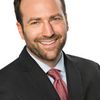
Patrick Wolff

Patrick Wolff (Democratic Party) is running for election for California Commissioner of Insurance. He declared candidacy for the primary scheduled on June 2, 2026.[source]
Wolff completed Ballotpedia's Candidate Connection survey in 2025. Click here to read the survey answers.
Biography
Patrick Wolff was born in New York, New York. He graduated from Belmont High School. He earned a bachelor's degree from Harvard in 1997. His career experience includes working as an investor. He worked in business and finance from 1997 to 2017.[1]
Wolff has been affiliated with the following organizations:[1]
- Mechanics’ Institute, board of trustees
- Westside Family Democratic Club, board member
2026 battleground election
Ballotpedia identified the June 2 primary as a battleground race. The summary below is from our coverage of this election here
Seven candidates are running in the top-two primary for insurance commissioner of California on June 2, 2026. Five have led in media attention: Ben Allen (D), Steven Bradford (D), Jane Kim (D), Stacy Korsgaden (R), and Patrick Wolff (D). Incumbent Ricardo Lara (D) is term-limited and is retiring from public office.
The Sacramento Bee's Stephen Hobbs wrote, "The race for California governor is going to get most of the attention. But the campaign to become the state’s next insurance commissioner might be almost as consequential."[2]
Wildfires across the state have affected insurance policies in recent years. CalMatters' Levi Sumagaysay wrote that wildfires "were a factor in insurance companies canceling homeowner policies or refusing to write new ones ... Many survivors of last year’s Los Angeles County fires are struggling to rebuild; they have sued insurance companies ... Many homeowners are continuing to turn to the last-resort FAIR Plan, which has seen a 146% increase in the number of policies since 2022."[3] Additionally, some insurers have been accused by lawmakers of intentionally denying or delaying action on claims.[4]
Allen has served as a state Senator since 2014. He says as commissioner, he would "demand transparency in rate filings, push back on increases that aren’t supported by the facts, and ensure insurers properly account for risk-reduction efforts."[5] Allen says he wants to implement more fire mitigation measures and will "push for neighborhood-scale fire prevention and risk reduction programs that lower losses across entire communities and make it possible for insurers to responsibly write policies again."[6] Sen. Adam Schiff (D-Calif.) has endorsed Allen.[7]
Bradford served in the state Senate from 2016 to 2024. He says that as commissioner, he would improve efficiency by "reviewing rate filings by increasing the rate review team, eliminating non-productive administrative hurdles ... and concentrating on eliminating the uncertainty and friction [in the current process.]"[8] Bradford also says he wants to offer residents premium reductions to make their homes more resilient to disasters. His website says, "I’ll make sure that when families take action to reduce their risk ... they get real, guaranteed premium discounts."[9] Former Senate President Pro Tempore Toni Atkins (D) has endorsed Bradford.[10]
Kim is a former San Francisco supervisor. She says she supports a state-run insurance plan called Disaster Insurance for All. Kim's website says the plan "would address climate disaster instead of avoiding it. The private insurance business model is to avoid losses, not to reduce risk ... A public insurer would invest in prevention and resiliency, and the public would benefit with fewer claims to pay out."[11] Kim supports capping insurance executive pay, and says, "We can do a far better job reining in profiteering and price gouging, and it is essential to restoring trust and affordability."[12] Kim is also affiliated with the Working Families Party, and Sen. Bernie Sanders (I-Vt.) has endorsed her.[13][14]
Korsgaden is an insurance agent. Her website says she wants to bring new insurers into the state to lower premiums and says she supports "innovation and encouraging capital investments so insurers can offer a variety of products."[15] Korsgaden also says the current number of regulations insurance companies face should be reduced: "As insurers are once again able to grow and write policies in California, coverage will shift back where it belongs, into the private market, restoring balance and choice for our community."[16] State Senate minority leader Brian Jones (R) has endorsed Korsgaden.[17]
Wolff is a financial analyst. In his response to Ballotpedia's Candidate Connection survey, Wolff said he wanted to increase transparency and would create a system "that grade[s] insurance companies on how they handle claims ... and he will require those grades to be shown to consumers before they buy a policy."[1] Wolff also said he wanted to create incentives for insurers to stay in high risk areas, which he said "means allowing them to use to predict risk using models that take climate change into account as a reality ... it means allowing them to factor in the cost of reinsurance ... and it means streamlining the rate filing review process so that insurance companies can get all normal rate filings [reviewed quicker]"[18] Ballotpedia was not able to identify any endorsements for Wolff.
Robert Howell (R) and Eduardo Vargas (Peace and Freedom Party) are also running.
A Democrat has held the position since 2011. Since the position became elected in 1990, all but one election have had a Democrat and a Republican candidate competing in the November general election.
Elections
2026
See also: California Insurance Commissioner election, 2026
General election
The primary will occur on June 2, 2026. The general election will occur on November 3, 2026. General election candidates will be added here following the primary.
Nonpartisan primary
Nonpartisan primary election for California Commissioner of Insurance
The following candidates are running in the primary for California Commissioner of Insurance on June 2, 2026.
Candidate | ||
 | Ben Allen (D) | |
 | Steven Bradford (D) | |
 | Jane Kim (D) | |
 | Patrick Wolff (D)  | |
| Robert Howell (R) | ||
 | Stacy Korsgaden (R) | |
 | Eduardo Vargas (Peace and Freedom Party) | |

| ||||
| = candidate completed the Ballotpedia Candidate Connection survey. | ||||
| If you are a candidate and would like to tell readers and voters more about why they should vote for you, complete the Ballotpedia Candidate Connection Survey. | ||||
Do you want a spreadsheet of this type of data? Contact our sales team. | ||||
Endorsements
Ballotpedia is gathering information about candidate endorsements. To send us an endorsement, click here.
Campaign themes
2026
Ballotpedia survey responses
See also: Ballotpedia's Candidate Connection

Patrick Wolff completed Ballotpedia's Candidate Connection survey in 2025. The survey questions appear in bold and are followed by Wolff's responses.
| Collapse all
- Patrick will fix California’s broken insurance system so coverage is available, affordable, and fair. California’s insurance markets are in crisis: many homeowners, renters, and small businesses can’t get the coverage they need, and those who can often face skyrocketing premiums and shrinking coverage. More and more people are being pushed onto the FAIR Plan, our “insurer of last resort,” which was never designed to carry this much of the market.
- Patrick brings real insurance and financial expertise — and he will stay independent from the insurance industry. This office should be held by someone whose qualifications are in insurance, finance, and consumer protection, not someone looking for a political stepping stone. Patrick has spent years analyzing insurance companies like Berkshire Hathaway and other major public insurers as a Chartered Financial Analyst, and helped build a home and auto insurance brokerage inside Capital One. That work gave him an inside view of how insurers design products, price risk, and manage claims, and how those decisions affect ordinary people. He also understands the importance of independence. Patrick has pledged not to accept campaign contributions
- Patrick will make the Department of Insurance work for consumers by demanding accountability, speeding approvals, and making policies understandable. Too often, people feel powerless when dealing with their insurance company. Claims get delayed or denied, policies are confusing, and there’s no easy way to compare how companies treat their customers. Patrick will change this. As Insurance Commissioner, Patrick will create clear “report cards” that grade insurance companies on how they handle claims using the Department’s existing justified complaint data, and he will require those grades to be shown to consumers before they buy a policy. Patrick will push to streamline rate-review timelines so California gets closer to the national average
Insurance reform and consumer protection:
California’s insurance system has become opaque, confusing, and too often unfair to ordinary people. Patrick cares deeply about creating a market where coverage is available and affordable, where companies are held accountable for honoring claims, and where consumers have clear information when they make decisions. That means grading insurers on claims performance, fixing underinsurance, strengthening the Sustainable Insurance Strategy to bring more companies back into the state, and investing in tools that make policies easier to understand.
Climate resilience and wildfire risk:
Note: Ballotpedia reserves the right to edit Candidate Connection survey responses. Any edits made by Ballotpedia will be clearly marked with [brackets] for the public. If the candidate disagrees with an edit, he or she may request the full removal of the survey response from Ballotpedia.org. Ballotpedia does not edit or correct typographical errors unless the candidate's campaign requests it.
Campaign website
Wolff's campaign website stated the following:
Insurance markets in California are in crisis. Many homeowners and businesses can’t get the coverage they need, while those who can often face skyrocketing prices and shrinking coverage. Insurance is supposed to provide peace of mind, not stress and confusion.
I have a plan to solve our state’s insurance crisis by holding insurance companies accountable, increasing choice and competition, and improving transparency.
This plan is a new way forward for California. We cannot afford to continue the same broken policies that got us into this crisis. California’s insurance markets can work the way they should, so long as we have the leadership we deserve.
As Insurance Commissioner, I will be totally focused on making California’s insurance markets work for you so that insurance is fair, affordable, and readily available to everyone in California.
Holding Insurance Companies Accountable
Grade Every Insurance Company on How They Process Claims and Provide to Consumers at Point of Purchase
Consumers deserve to know how well insurance companies fulfill their responsibilities to pay claims fairly, and they need to have this information before making the purchase decision. The Department of Insurance collects Market Conduct Annual Statements, which analyze the behavior of insurance companies in detail. This data identifies how well each individual insurance company behaves on claims. However, the insurance industry has lobbied to anonymize this data, shielding individual companies. I will have the Department release company-specific data and create an easy to understand claims performance report card for each insurance company, and I will mandate that the report card be provided to consumers before making the purchase decision.
Mandate Insurance Companies Offer Discounts for Residents Who Have Reduced Fire Risk Around Their Homes
The Department of Insurance must align its guidelines for home hardening with how insurance companies actually underwrite, so that the insurance companies can offer meaningful discounts for homeowners who take the right steps. In return, insurance companies must be required to offer meaningful discounts to customers who have faithfully followed the regulations that reduce fire risk at the house and neighborhood level.
Mandate Smoke Damage Protection Inclusion for Home Insurance
Modern wildfires create unprecedented levels of smoke damage that insurance companies are not sufficiently covering. The Department of Insurance has created a task force to develop statewide standards for smoke claims. However, recent reporting casts serious doubts on the objectivity of this task force. I will create a new task force based on science, not insurance company influence; I will mandate that all home insurance policies sold in California reflect these unbiased, science-based findings; and I will hold insurance companies accountable for paying smoke damage claims.
Disclose Potential Home Insurance Underinsurance and Mandate Availability of Extended Replacement Cost Coverage
The typical homeowners’ insurance policy significantly underestimates the replacement cost of a property. As a result, many Californian homeowners are deeply underinsured, which means they don’t get paid enough to rebuild after a disaster. The root cause is that insurance companies all use the same software to estimate replacement cost, and the software estimates are biased to estimate too low. The Department of Insurance has the data required to fix this problem of homeowners being underinsured. I will mandate that: (1) consumers must receive an estimate at the point of purchase that quantifies how much the replacement cost is likely to be too low based on Department of Insurance data; (2) insurance companies must provide consumers the option to purchase sufficient Extended Replacement Cost coverage to close this gap.
Increasing Choice & Competition
Shorten the Approval Process for Standard Rate Applications
One of the key factors limiting choice and competition in California’s insurance market is how long it takes for insurance rate applications to be reviewed. The national average for a rate application review is 60 days, but in California it takes nearly 300 days. We can dramatically speed up the rate review process to be much closer to the national average by streamlining standard rate applications. This will make competitive rates available to consumers faster and make it easier for more companies to do business in California.
Provide Financial Support to Harden Homes Against Wildfires
It can cost tens of thousands of dollars to make a house resilient to wildfire. This investment does not just benefit the homeowner, it also benefits the neighbors and the community. Homeowners need and deserve financial support for this investment given its substantial communal benefits. As Insurance Commissioner, I will fight to make sure Sacramento provides tax incentives and other fiscal subsidies so homeowners can afford to make their homes safer from wildfire.
Urge Sacramento to Increase Annual Controlled Burns to Reduce Wildfire Severity
California must take the scientifically backed action necessary to reduce wildfire severity. The state should be doing 500,000 acres/year of controlled burns to reduce the risk of catastrophic wildfires. Instead, we are only doing approximately 100,000 acres/year. I will use the role of the Insurance Commissioner office to explain the urgency of this issue and emphasize the need to take action. Reducing the severity of wildfires will reduce the cost of insurance and make it easier for insurance companies to do business here. It will also protect property and, most importantly, save lives.
Study the Potential Approval of Telematics for Auto Insurance Underwriting
Telematics refers to installing a device in the automobile to directly track driving behavior. California is the only state in the US that does not allow using telematics to underwrite auto insurance. Allowing telematics has many potential benefits: (1) more efficient and ultimately lower pricing of insurance; (2) safer driver behavior; (3) providing objective data to challenge biased policing; (4) attracting more auto insurance companies into California – which would also increase home insurance competition, because auto insurance and home insurance are often sold together. To be clear, there are important privacy concerns with telematics, which I take very seriously. However, every other state in the US has developed regulations that meet the privacy needs of its residents, and I believe with proper study California can do so also.
Strengthen the Sustainable Insurance Strategy
For many years, California’s regulations have not allowed insurance companies to use forward-looking models or to include the cost of reinsurance in underwriting homeowners’ insurance. (Reinsurance is when an insurance company buys insurance from other insurance companies in order to reduce risk, which is a standard practice in the industry.) The Department of Insurance is changing those regulations in what it calls the Sustainable Insurance Strategy. This is a critical reform. As Insurance Commissioner, I will ensure the Sustainable Insurance Strategy reform is carried forward and strengthened, to allow more insurance companies to enter the California market to increase availability of insurance.
Fix the FAIR Plan
The California FAIR Plan is a jointly operated association of all licensed insurance companies in California, which is required to offer basic fire insurance to anyone that is otherwise unable to get coverage. It is supposed to be a “last resort” that is only very rarely used. Instead, because of the failure of California’s regular insurance markets, it is the fastest growing insurer in the state and it is quickly also becoming one of the largest. The FAIR Plan was never designed to provide adequate service to so many customers. It is imperative to heal the regular markets as quickly as possible. This will allow customers to go back to the normal insurance companies who can provide better service, and will align rates with the correct level of risk so that rates are fairer for everyone. In the meantime, the Department of Insurance must invest the resources the FAIR Plan needs and require insurance companies to fix their management and oversight of the FAIR Plan so that it provides adequate service for customers who lack alternatives.
Improving Transparency
Overhaul Department of Insurance Website
The Department of Insurance website is disorganized, hard to navigate, and opaque. California should have a Department of Insurance website that is well organized, easy to navigate, and transparent. I will have the Department of Insurance completely overhaul its website. We will study the best practices of other states and bring in the best technology and design talent so that California consumers have the online information and resources they deserve.
Publish Annual State Insurance Rates Benchmarking Report
I will implement an annual benchmarking report that compares California’s insurance rates to all the other Western states, accounting for the cost of living, so that consumers and businesses can see an objective benchmark of California’s market versus other, similarly wildfire-affected states. This will allow consumers and businesses to track when our insurance rates are outside the range of what is reasonable and fair. It will also allow the Department of Insurance to track when California’s insurance markets are deviating from other states, in order to analyze the reasons and potential implications.
Analyze How AI Can Improve Transparency of Insurance Policies
Research consistently shows that most customers do not have a clear understanding of what is covered under their insurance policies. AI is a technology that can analyze complicated text and translate it into plain language. At the moment, the technology may not be accurate enough to be relied upon, and there are complicated questions to answer about how it would work in practice. Now is the right time to create a dedicated task force to study how this technology could be put to use to help consumers, while also surfacing any potential risks or pitfalls. If we invest the time and effort to get this right, California could lead the way in using this new technology to create substantial consumer benefit by making insurance coverage much more transparent and understandable.
Every American has a right to health insurance that is available, adequate, and affordable.
This is personal for me. When I was 22 I was diagnosed with a leaky heart valve. My doctor assured me I would be fine. But it meant I would eventually need heart surgery – and just like that, I was uninsurable unless I was employed. I’m fortunate: I had good insurance when the time for surgery came, and everything went well. But you shouldn’t have to be fortunate in America to have available, adequate, and affordable healthcare.
The Affordable Care Act finally fulfilled the promise to make health insurance available to all Americans. Unfortunately, more and more Americans are finding that insurance to be increasingly unaffordable because of rising costs and higher deductibles, and increasingly inadequate because of reduced coverage, longer delays and more aggressive denials.
This growing health insurance crisis is national and ultimately requires action by the federal government to be fixed. Furthermore, California’s regulatory system is uniquely dysfunctional because we are the only state to have a split regulatory oversight. Most health insurance is regulated outside the Department of Insurance by a separate government agency: the Department of Managed Health Care, which reports to the Governor.
Nevertheless, there are important steps the next Insurance Commissioner can take to address the crisis in health insurance. Here are two major reforms I will take as Insurance Commissioner.
Reform California’s Dual
Regulation of Health Insurance
California is unique in having two different regulators for health insurance: the Department of Insurance, and the Department of Managed Healthcare. This dual regulation creates complexity and confusion, which often slows down or degrades effective regulation. To give just one example: it took the Department of Insurance five years to enact the regulations that implemented the access to mental health care as passed in 2020.
Think tanks have argued for years that California should combine its regulation of health insurance into a single entity. But bureaucratic turf wars have prevented anyone from championing this effort. That will end under my leadership.
As Insurance Commissioner, I will lead the effort to enact landmark legislation to combine the regulation of California’s health insurance under one agency. I will cut through the bureaucratic fiefdoms that prevent reform. My priority will be to combine the best of both agencies into a single department that provides California residents the regulatory oversight they deserve – even if that means reducing the span of authority of the Department of Insurance.
Force Radical Transparency
of Claims Denials
Currently, health insurance companies are not required to reveal details about their denial of care. This is completely unacceptable. It is also within the power of regulators to fix.
As Insurance Commissioner, as long as any part of the health insurance market is under my regulation, I will require all health insurance plans regulated by the Department of Insurance to provide detailed information about claims fulfillment and denial rates, such as:
- The time from when a doctor’s order is placed to fulfillment or denial
- The rate of denials
- The reason for denials
Many states are recognizing the growing crisis of health insurance denials. Even though the Department of Insurance only oversees approximately 5% of health insurance plans in California, implementing radical transparency will expose the details of the crisis of health insurance denials and hold insurance companies accountable for their bad behavior and drive comprehensive reform.
— Patrick Wolff's campaign website (March 12, 2026)
Campaign finance summary
Campaign finance information for this candidate is not yet available from OpenSecrets. That information will be published here once it is available.
See also
2026 Elections


External links
Footnotes
- ↑ 1.0 1.1 1.2 Information submitted to Ballotpedia through the Candidate Connection survey on December 10, 2025
- ↑ The Sacramento Bee, "Who’s running for California insurance commissioner in 2026?" February 1, 2026
- ↑ CalMatters, "California’s next insurance commissioner will have ‘brutal’ balancing act," March 5, 2026
- ↑ Los Angeles Times, "Lawmakers demand insurers explain tough requirements for payouts to wildfire victims," February 3, 2026
- ↑ Capitol Weekly, "Meet the insurance commissioner candidates: Sen Ben Allen," February 18, 2026
- ↑ CalMatters, "Candidate comment: After disasters, California should ensure people recover, not be forced out," January 8, 2026
- ↑ Ben Allen 2026 campaign website, "Endorsements," accessed March 11, 2026
- ↑ Capitol Weekly, "Meet the insurance commissioner candidates: Steven Bradford," February 22, 2026
- ↑ Steven Bradford 2026 campaign website, "Vision," accessed March 11, 2026
- ↑ Steven Bradford 2026 campaign website, "Endorsements," accessed March 11, 2026
- ↑ Jane Kim 2026 campaign website, "Jane Kim believes in Lower Costs," accessed March 11, 2026
- ↑ CalMatters, "Candidate comment: Insurers’ blockbuster profits enrich shareholders and CEOs, not customers," February 12, 2026
- ↑ Working Families Party, "WFP Endorses Jane Kim for California Insurance Commissioner," January21, 2026
- ↑ Jane Kim 2026 campaign website, "Endorsements," accessed March 11, 2026
- ↑ Stacy Korsgaden 2026 campaign website, "A PLAN FOR CALIFORNIA ," accessed March 11, 2026
- ↑ CalMatters, "Candidate comment: California’s insurance crisis is pervasive but fixable," January 9, 2026
- ↑ Stacy Korsgaden 2026 campaign website, "Endorse Stacy for Insurance Commissioner," accessed March 11, 2026
- ↑ Capitol Weekly, "Meet the insurance commissioner candidates: Patrick Wolff," March 10, 2026




