

Party control of Nevada state government: Difference between revisions
No edit summary |
m (Text replacement - "==Legislative party competitiveness score== The below chart shows the state's legislative party competitiveness score from 1880 to 1990. According to Gerald Gamm and Thad Kousser's study on party competition and policy outcomes, "This measure of competitiveness can range from 100% if the two parties are evenly matched to 0% if one party holds every seat in a legislature."<ref>[https://www.cambridge.org/core/journals/american-political-science-review/article/life-literacy-a...) |
||
| (11 intermediate revisions by 7 users not shown) | |||
| Line 1: | Line 1: | ||
<APIWidget template="StatePartyControl" where="state.name = 'Nevada' "/> | |||
< | <APIWidget template="TrifectaTriplexSentence" where="state.name = 'Nevada'" extra_params='{"scope":"state"}' /> | ||
<APIWidget template="TrifectaTriplexSentence" where="'a' = 'a' " extra_params='{"scope":"nation", "type":"trifecta"}' /> | |||
<APIWidget template="TrifectaTriplexSentence" where="'a' = 'a' " extra_params='{"scope":"nation", "type":"triplex"}' /> | |||
{{Patry control intro explainer}} | |||
== | |||
{ | |||
==Current leadership of key offices== | ==Current leadership of key offices== | ||
<APIWidget where="( (officeholders.status in ('Current','Acting') and offices.name in ('Governor of Nevada') ) or (leadership.status = 'Current' and leadership_positions.title in ('President of the State Senate', 'State Speaker of the House') )) and districts.state = 'NV'" template="StateLeadership" extra_params='{"hide_header": true, "include_photos": true}' /> | |||
==Historical party control== | ==Historical party control== | ||
{{Nevada Trifectas}} | {{Nevada Trifectas}} | ||
==Legislative party competitiveness score== | |||
Professors of Political Science Gerald Gamm and Thad Kousser, University of Rochester and University of California San Diego, respectively, claim that states with competitive party systems spend more on education, health, and transportation. They base this on a study of each state's party competitiveness from 1880 (or year of statehood) to 2010. They assigned each state legislature a competitiveness score, which "can range from 100% if the two parties are evenly matched to 0% if one party holds every seat in a legislature."<ref>[https://www.cambridge.org/core/journals/american-political-science-review/article/life-literacy-and-the-pursuit-of-prosperity-party-competition-and-policy-outcomes-in-50-states/4DD3750D110D228E18ABDBD9F30E089C ''American Political Science Review'', "Life, Literacy, and the Pursuit of Prosperity: Party Competition and Policy Outcomes in 50 States," August 2, 2021]</ref> | |||
The below chart shows the state's legislative party competitiveness score from 1880 to 1990. The chart offers a look into competitiveness prior to Ballotpedia's 1992 analysis. | |||
<html><iframe title="Nevada' legislative party competitiveness score: 1880-1990 " aria-label="Interactive line chart" id="datawrapper-chart-dhln6" src="https://datawrapper.dwcdn.net/dhln6/1/" scrolling="no" frameborder="0" style="width: 0; min-width: 100% !important; border: none;" height="400" data-external="1"></iframe><script type="text/javascript">!function(){"use strict";window.addEventListener("message",(function(a){if(void 0!==a.data["datawrapper-height"]){var e=document.querySelectorAll("iframe");for(var t in a.data["datawrapper-height"])for(var r=0;r<e.length;r++)if(e[r].contentWindow===a.source){var i=a.data["datawrapper-height"][t]+"px";e[r].style.height=i}}}))}(); | |||
</script></html> | |||
==See also== | ==See also== | ||
*[[Nevada]] | *[[Nevada]] | ||
*[[Gubernatorial and legislative party control of state government]] | *[[Gubernatorial and legislative party control of state government]] | ||
*[[Ballotpedia:Who Runs the States|Who | *[[Ballotpedia:Who Runs the States|Who runs the states]] | ||
*[[Ballotpedia:Who Runs the States, Nevada|Who | *[[Ballotpedia:Who Runs the States, Nevada|Who runs the states, Nevada]] | ||
==Footnotes== | |||
{{reflist}} | |||
{{who runs the states hnt}} | {{who runs the states hnt}} | ||
{{Nevada}} | {{Nevada}} | ||
{{Trifectas HNT}} | |||
[[Category:Party control]] | [[Category:Party control]] | ||
Latest revision as of 20:40, 30 August 2023
| Party control in Nevada | |
|---|---|
 | |
| Governor | Republican |
| Senate | Democratic |
| House | Democratic |
| Click here for party control in all 50 states |
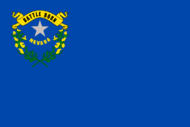
Nevada has a divided government. The Republican Party controls the office of governor, while the Democratic Party controls the offices of attorney general, secretary of state, and both chambers of the state legislature.
As of January 30, 2026, there are 23 Republican trifectas, 16 Democratic trifectas, and 11 divided governments where neither party holds trifecta control.
As of January 30, 2026, there are 24 Republican triplexes, 21 Democratic triplexes, and 5 divided governments where neither party holds triplex control.
A state government trifecta is a term to describe when one political party holds majorities in both chambers of the state legislature and the governor's office. A state government triplex is a term to describe when one political party holds the following three positions in a state's government: governor, attorney general, and secretary of state. To learn more about trifectas and triplexes, click here.
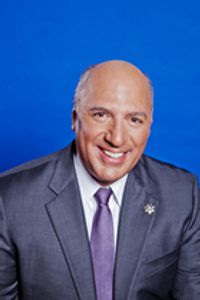
Current leadership of key offices


Historical party control
Nevada Party Control: 1992-2026
Five years of Democratic trifectas • Two years of Republican trifectas
Scroll left and right on the table below to view more years.
| Year | 92 | 93 | 94 | 95 | 96 | 97 | 98 | 99 | 00 | 01 | 02 | 03 | 04 | 05 | 06 | 07 | 08 | 09 | 10 | 11 | 12 | 13 | 14 | 15 | 16 | 17 | 18 | 19 | 20 | 21 | 22 | 23 | 24 | 25 | 26 |
|---|---|---|---|---|---|---|---|---|---|---|---|---|---|---|---|---|---|---|---|---|---|---|---|---|---|---|---|---|---|---|---|---|---|---|---|
| Governor | D | D | D | D | D | D | D | R | R | R | R | R | R | R | R | R | R | R | R | R | R | R | R | R | R | R | R | D | D | D | D | R | R | R | R |
| Senate | D | R | R | R | R | R | R | R | R | R | R | R | R | R | R | R | R | D | D | D | D | D | D | R | R | D | D | D | D | D | D | D | D | D | D |
| House | D | D | D | S | S | D | D | D | D | D | D | D | D | D | D | D | D | D | D | D | D | D | D | R | R | D | D | D | D | D | D | D | D | D | D |
Legislative party competitiveness score
Professors of Political Science Gerald Gamm and Thad Kousser, University of Rochester and University of California San Diego, respectively, claim that states with competitive party systems spend more on education, health, and transportation. They base this on a study of each state's party competitiveness from 1880 (or year of statehood) to 2010. They assigned each state legislature a competitiveness score, which "can range from 100% if the two parties are evenly matched to 0% if one party holds every seat in a legislature."[1]
The below chart shows the state's legislative party competitiveness score from 1880 to 1990. The chart offers a look into competitiveness prior to Ballotpedia's 1992 analysis.
See also
- Nevada
- Gubernatorial and legislative party control of state government
- Who runs the states
- Who runs the states, Nevada
Footnotes

 |
State of Nevada Carson City (capital) |
|---|---|
| Elections |
What's on my ballot? | Elections in 2026 | How to vote | How to run for office | Ballot measures |
| Government |
Who represents me? | U.S. President | U.S. Congress | Federal courts | State executives | State legislature | State and local courts | Counties | Cities | School districts | Public policy |
| ||||||||||||||||


