Gubernatorial elections, 2025: Difference between revisions
No edit summary |
|||
| (14 intermediate revisions by 3 users not shown) | |||
| Line 1: | Line 1: | ||
{{2025 elections dropdown}}{{SEPElectionOverviews|PastPage=Gubernatorial elections, 2024|PastYear=2024|next=y|NextPage=Gubernatorial elections, 2026|NextYear=2026}} | {{2025 elections dropdown}}{{SEPElectionOverviews|PastPage=Gubernatorial elections, 2024|PastYear=2024|next=y|NextPage=Gubernatorial elections, 2026|NextYear=2026}} | ||
<!--DELETE NOTE: For each state holding a gubernatorial election in 2025, link to the gubernatorial election overview. Make sure the page link appears as just the state. The list should be in | <!--DELETE NOTE: For each state holding a gubernatorial election in 2025, link to the gubernatorial election overview. Make sure the page link appears as just the state. The list should be in alphabetical order by state name. For example: --> | ||
{{BP-Youtube-Viewer | {{BP-Youtube-Viewer | ||
| ''On the Ballot'' takes an early look at 2025's gubernatorial elections. | | ''On the Ballot'' takes an early look at 2025's gubernatorial elections. | ||
|_t8euW4AtIw | |_t8euW4AtIw | ||
}} | }} | ||
{{#section:Election results, 2025: Governors|intro}} | |||
Eleven states held elections for governor in [[Gubernatorial elections, 2024|2024]]. Heading into the election, three states (Delaware, North Carolina, and Washington) had Democratic governors, while eight states (Indiana, New Hampshire, North Dakota, Missouri, Montana, Utah, Vermont, and West Virginia) had a Republican governor. No seats changed hands as a result of the 2024 elections. To read more about those elections, [[Gubernatorial elections, 2024|click here]]. | |||
Eleven states held elections for governor in [[Gubernatorial elections, 2024|2024]]. Heading into the election, three states (Delaware, North Carolina, and Washington) had Democratic governors, while eight states ( Indiana, New Hampshire, North Dakota, Missouri, Montana, Utah, Vermont, and West Virginia) had a Republican governor. No seats changed hands as a result of the 2024 elections. To read more about those elections, [[Gubernatorial elections, 2024|click here]]. | |||
<div class="mt-5 bp-intro-text"> | <div class="mt-5 bp-intro-text"> | ||
| Line 58: | Line 50: | ||
! Party | ! Party | ||
! bg="rep" align="right" | As of {{#time:F Y}} | ! bg="rep" align="right" | As of {{#time:F Y}} | ||
! align="right" | After the 2025 elections | ! bg="rep" align="right" | After the 2025 elections | ||
|- | |- | ||
|bg="dem"| Democratic|| | |bg="dem"| Democratic||23||''24'' | ||
|- | |- | ||
|bg="rep"| Republican|| | |bg="rep"| Republican||27||''26'' | ||
|- footer | |- footer | ||
| '''Total''' || bg="rep"| '''50'''||'''50'''</datatable> | | '''Total''' || bg="rep"| '''50'''||bg="rep"| '''50'''</datatable> | ||
<br><br> | <br><br> | ||
| Line 72: | Line 64: | ||
</script></html> | </script></html> | ||
Republicans led in governorships from 1994 until 2006, after which there were 28 Democratic governors to the Republicans' 22. Republicans regained their national majority in the 2010 midterm elections. Between 2010 and 2017, the number of Republican governors continued to increase, reaching a high point of 33 following [[West Virginia]] [[Governor of West Virginia|Gov.]] [[Jim Justice]]'s switch to the Republican Party in August 2017.<ref>Because Justice switched his registration more than halfway through the year, he was counted as a Democrat in 2017 for the purposes of the chart.</ref> From 2017 to 2019, Democrats won Republican-held governorships in [[Illinois gubernatorial election, 2018|Illinois]], [[Kansas gubernatorial election, 2018|Kansas]], [[Kentucky gubernatorial and lieutenant gubernatorial election, 2019|Kentucky]], [[Maine gubernatorial election, 2018|Maine]], [[Michigan gubernatorial election, 2018|Michigan]], [[Nevada gubernatorial election, 2018|Nevada]], [[New Jersey gubernatorial election, 2017|New Jersey]], [[New Mexico gubernatorial election, 2018|New Mexico]], and [[Wisconsin gubernatorial election, 2018|Wisconsin]]. Republicans, meanwhile, gained a governorship in [[Alaska gubernatorial election, 2018|Alaska]] previously held by independent [[Bill Walker (Alaska)|Bill Walker]]. | Republicans led in governorships from 1994 until 2006, after which there were 28 Democratic governors to the Republicans' 22. Republicans regained their national majority in the 2010 midterm elections. Between 2010 and 2017, the number of Republican governors continued to increase, reaching a high point of 33 following [[West Virginia]] [[Governor of West Virginia|Gov.]] [[Jim Justice]]'s switch to the Republican Party in August 2017.<ref>Because Justice switched his registration more than halfway through the year, he was counted as a Democrat in 2017 for the purposes of the chart.</ref> From 2017 to 2019, Democrats won Republican-held governorships in [[Illinois gubernatorial election, 2018|Illinois]], [[Kansas gubernatorial election, 2018|Kansas]], [[Kentucky gubernatorial and lieutenant gubernatorial election, 2019|Kentucky]], [[Maine gubernatorial election, 2018|Maine]], [[Michigan gubernatorial election, 2018|Michigan]], [[Nevada gubernatorial election, 2018|Nevada]], [[New Jersey gubernatorial election, 2017|New Jersey]], [[New Mexico gubernatorial election, 2018|New Mexico]], and [[Wisconsin gubernatorial election, 2018|Wisconsin]]. Republicans, meanwhile, gained a governorship in [[Alaska gubernatorial election, 2018|Alaska]] previously held by independent [[Bill Walker (Alaska)|Bill Walker]]. No governorships changed party hands in 2024. Democrats gained one governorship in [[Virginia gubernatorial election, 2025|Virginia]] in 2025. | ||
==Election results== | |||
{| class="marqueetable" cellpadding="6px" border="0" style="border:1px solid #424949; border-radius:5px; text-align=center;" | |||
! colspan="8" align="center" style="background-color: #424949; color: white;" | Gubernatorial elections, 2025 | |||
|- | |||
! style="background-color:#C8CCD0; border-radius:0px;" rowspan="1" | State | |||
! style="background-color:#C8CCD0; border-radius:0px;" rowspan="1" | Incumbent | |||
! style="background-color:#C8CCD0; border-radius:0px;" rowspan="1" | Incumbent running? | |||
! style="background-color:#C8CCD0; border-radius:0px;" rowspan="1" | Election winner | |||
! style="background-color:#C8CCD0; border-radius:0px;" rowspan="1" | Last time office changed parties | |||
! style="background-color:#C8CCD0; border-radius:0px;" rowspan="1" | 2025 election result | |||
! style="background-color:#C8CCD0; border-radius:0px;" rowspan="1" | 2021 gubernatorial result | |||
! style="background-color:#C8CCD0; border-radius:0px;" rowspan="1" | 2024 presidential result | |||
|- | |||
| [[New Jersey gubernatorial and lieutenant gubernatorial election, 2025|New Jersey]] || {{bluedot}} [[Phil Murphy]] || No || {{bluedot}} [[Mikie Sherrill]] || 2017 || style="background: #44c; color: white" align="center"| '''D+13.2''' || style="background: #44c; color: white" align="center"| '''D+3.2''' ||style="background: #44c; color: white" align="center"|'''D+5.9''' | |||
|- | |||
| [[Virginia gubernatorial election, 2025|Virginia]] || {{reddot}} [[Glenn Youngkin]] || No || {{bluedot}} [[Abigail Spanberger]] || 2021 || style="background: #44c; color: white" align="center"| '''D+13.5''' || style="background: #c44; color: white" align="center"| '''R+2''' ||style="background: #44c; color: white" align="center"|'''D+5.7''' | |||
|- | |||
|} | |||
{{Template:BPtabbed | |||
|tabs-id=Election results analysis | |||
|count=3 | |||
|tab-1-label=Election results map | |||
|tab-panel-1-content= | |||
<html><iframe title="Gubernatorial election results, 2025" aria-label="Choropleth map" id="datawrapper-chart-35azZ" src="https://datawrapper.dwcdn.net/35azZ/3/" scrolling="no" frameborder="0" style="width: 0; min-width: 100% !important; border: none;" height="517" data-external="1"></iframe><script type="text/javascript">window.addEventListener("message",function(a){if(void 0!==a.data["datawrapper-height"]){var e=document.querySelectorAll("iframe");for(var t in a.data["datawrapper-height"])for(var r,i=0;r=e[i];i++)if(r.contentWindow===a.source){var d=a.data["datawrapper-height"][t]+"px";r.style.height=d}}});</script></html> | |||
|tab-2-label=Offices that changed party hands | |||
|tab-panel-2-content= | |||
<html><iframe title="Gubernatorial offices that changed party hands, 2025" aria-label="Table" id="datawrapper-chart-K25UN" src="https://datawrapper.dwcdn.net/K25UN/1/" scrolling="no" frameborder="0" style="width: 0; min-width: 100% !important; border: none;" height="168" data-external="1"></iframe><script type="text/javascript">window.addEventListener("message",function(a){if(void 0!==a.data["datawrapper-height"]){var e=document.querySelectorAll("iframe");for(var t in a.data["datawrapper-height"])for(var r,i=0;r=e[i];i++)if(r.contentWindow===a.source){var d=a.data["datawrapper-height"][t]+"px";r.style.height=d}}});</script></html> | |||
|tab-3-label=Incumbents defeated | |||
|tab-panel-3-content= | |||
No incumbents were defeated in the 2025 gubernatorial elections. [[Phil Murphy]] (D-NJ) and [[Glenn Youngkin]] (R-Va.) were both term-limited and could not run for re-election. | |||
}} | |||
==On the ballot== | ==On the ballot== | ||
| Line 125: | Line 154: | ||
|tab-1-label=Incumbents not seeking re-election | |tab-1-label=Incumbents not seeking re-election | ||
|tab-panel-1-content= | |tab-panel-1-content= | ||
Incumbent governors [[Glenn Youngkin]] (R- | Incumbent governors [[Glenn Youngkin]] (R-Va.) and [[Phil Murphy]] (D-N.J.) {{Greener|start=11/4/2025 11:00pm EST|before=are term-limited and can|after=were term-limited and could}} not seek re-election. | ||
As of 2025, governors of Virginia | As of 2025, governors of Virginia {{Greener|start=11/4/2025 11:00pm EST|before=may not run|after=could not run}} for consecutive terms, although they {{Greener|start=11/4/2025 11:00pm EST|before=may|after=could}} run for another term after spending a term out of office. Governors of New Jersey {{Greener|start=11/4/2025 11:00pm EST|before=are|after=were}} limited to two four-year terms, and {{Greener|start=11/4/2025 11:00pm EST|before=may|after=could}} run again after a four-year break. | ||
|tab-2-label=Competitiveness | |tab-2-label=Competitiveness | ||
| Line 134: | Line 163: | ||
*'''18''' candidates, including '''seven''' Democrats, '''six''' Republicans, and '''five''' minor-party or independent candidates, filed to run. | *'''18''' candidates, including '''seven''' Democrats, '''six''' Republicans, and '''five''' minor-party or independent candidates, filed to run. | ||
*'''No''' incumbents filed for re-election | *'''No''' incumbents filed for re-election | ||
*'''Both''' races featured at least one Democrat and one Republican in the general. New Jersey also had two contested primaries, one for each party. Virginia's primaries were cancelled after only two | *'''Both''' races featured at least one Democrat and one Republican in the general. New Jersey also had two contested primaries, one for each party. Virginia's primaries were cancelled after only two candidates — one Democrat and one Republican — filed to run. | ||
|tab-3-label=Battlegrounds | |tab-3-label=Battlegrounds | ||
|tab-panel-3-content= | |tab-panel-3-content= | ||
Ballotpedia | Ballotpedia identified both gubernatorial elections in 2025 as [[Ballotpedia:Battlegrounds|battlegrounds]]. As both incumbent Governors [[Phil Murphy]] (D-N.J.) and [[Glenn Youngkin]] (R-Va.) {{Greener|start=11/4/2025 11:00pm EST|before=are|after=were}} term-limited, the seats {{Greener|start=11/4/2025 11:00pm EST|before=are|after=were}} open. | ||
One | One governor's office changed party control in 2021. In [[Virginia gubernatorial election, 2021|Virginia]], [[Glenn Youngkin]] (R) defeated [[Terry McAuliffe]] (D), changing partisan control of the state's governorship. Youngkin {{Greener|start=11/4/2025 11:00pm EST|before=is|after=was}} the first Republican to win election as governor of Virginia since [[Bob McDonnell]] (R) in 2009. | ||
|tab-4-label=Polls | |tab-4-label=Polls | ||
| Line 159: | Line 188: | ||
::''See also: [[Election results, 2021: Partisan balance of governors]]'' | ::''See also: [[Election results, 2021: Partisan balance of governors]]'' | ||
One | One governor's office changed party control in 2021. In [[Virginia gubernatorial election, 2021|Virginia]], [[Glenn Youngkin]] (R) defeated [[Terry McAuliffe]] (D), changing partisan control of the state's governorship. Youngkin {{Greener|start=11/4/2025 11:00pm EST|before=is|after=was}} the first Republican to win election as governor of Virginia since [[Bob McDonnell]] (R) in 2009. | ||
}} | }} | ||
| Line 173: | Line 199: | ||
|tab-panel-1-content= | |tab-panel-1-content= | ||
:''See also: [[State government trifectas]]'' | :''See also: [[State government trifectas]]'' | ||
A '''state government trifecta''' is a term used to describe when a single-party government in which one political party holds the governorship and majorities in both chambers of the state legislature. | |||
<APIWidget template="TrifectaTriplexSentence" where="'a' = 'a' " extra_params='{"scope":"nation", "type":"trifecta"}' /> | <APIWidget template="TrifectaTriplexSentence" where="'a' = 'a' " extra_params='{"scope":"nation", "type":"trifecta"}' /> | ||
| Line 188: | Line 214: | ||
==Presidential data== | ==Presidential data== | ||
::''See also: [[Presidential election, 2024]]'' | ::''See also: [[Presidential election, 2024]]'' | ||
[[Kamala Harris]] (D) carried both states {{Greener|start=11/4/2025|before=holding|after=that held}} | [[Kamala Harris]] (D) carried both states {{Greener|start=11/4/2025|before=holding|after=that held}} gubernatorial elections in 2025 in the 2024 presidential election. Harris carried [[Presidential election in New Jersey, 2024|New Jersey]] by a margin of 5.9 percentage points and [[Presidential election in Virginia, 2024|Virginia]] by a margin of 5.7 percentage points. | ||
{{Template:BPtabbed | {{Template:BPtabbed | ||
| Line 207: | Line 233: | ||
The table below lists important dates throughout the 2025 election cycle, including filing deadlines and primary dates. | The table below lists important dates throughout the 2025 election cycle, including filing deadlines and primary dates. | ||
{{Statewide filing and primary dates, 2025}} | {{Statewide filing and primary dates, 2025}} | ||
==2021 gubernatorial elections== | |||
::''See also: [[Gubernatorial elections, 2021]]'' | |||
'''Two''' states—New Jersey and Virginia—held elections for governor in 2021. [[Gavin Newsom recall, Governor of California (2019-2021)|California]] also held a [[Recall (political)|recall]] election for Gov. [[Gavin Newsom]] (D) on September 14, 2021. | |||
Incumbent [[Phil Murphy]] (D) was re-elected in [[New Jersey gubernatorial and lieutenant gubernatorial election, 2021|New Jersey]]. [[Glenn Youngkin]] (R) was elected to succeed term-limited [[Ralph Northam]] (D) in [[Virginia gubernatorial election, 2021|Virginia]]. California Gov. [[Gavin Newsom]] (D) was retained in the recall election. | |||
The following table details the margin of victory for winning candidates in states that held gubernatorial elections in 2005, 2009, 20132, 2017, and 2021. | |||
{| class="marqueetable" cellpadding="6px" border="0" style="border:1px solid #424949; border-radius:5px; text-align=center;" | |||
! colspan="10" align="center" style="background-color: #424949; color: white;" | Margin of victory analysis, 2005-2021 | |||
|- | |||
! style="background-color:#C8CCD0; border-radius:0px;" rowspan="1" | State | |||
! style="background-color:#C8CCD0; border-radius:0px;" rowspan="1" | 2021 margin of victory (%) | |||
! style="background-color:#C8CCD0; border-radius:0px;" rowspan="1" | 2017 margin of victory (%) | |||
! style="background-color:#C8CCD0; border-radius:0px;" rowspan="1" | 2013 margin of victory (%) | |||
! style="background-color:#C8CCD0; border-radius:0px;" rowspan="1" | 2009 margin of victory (%) | |||
! style="background-color:#C8CCD0; border-radius:0px;" rowspan="1" | 2005 margin of victory (%) | |||
|- | |||
| [[Governor of New Jersey|New Jersey]] || style="background: #44c; color: white" align="center"| D+3.2 || style="background: #44c; color: white" align="center"| D+14.1 || style="background: #c44; color: white" align="center"| R+22.1 || style="background: #c44; color: white" align="center"| R+3.6 || style="background: #44c; color: white" align="center"| D+10.5 | |||
|- | |||
| [[Governor of Virginia|Virginia]] || style="background: #c44; color: white" align="center"| R+2 || style="background: #44c; color: white" align="center"| D+8.9 || style="background: #44c; color: white" align="center"| D+2.6 || style="background: #c44; color: white" align="center"| R+17.3 || style="background: #44c; color: white" align="center"| R+5.7 | |||
|- | |||
|} | |||
===Gubernatorial offices that changed party control in 2021=== | |||
One gubernatorial office changed party control in 2021. In [[Virginia gubernatorial election, 2021|Virginia]], [[Glenn Youngkin]] (R) was elected to succeed term-limited Gov. [[Ralph Northam]] (D). | |||
==About the office== | ==About the office== | ||
| Line 223: | Line 282: | ||
</script></center></html> | </script></center></html> | ||
<br> | <br> | ||
According to compensation figures for 2023 compiled by the Council of State Governments in the ''Book of the States'', the highest salary for a governor was $250,000 in [[Governor of New York|New York]] while the lowest was $70,000 in [[Governor of Maine|Maine]]. To view the compensation of a particular governor, hover your mouse over the state.<ref name=2023salary>[https://bookofthestates.org/ ''Book of the States'', "2023 edition: Chapter 4 - Selected State Administrative Officials: Annual Salaries," accessed December 18, 2024]</ref> | According to compensation figures for 2023 compiled by the Council of State Governments in the ''Book of the States'', the highest salary for a governor was $250,000 in [[Governor of New York|New York]], while the lowest was $70,000 in [[Governor of Maine|Maine]]. To view the compensation of a particular governor, hover your mouse over the state.<ref name=2023salary>[https://bookofthestates.org/ ''Book of the States'', "2023 edition: Chapter 4 - Selected State Administrative Officials: Annual Salaries," accessed December 18, 2024]</ref> | ||
|tab-2-label=Vacancy fill offices | |tab-2-label=Vacancy fill offices | ||
| Line 240: | Line 299: | ||
</script></center></html> | </script></center></html> | ||
<br> | <br> | ||
Although all governors have some involvement in the process of developing a state budget, the specific level of involvement differs from state to state. According to information published in the 2022 ''Book of the States'', 24 governors share responsibility for developing a budget proposal, while 11 governors have full responsibility for developing an initial budget proposal and the remaining 15 have full responsibility for developing a budget.<ref name=BotS2022B>Council of State Governments' ''Book of the States 2022 Table 4.4: The Governors: Powers'' provided to Ballotpedia by CSG personnel</ref><!--<ref>[http://knowledgecenter.csg.org/kc/system/files/4.4.2017.pdf ''Council of State Governments'', "Book of the States 2017 - The Governors: Powers," accessed December 3, 2017]</ref>--> | Although all governors have some involvement in the process of developing a state budget, the specific level of involvement differs from state to state. According to information published in the 2022 ''Book of the States'', 24 governors share responsibility for developing a budget proposal, while 11 governors have full responsibility for developing an initial budget proposal, and the remaining 15 have full responsibility for developing a budget.<ref name=BotS2022B>Council of State Governments' ''Book of the States 2022 Table 4.4: The Governors: Powers'' provided to Ballotpedia by CSG personnel</ref><!--<ref>[http://knowledgecenter.csg.org/kc/system/files/4.4.2017.pdf ''Council of State Governments'', "Book of the States 2017 - The Governors: Powers," accessed December 3, 2017]</ref>--> | ||
|tab-5-label=Term limits | |tab-5-label=Term limits | ||
Latest revision as of 14:45, 20 November 2025
2026 »
« 2024
|
 |
There were two gubernatorial offices on the ballot in 2025. These elections were in New Jersey and Virginia.
Heading into the 2025 elections, 27 governors were Republicans and 23 were Democrats. The 2025 elections resulted in 26 governors being Republicans and 24 being Democrats.
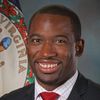
Abigail Spanberger (D) won election as governor of Virginia on Nov. 4, 2025. Incumbent Gov. Glenn Youngkin (R) was term-limited and unable to run for re-election. Spanberger's win meant Virginia would change from a divided government to a Democratic trifecta.
Mikie Sherrill (D) won election as governor of New Jersey on Nov. 4, 2025. Incumbent Gov. Phil Murphy (D) was term-limited and unable to run for re-election. Sherrill's win meant New Jersey would remain a Democratic trifecta as Democrats maintained partisan control of both legislative chambers.
In the 2025 elections, Democrats gained a trifecta. As a result, there were 23 Republican trifectas, 16 Democratic trifectas, and 11 divided governments.
In the 2025 elections, Democrats gained a triplex. As a result, there were 25 Republican triplexes, 20 Democratic triplexes, and 5 divided governments where neither party held triplex control.
Eleven states held elections for governor in 2024. Heading into the election, three states (Delaware, North Carolina, and Washington) had Democratic governors, while eight states (Indiana, New Hampshire, North Dakota, Missouri, Montana, Utah, Vermont, and West Virginia) had a Republican governor. No seats changed hands as a result of the 2024 elections. To read more about those elections, click here.
- Partisan balanceThe partisan balance of U.S. governors
- On the ballotA list of elections and candidates on the ballot
- Pre-election analysisAnalysis leading up to the 2025 gubernatorial elections
- Trifectas and triplexesInformation on trifectas and triplexes
- Important dates and deadlinesA list of important dates and deadlines for the 2025 election cycle
- About the officeInformation about governors across all 50 states
Partisan balance
The following chart displays the number of governors' offices held by each party before and after the 2025 elections.
| Party | As of February 2026 | After the 2025 elections |
|---|---|---|
| Democratic | 23 | 24 |
| Republican | 27 | 26 |
| Total | 50 | 50 |
The chart below shows historical partisan breakdown information for governors.
Republicans led in governorships from 1994 until 2006, after which there were 28 Democratic governors to the Republicans' 22. Republicans regained their national majority in the 2010 midterm elections. Between 2010 and 2017, the number of Republican governors continued to increase, reaching a high point of 33 following West Virginia Gov. Jim Justice's switch to the Republican Party in August 2017.[1] From 2017 to 2019, Democrats won Republican-held governorships in Illinois, Kansas, Kentucky, Maine, Michigan, Nevada, New Jersey, New Mexico, and Wisconsin. Republicans, meanwhile, gained a governorship in Alaska previously held by independent Bill Walker. No governorships changed party hands in 2024. Democrats gained one governorship in Virginia in 2025.
Election results
| Gubernatorial elections, 2025 | |||||||
|---|---|---|---|---|---|---|---|
| State | Incumbent | Incumbent running? | Election winner | Last time office changed parties | 2025 election result | 2021 gubernatorial result | 2024 presidential result |
| New Jersey |  Phil Murphy Phil Murphy |
No | Mikie Sherrill |
2017 | D+13.2 | D+3.2 | D+5.9 |
| Virginia |  Glenn Youngkin Glenn Youngkin |
No | Abigail Spanberger |
2021 | D+13.5 | R+2 | D+5.7 |
On the ballot
Click the tabs below to view information about the elections this year. In this section, you will find:
- A list of seats up for election
- A list of candidates running
- Ballotpedia's Sample Ballot Lookup Tool
There was one Democratic and one Republican seat up for election in 2025. These statistics do not include elections in the U.S. territories. The table and map below shows which states held gubernatorial elections in 2025.
| 2025 Gubernatorial races | ||||
|---|---|---|---|---|
| State | Current Incumbent | Term-limited (Y/N) | ||
| New Jersey | Phil Murphy | Yes | ||
| Virginia | Glenn Youngkin | Yes | ||

























Pre-election analysis
Incumbent governors Glenn Youngkin (R-Va.) and Phil Murphy (D-N.J.) were term-limited and could not seek re-election.
As of 2025, governors of Virginia could not run for consecutive terms, although they could run for another term after spending a term out of office. Governors of New Jersey were limited to two four-year terms, and could run again after a four-year break.Trifectas and triplexes
The office of governor is a component of both trifectas and triplexes. Click the tabs below to view the current status of trifectas and triplexes across the country.
- See also: State government trifectas
A state government trifecta is a term used to describe when a single-party government in which one political party holds the governorship and majorities in both chambers of the state legislature.
As of February 22, 2026, there are 23 Republican trifectas, 16 Democratic trifectas, and 11 divided governments where neither party holds trifecta control.
Presidential data
- See also: Presidential election, 2024
Kamala Harris (D) carried both states that held gubernatorial elections in 2025 in the 2024 presidential election. Harris carried New Jersey by a margin of 5.9 percentage points and Virginia by a margin of 5.7 percentage points.
Presidential election in New Jersey, 2024
Candidate/Running mate |
% |
Popular votes |
Electoral votes |
||
| ✔ |
 
| Kamala D. Harris/Tim Walz (D) |
52.0
|
2,220,713 | 14 |
 
| Donald Trump/J.D. Vance (R) |
46.1
|
1,968,215 | 0 | |
 
| Jill Stein/Samson LeBeau Kpadenou (G) |
0.9
|
39,041 | 0 | |
 
| Robert F. Kennedy Jr./Nicole Shanahan (Independent) |
0.5
|
23,479 | 0 | |
 
| Chase Oliver/Mike ter Maat (L) |
0.2
|
10,500 | 0 | |
 
| Claudia De La Cruz/Karina Garcia (Party for Socialism and Liberation) |
0.1
|
5,105 | 0 | |
 
| Randall Terry/Stephen E. Broden (Constitution Party) |
0.1
|
3,024 | 0 | |
 
| Joseph Kishore/Jerry White (Socialist Equality Party) |
0.0
|
1,371 | 0 | |

| Rachele Fruit/Margaret Trowe (Socialist Workers Party) |
0.0
|
1,277 | 0 | |
 |
Total votes: 4,272,725 |



Important dates and deadlines
The table below lists important dates throughout the 2025 election cycle, including filing deadlines and primary dates.
| State | Election date | Filing deadline | Source |
|---|---|---|---|
| New Jersey | June 10, 2025 | March 24, 2025 - New Jersey statewide primary candidate filing deadline | Source |
| Pennsylvania | May 20, 2025 | March 11, 2025 - Pennsylvania statewide primary candidate filing deadline | Source |
| Virginia | June 17, 2025 | April 3, 2025 - Virginia statewide primary candidate filing deadline | Source |
| Wisconsin | Feb. 18, 2025 | Jan. 7, 2025 - Wisconsin statewide spring primary candidate filing deadline | Source |
2021 gubernatorial elections
- See also: Gubernatorial elections, 2021
Two states—New Jersey and Virginia—held elections for governor in 2021. California also held a recall election for Gov. Gavin Newsom (D) on September 14, 2021.
Incumbent Phil Murphy (D) was re-elected in New Jersey. Glenn Youngkin (R) was elected to succeed term-limited Ralph Northam (D) in Virginia. California Gov. Gavin Newsom (D) was retained in the recall election.
The following table details the margin of victory for winning candidates in states that held gubernatorial elections in 2005, 2009, 20132, 2017, and 2021.
| Margin of victory analysis, 2005-2021 | |||||||||
|---|---|---|---|---|---|---|---|---|---|
| State | 2021 margin of victory (%) | 2017 margin of victory (%) | 2013 margin of victory (%) | 2009 margin of victory (%) | 2005 margin of victory (%) | ||||
| New Jersey | D+3.2 | D+14.1 | R+22.1 | R+3.6 | D+10.5 | ||||
| Virginia | R+2 | D+8.9 | D+2.6 | R+17.3 | R+5.7 | ||||
Gubernatorial offices that changed party control in 2021
One gubernatorial office changed party control in 2021. In Virginia, Glenn Youngkin (R) was elected to succeed term-limited Gov. Ralph Northam (D).
About the office
- See also: Governor (state executive office)
In the United States, the title governor refers to the chief executive of each state. The governor is not directly subordinate to the federal authorities but is the political and ceremonial head of the state. The governor may also assume additional roles, such as the commander-in-chief of the National Guard when the role is not federalized. The governor may also have the ability to commute or pardon a criminal sentence.
In all states, the governor is directly elected and, in most cases, has considerable practical powers. Notable exceptions with weak governorships include the office of the governor in Texas, though this may be moderated by the state legislature and, in some cases, by other elected executive officials. Governors can veto state bills. The specific duties and powers vary widely between states.
According to compensation figures for 2023 compiled by the Council of State Governments in the Book of the States, the highest salary for a governor was $250,000 in New York, while the lowest was $70,000 in Maine. To view the compensation of a particular governor, hover your mouse over the state.[60]
Analysis of state elections
State legislative elections

- See also: State legislative elections, 2025
As of February 22nd, 2026, Republicans controlled 55.1% of all state legislative seats nationally, while Democrats held 43.88%. Republicans held a majority in 57 chambers, and Democrats held the majority in 39 chambers. Two chambers (Alaska House and Alaska Senate) were organized under multipartisan, power-sharing coalitions. One chamber (Minnesota House of Representatives) was split evenly between both parties.
| Partisan balance of all 7,386 state legislative seats | ||||||||
|---|---|---|---|---|---|---|---|---|
| Legislative chamber |
|
|
 Other Other
|
Vacant | ||||
| State senates | 837 | 1,120 | 6 | 10 | ||||
| State houses | 2,404 | 2,950 | 20 | 39 | ||||
| Total: | 3,241
|
4,070
|
26
|
49 | ||||
Tap the box below to show more analysis articles related to the 2025 state legislative elections.
- Ballotpedia's Top 10 Elections to Watch, 2025
- Annual Competitiveness Report
- State legislative special elections
- Primary election competitiveness in state government, 2025
- Impact of term limits
- Trifecta vulnerability in the 2025 elections
- Data on incumbents defeated in 2025
- Characteristics of incumbents defeated in 2025
- Veto-proof state legislatures and opposing party governors in the 2025 elections
- Contested primaries
- Open seats
- Incumbents in contested primaries
- Major party competition
- Unconstested incumbents
- Election results, 2025: State legislative seats that changed party control
- Election results, 2025: State legislative veto-proof majorities
- Election results, 2025: Incumbent win rates by state
- Election results, 2025: Uncontested races by state
- Election results, 2025: Results of elected officials seeking other offices
- Margins of victory
State executive elections

- See also: State executive official elections, 2025
Tap the box below to show more analysis articles related to the 2025 state executive elections.
- Ballotpedia's Top 10 Elections to Watch, 2025
- Annual Competitiveness Report
- State executive official elections overview
- Primary election competitiveness in state government, 2025
- Gubernatorial elections
- Secretary of State elections
- Attorney General elections
- Historical and potential changes in trifectas
- State government trifectas
- Endorsements of school board members by state executive officeholders and candidates, 2025
- Impact of term limits on state executive elections
- Veto-proof state legislatures and opposing party governors
State judicial elections

- See also: State judicial elections, 2025
Tap the box below to show more analysis articles related to the 2025 state judicial elections.
Election coverage by office
 Congressional special elections
 Governors
 Attorney general
 Other state executives
 State legislatures
 State ballot measures
 Local ballot measures
 State judges
 Local judges
 Municipal government
 School boards
 Recalls
See also
- Past gubernatorial elections: 2024 • 2023 • 2022 • 2021 • 2020 • 2019 • 2018 • 2017 • 2016
- Past state executive elections: 2024 • 2023 • 2022 • 2021 • 2020 • 2019 • 2018 • 2017 • 2016
- Past election analysis: 2024 • 2023 • 2022 • 2021 • 2020 • 2019 • 2018
Footnotes
- ↑ Because Justice switched his registration more than halfway through the year, he was counted as a Democrat in 2017 for the purposes of the chart.
- ↑ For more information on the difference between margins of error and credibility intervals, see explanations from the American Association for Public Opinion Research and Ipsos.
- ↑ Pew Research Center, "5 key things to know about the margin of error in election polls," September 8, 2016
- ↑ RV=Registered Voters
LV=Likely Voters - ↑ The sponsor is the person or group that funded all or part of the poll.
- ↑ Undecided: 1%
- ↑ Other: 2%; Undecided: 7%
- ↑ Other: 1%; Undecided: 1%
- ↑ Other: 1%; Undecided: 2%
- ↑ Undecided: 3%
- ↑ Undecided: 5%
- ↑ Other: 2%; Undecided: 4%
- ↑ Undecided: 4%
- ↑ Other: 2%
- ↑ Other: 1%; Undecided: 6%
- ↑ Undecided: 5%
- ↑ Other: 1%; Undecided: 5%
- ↑ Undecided: 8%
- ↑ Undecided: 11%
- ↑ Undecided: 5%
- ↑ Undecided: 9%
- ↑ Other: 4%; Undecided: 7%
- ↑ Undecided: 3%
- ↑ Undecided: 8%
- ↑ Undecided: 8%
- ↑ Other: 2%; Undecided: 4%
- ↑ Undecided: 4%
- ↑ Other: 4%; Undecided: 9%
- ↑ Undecided: 12%
- ↑ Undecided: 8%
- ↑ Undecided: 8%
- ↑ Undecided: 6%
- ↑ Undecided: 8%
- ↑ Undecided: 11%
- ↑ Undecided: 7%
- ↑ Undecided: 7%
- ↑ Other: 3%; Undecided: 11%
- ↑ Undecided: 10%
- ↑ Undecided: 9%
- ↑ Other: 2%; Undecided: 6%
- ↑ Undecided: 7%
- ↑ Undecided: 8%
- ↑ Undecided: 12%
- ↑ Undecided: 12%
- ↑ Undecided: 27%
- ↑ Other: 2%; Undecided: 12%
- ↑ Other: 2%; Undecided: 8%
- ↑ Other: 3%; Undecided: 17%
- ↑ Other: 3%; Undecided: 12%
- ↑ Other: 1%; Undecided: 9%
- ↑ Other: 3%; Undecided: 15%
- ↑ Undecided: 11%
- ↑ Undecided: 7%
- ↑ Undecided: 18%
- ↑ Undecided: 9%
- ↑ Undecided: 12%
- ↑ Undecided: 12%
- ↑ For more information on the difference between margins of error and credibility intervals, see explanations from the American Association for Public Opinion Research and Ipsos.
- ↑ Pew Research Center, "5 key things to know about the margin of error in election polls," September 8, 2016
- ↑ Book of the States, "2023 edition: Chapter 4 - Selected State Administrative Officials: Annual Salaries," accessed December 18, 2024
- ↑ Council of State Governments' Book of the States 2022 Table 4.3: The Governors: Compensation, Staff, Travel and Residence provided to Ballotpedia by CSG personnel
- ↑ 62.0 62.1 Council of State Governments' Book of the States 2022 Table 4.4: The Governors: Powers provided to Ballotpedia by CSG personnel