North Carolina gubernatorial election, 2024


|
← 2020
|
| Governor of North Carolina |
|---|
 |
| Democratic primary Republican primary Libertarian primary General election |
| Election details |
| Filing deadline: December 15, 2023 |
| Primary: March 5, 2024 Primary runoff: May 14, 2024 General: November 5, 2024 Pre-election incumbent(s): Roy Cooper (D) |
| How to vote |
| Poll times: 6:30 a.m. to 7:30 p.m. Voting in North Carolina |
| Race ratings |
Sabato's Crystal Ball: Likely Democratic Inside Elections: Likely Democratic |
| Ballotpedia analysis |
| Federal and state primary competitiveness State executive elections in 2024 Impact of term limits in 2024 State government trifectas State government triplexes Ballotpedia's Election Analysis Hub, 2024 |
| North Carolina executive elections |
| Governor Lieutenant Governor |
Josh Stein (D) defeated Mark K. Robinson (R), Wayne Turner (G), and Mike Ross (L) in the general election for governor of North Carolina on November 5, 2024. Click here for detailed results.
Incumbent Governor Roy Cooper (D) was term-limited.
In March 2024, Politico called the race the most important and likely the most expensive governor's race of 2024.[1] North Carolina's trifecta status was at stake. Heading into the 2024 election, Republicans had majorities in both chambers of the North Carolina General Assembly. Republicans were looking to win a trifecta while Democrats were looking to preserve the state's divided government.
Stein was elected as the state's attorney general in 2016 and was a former state senator. Before holding public office, he was a lawyer.
Stein campaigned on public education, his plans for economic development, and his record as attorney general. His campaign website said, "As Attorney General, I have fought for the people of North Carolina for safer communities, stronger schools, healthier families, and personal freedom. And that’s what I’ll do as Governor." On his campaign website, Stein said he secured more than $50 billion nationally to bring opioid addiction treatment and recovery services to North Carolina and eliminated the state's rape kit backlog.[2]
Stein said, "Robinson wants to tell you who you can marry, when you'll be pregnant, and who you should hate. I'm running for Governor because I believe in a very different North Carolina. One rooted in our shared values of freedom, justice, and opportunity for everyone."
Robinson was elected as lieutenant governor in 2020. Before holding public office, he served in the U.S. Army Reserve and was a factory worker.
Robinson highlighted his personal experience growing up poor and positioned himself as different from the typical politician. He said, "North Carolina doesn't need more slick politicians who use work boots and Carhartt jackets as props in TV ads. They're just pretending to be one of us. You see, it doesn't take an Ivy League education to understand the problems we're facing. What it takes is somebody with a backbone and a vision who cares about serving instead of climbing the political ladder, I'm running for Governor because we deserve to be represented by someone who's actually lived like us."
Robinson said he "championed more transparency for parents in their children’s education, education options, and ensuring schools are safe" and was "an outspoken supporter of law enforcement, cutting taxes for all hardworking North Carolinians, and making NC the gold standard for veterans’ care."[3] As lieutenant governor, Robinson also said he secured more than $11 million dollars in the state budget for apprentice programs and partnered with parents, students, and teachers to find more than 500 examples what he said were inappropriate materials in classrooms.[3]
In 2020, former President Donald Trump (R) carried North Carolina, defeating President Joe Biden (D) 49.9% to 48.6%. That same year Cooper was re-elected governor, defeating Dan Forest (R) 51.5% to 47.0%. At the time of the election, candidates from opposing parties had won in North Carolina's presidential and gubernatorial elections in six of the last eight election years. Democrats won seven gubernatorial elections and Republicans won seven presidential elections in North Carolina between 1992 and the election.
North Carolina was one of two battleground states the Democratic Governors Association targeted in 2024 with its Power to Appoint Fund, the other being New Hampshire. The fund focused on electing Democratic governors in battleground states because of their roles in appointing justices to the states' supreme courts. Though voters in North Carolina elect state supreme court justices, the next governor was scheduled to appoint at least one justice because of the state's age limit rules.[4]
Before the election, three national election forecasters each rated the general election Likely Democratic.
This was one of 11 gubernatorial elections that took place in 2024. The governor serves as a state's top executive official and is the only executive office elected in all 50 states. At the time of the 2024 elections, there were 27 Republican governors and 23 Democratic governors. Click here for an overview of all 11 gubernatorial elections that took place in 2024.
Heading into the 2024 elections, there were 23 Republican trifectas, 17 Democratic trifectas, and 10 divided governments where neither party held trifecta control. There were 25 Republican triplexes, 20 Democratic triplexes, and five divided governments where neither party held triplex control.
A state government trifecta refers to a situation where one party controls a state's governorship and majorities in both chambers of the state legislature. A state government triplex refers to a situation where the governor, attorney general, and secretary of state are all members of the same political party.
For more information about the primaries in this election, click on the links below:
- North Carolina gubernatorial election, 2024 (March 5 Democratic primary)
- North Carolina gubernatorial election, 2024 (March 5 Libertarian primary)
- North Carolina gubernatorial election, 2024 (March 5 Republican primary)
Election news
This section includes a timeline of events leading up to the election.
- September 26, 2024: Inside Elections with Nathan L. Gonzales changed their race rating from Tilt Democratic to Likely Democratic.[5]
- September 23, 2024: Tennessee Gov. Bill Lee (R) and Georgia Gov. Brian Kemp (R) withdrew their endorsements from Robinson.[6]
- September 20, 2024: The Cook Political Report with Amy Walter changed their race rating from Lean Democratic to Likely Democratic.[7]
- September 19, 2024: Larry J. Sabato's Crystal Ball changed their race rating from Lean Democratic to Likely Democratic.[8]
Candidates and election results
General election
General election for Governor of North Carolina
Josh Stein defeated Mark K. Robinson, Mike Ross, Vinny Smith, and Wayne Turner in the general election for Governor of North Carolina on November 5, 2024.
Candidate | % | Votes | ||
| ✔ |  | Josh Stein (D)  | 54.9 | 3,069,496 |
 | Mark K. Robinson (R) | 40.1 | 2,241,309 | |
 | Mike Ross (L) | 3.2 | 176,392 | |
 | Vinny Smith (Constitution Party) | 1.0 | 54,738 | |
 | Wayne Turner (G) | 0.9 | 49,612 | |
| Total votes: 5,591,547 | |||
| = candidate completed the Ballotpedia Candidate Connection survey. | ||||
| If you are a candidate and would like to tell readers and voters more about why they should vote for you, complete the Ballotpedia Candidate Connection Survey. | ||||
Do you want a spreadsheet of this type of data? Contact our sales team. | ||||
Withdrawn or disqualified candidates
- Gordon Ward (Independent)
- Donte McCorey Sr. (Independent)
Democratic primary election
Democratic primary for Governor of North Carolina
Josh Stein defeated Michael R. Morgan, Chrelle Booker, Marcus Williams, and Gary Foxx in the Democratic primary for Governor of North Carolina on March 5, 2024.
Candidate | % | Votes | ||
| ✔ | | Josh Stein | 69.6 | 479,026 |
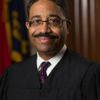 | Michael R. Morgan | 14.3 | 98,627 | |
 | Chrelle Booker | 6.7 | 46,045 | |
 | Marcus Williams | 5.7 | 39,257 | |
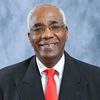 | Gary Foxx | 3.7 | 25,283 | |
| Total votes: 688,238 | |||
| = candidate completed the Ballotpedia Candidate Connection survey. | ||||
| If you are a candidate and would like to tell readers and voters more about why they should vote for you, complete the Ballotpedia Candidate Connection Survey. | ||||
Do you want a spreadsheet of this type of data? Contact our sales team. | ||||
Republican primary election
Republican primary for Governor of North Carolina
Mark K. Robinson defeated Dale Folwell and Bill Graham in the Republican primary for Governor of North Carolina on March 5, 2024.
Candidate | % | Votes | ||
| ✔ | | Mark K. Robinson | 64.8 | 666,504 |
 | Dale Folwell | 19.2 | 196,955 | |
 | Bill Graham | 16.0 | 164,572 | |
| Total votes: 1,028,031 | |||
| = candidate completed the Ballotpedia Candidate Connection survey. | ||||
| If you are a candidate and would like to tell readers and voters more about why they should vote for you, complete the Ballotpedia Candidate Connection Survey. | ||||
Do you want a spreadsheet of this type of data? Contact our sales team. | ||||
Withdrawn or disqualified candidates
- Andy Wells (R)
- Jesse Thomas (R)
- Mark Walker (R)
Green primary election
The Green primary election was canceled. Wayne Turner advanced from the Green primary for Governor of North Carolina.
Libertarian primary election
Libertarian primary for Governor of North Carolina
Mike Ross defeated Shannon Bray in the Libertarian primary for Governor of North Carolina on March 5, 2024.
Candidate | % | Votes | ||
| ✔ | | Mike Ross | 59.4 | 2,910 |
 | Shannon Bray | 40.6 | 1,985 | |
| Total votes: 4,895 | |||
| = candidate completed the Ballotpedia Candidate Connection survey. | ||||
| If you are a candidate and would like to tell readers and voters more about why they should vote for you, complete the Ballotpedia Candidate Connection Survey. | ||||
Do you want a spreadsheet of this type of data? Contact our sales team. | ||||
Voting information
- See also: Voting in North Carolina
Candidate comparison
Candidate profiles
This section includes candidate profiles that may be created in one of two ways: either the candidate completed Ballotpedia's Candidate Connection survey, or Ballotpedia staff may compile a profile based on campaign websites, advertisements, and public statements after identifying the candidate as noteworthy. For more on how we select candidates to include, click here.





Party: Democratic Party
Incumbent: No
Submitted Biography: "I learned early on that some things are worth fighting for, no matter the opposition. Julius Chambers, James Ferguson, and my father Adam started North Carolina’s first integrated law firm in Charlotte in the mid-1960s, and they won important victories in our nation’s legal battle for equality. My parents grounded me in values of freedom, justice, and opportunity for everyone, and my faith teaches me that we are called to make a difference. As Attorney General, I have worked to: -Protect vulnerable North Carolinians from fraudsters and scammers. -Tackle the largest backlog of untested rape kits in the country, bringing justice to victims. - Lead the national effort by state Attorneys General to hold accountable the big drug companies that created and fueled the opioid crisis, securing more than $55 billion in settlement funds – $1.5 billion of which will fund much-needed treatment and recovery services for North Carolinians. -Hold e-cigarette manufacturer Juul accountable for sparking a teen vaping epidemic – setting a standard the rest of the nation followed. -Defend women’s reproductive freedoms and people’s right to vote and to vote in fair districts. As the next Governor of North Carolina, I will bring people together to tackle the issues that impact North Carolinians, including lowering the cost of living, creating good-paying jobs, protecting our public schools, keeping communities safe, and making sure everyone has access to quality, affordable health care."


This information was current as of the candidate's run for Governor of North Carolina in 2024.
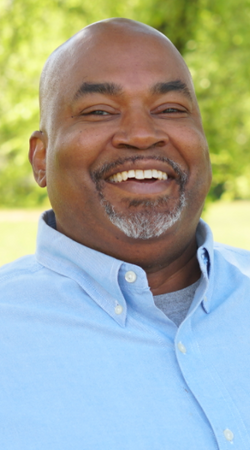
Party: Republican Party
Incumbent: No
Political Office:
Lieutenant Governor of North Carolina (Assumed office: 2021)
Biography: Robinson served one tour in the U.S. Army. He also worked in various manufacturing industries before being elected North Carolina's lieutenant governor in 2020.
Show sources
Sources: Mark Robinson for NC,"Meet Mark," accessed December 11, 2023; Facebook, "Mark Robinson," November 15, 2022; MyFox8,"NC Lt. Gov. Mark Robinson’s social media posts show a long history of outrage in 7-year examination," March 24, 2023; Mark Robinson for NC,"Meet Mark," accessed December 11, 2023
This information was current as of the candidate's run for Governor of North Carolina in 2024.

Party: Libertarian Party
Incumbent: No
Submitted Biography: "My name is Mike Ross and I’m running for Governor of North Carolina. I’ve lived in Charlotte for more than two decades with my wife of 18 years and our son. I obtained degrees in business and finance before being a certified financial planner. After getting my start in tech, I began working in the corporate sector in the early 2000’s until leaving to start “My Money” in 2018 to help provide quality financial advice to people of all economic backgrounds. While running for Governor, I’ve put my business on hold so I can focus on sharing my message with the voters of North Carolina."
This information was current as of the candidate's run for Governor of North Carolina in 2024.

Party: Green Party
Incumbent: No
Submitted Biography: "I am a 69 year old, retired former engineer and plant manager, residing in Pittsboro, NC. I have been involved in third party independent politics as a Green for the last two decades. "
This information was current as of the candidate's run for Governor of North Carolina in 2024.
Ballotpedia's Candidate Connection survey responses
Ballotpedia asks all federal, state, and local candidates to complete a survey and share what motivates them on political and personal levels. The section below shows responses from candidates in this race who completed Ballotpedia's Candidate Connection survey. Candidates are asked three required questions for this survey, but they may answer additional optional questions as well.

Survey responses from candidates in this race
Click on a candidate's name to visit their Ballotpedia page.
Note: Ballotpedia reserves the right to edit Candidate Connection survey responses. Any edits made by Ballotpedia will be clearly marked with [brackets] for the public. If the candidate disagrees with an edit, he or she may request the full removal of the survey response from Ballotpedia.org. Ballotpedia does not edit or correct typographical errors unless the candidate's campaign requests it.
| Collapse all
Mike Ross (L)
2. We are pushing for a transparent and accountable government. One that works for the people instead of simply taking from us without solving problems efficiently and effectively.
3. Consideration of a truly free market for education: Our systems are failing us, but worse, they are failing our children. Parents must determine the best route for their child/children and teachers must be allowed to teach without impossible bureaucratic barriers to their success.
Josh Stein (D)
Throughout my career, I have taken on tough fights for the people of North Carolina and delivered, whether it’s families suffering from the opioid crisis or it’s survivors of sexual assault or it’s children being exploited or it’s people whose drinking water has been polluted.
As Governor, I’ll keep fighting to build a safer and stronger North Carolina - a state with a thriving economy, strong schools, and safe communities.
Wayne Turner (G)
The system of capitalism, as a method of organizing human production and determining social relations only works for a relatively few people. Many accept its restrictions because they have no resources except their own labor, and cannot avoid selling it to survive. Consequently, human production focuses on products which can sold at a profit in the market. Those profits depend on costs of production. Capitalists have found that many of those costs, such as costs of managing containment of pollutants, can be offloaded onto the general public, and do not affect cost of production, thus maximizing profit. Humanity can no longer afford this approach to production, which both overproduces, and wastes increasingly scarce natural resources.
Decisions about production, usually made by private interests, are accompanied by environmental exploitation and destruction. As capitalism privatizes profit and socializes responsibility, environmental degradation increases. This includes the threat of global warming, but on a more local level it strips or reduces the possibility of life through loss of arable land, overfishing, and loss of ecosystem resources (for example, clean water). The tremendous inequality in wealth brought about by capitalist production traps people into overexploitation of the environment for survival, and reduces the possibility of mitigation of these harms. We have to reimagine our relationship with the natural world to undo this damage, and avoid future damage.
Mike Ross (L)
Protecting both the police AND the public Prosperity for North Carolinians Governmental transparency
Restoring integrity and leadership to government
Josh Stein (D)
Wayne Turner (G)
Mike Ross (L)
Josh Stein (D)
Wayne Turner (G)
Mike Ross (L)
Wayne Turner (G)
Mike Ross (L)
Wayne Turner (G)
Also, we can no longer afford fairy tales and just-so stories about the depth and magnitude of the challenges humanity faces today. Truth-telling must be part of our political process, no matter the pressures from interest groups or the advice of campaign consultants. There are experts in various fields for a reason. Public policy practices and related science may be understood in a general way by many, but when making decisions about policy, detailed information is a necessity. Rejecting expert opinion in favor of political safety gambles with the future. If constituents are served by it, that is a matter of chance.
This is closely allied to another feature of of today's elected officials, which as a blustering arrogance that is unfounded in knowledge. This behavior substitutes for reason, and covers up understanding of the roots of many of our problems. There is never a good reason for arrogance, and an elected official that exhibits it will never be a good representative. An elected official should be widely informed, or upon finding that they are not, would seek to educate themselves more broadly about issues upon which they would create policy.
Mike Ross (L)
Wayne Turner (G)
Mike Ross (L)
To be decisive and accountable.
To understand our state’s challenges, adjust accordingly, and to promote the uniqueness and unlimited potential of North Carolina.
Wayne Turner (G)
The recent history of legislation in North Carolina has led to a transfer of power from the governor's office and to the state's legislature. Many of the provisions described in the constitution, especially as relates to budgets, appointments, and the power to make changes in the administration of council of state offices and departments, have been greatly reduced. The legislature currently has super-majorities through gerrymandering of state house and senate seats. No governor of any party can override their decisions, and the legislature can override any vetoes. Budget power for all intents and purposes resides in the legislature.
Thus the core responsibility of the governor's office is to keep the people of the state informed of state affairs and point out discrepancies between gubernatorial recommendations and their intent as contrasted with the actual outcomes of laws created and passed within the general assembly. Insofar as appointments remain possible, the governor's office should strive to appoint qualified people that are non-partisan. The clemency powers of the office should be used to redress wrongs created through flaws in the justice system. At every turn, he governor should remind the people of the imbalance of power created by gerrymandering, loss of appointment authority, and the complete subsumption of budgetary power within the legislature as detrimental to democracy.
Mike Ross (L)
Wayne Turner (G)
I hope that when I leave, the democratic institutions will be more broadly democratic through greater representation of the public, as accomplished by voting reforms, including elimination of the plurality winner-take-all system that lies at the root of much of our democratic failures. We need proportional representation, multi-member districts, ranked choice or other voting systems that create compromise instead of strife, and an electoral system open to all parties and to politically independent candidates.
When I leave, I want to see prison populations reduced to the bare minimum necessary for public safety. an end to policing that puts mentally ill and poor people in prison, and economic conditions that allow people to avoid having to resort to crime to eat or have clothing and shelter. I want an end to the institutional racism built into our justice system and economic system by centuries of discrimination from irrational bigotry and class behavior. There is no meritocracy in the US. Only class warfare and racism explain the outcomes we see today in education, criminal justice.
Finally, I hope to see real discussions about wealth, what it means to be wealthy in a world of billions of people, and why we let personal wealth dictate a person's value and status in society. There can be enough for everybody.
Mike Ross (L)
Wayne Turner (G)
Mike Ross (L)
Wayne Turner (G)
Wayne Turner (G)
Wayne Turner (G)
Wayne Turner (G)
Wayne Turner (G)
Wayne Turner (G)
For myself, I would much prefer that any decisions that are made, other than the emergency powers addressed below, are accepted by the people of the state largely by consent before the decision is executed. For administrative decisions that are limited to the efficient and cost-effective operation of the state, it is not practical or expected that wide consultation with the public is required. For decisions involving a budget, and the collection and expenditure of resources, I would only feel comfortable exercising power after a process which had sufficient public input and resultant support. Since in North Carolina, as described previously, the governor is very limited in power to take any meaningful action with regard to collection or expenditure of resources, that possibility of that process will never be offered to the public.
Otherwise, I have no interest in being considered an "executive authority", or in being in a position where I have to exercise power without public consent, excluding emergencies. In emergencies I would have to rely on the mandate of my election as a sign of the peoples' trust that I would act correctly.
Mike Ross (L)
- Holding to principles and GA accountability
- The power of appointment. It’s incredible important to choose people that are not in debt to lobbyists.
Josh Stein (D)
Wayne Turner (G)
In lieu of this ability. the greatest responsibility of the office is to be aware of the conditions that the people of the state experience on a daily basis, and to communicate these conditions to the public and to the legislature. The governor has the ability to ask for information from the various departments and offices of state, and can ask for this information to be delivered in a timely manner. This allows the office to be aware of changes in state administration and in the impact of budgets on decisions and actions at the state level. Budgets have impacts on the local level as well. An accurate and truthful description of the issues facing the state, the impact of budgets on those issues, and whether those impacts are positive or negative for the people, delivered as public information, may be the most effective way left to use the responsibilities of the office in favor of the people.
Mike Ross (L)
Wayne Turner (G)
Wayne Turner (G)
Wayne Turner (G)
Mike Ross (L)
Josh Stein (D)
Wayne Turner (G)
Mike Ross (L)
Wayne Turner (G)
Second. our state population is increasing at a rapid rate, but state services are not funded to keep up. In fact, the path we are on has state services, such as public education, declining in the future in favor of for-profit private education. Nor can we build housing that everybody can afford in any reasonable length of time. The development of high end luxury housing and high-rent apartments is rampant and intrusive. Homelessness and poverty are being kicked down the road for future generations. Volunteer groups substitute for governments disdainful of the poor. Domestic violence shelters and homeless shelters are overwhelmed. But the new residents coming to the state are predisposed to simply displace low-income people, preferably to somewhere out of sight and out of mind. The state seems to agree.
The decline of public education system is remarkable. The state nearly destroyed it completely, then realized it wasn't the right time, and began to refund the schools partially. But along the way it is creating a state-funded parallel educational system of for-profit schools that don't perform any better, but seem to vent the hostility of legislators towards public schools. Emulating Florida or Texas isn't going to help. Along the way, we are reducing the university system to a diploma mill for capitalism. We have to reverse this.
Wayne Turner (G)
Wayne Turner (G)
Any elected official worthy of the office would recognize this and refuse to use emergency powers for political advantage.
We are also now living in a world where science and public health concerns are not considered important, or even worthy of acknowledgement, by significant portions of the population. A governor cannot afford this ignorance, and must be able to understand the risks to the public in a pandemic or in the appearance of a biological threat where quarantine of individuals and communities is the correct path to follow. Prior to Covid, challenges to the idea of public health came from cranks and fools. Antipathy to public health science and the idea of a common goal have been weaponized as oppression and denied as a possibility, respectively. A new pandemic with greater consequences than Covid is possible, and will present a new challenge for governors who must weigh the consequences in the life of millions against the consequences of using emergency powers.
Presumably, a governor could also be asked to or see a need for invocation of emergency powers in response to military attacks on the US. At that time the state guard could be under the orders of the larger military structure of the US, but in the event that did not happen immediately, the governor’s office could use emergency powers to provide medical aid, transportation services and support displaced persons.
Mike Ross (L)
Josh Stein (D)
Wayne Turner (G)
Mike Ross (L)
Wayne Turner (G)
Regarding government accountability, accountability for what, and to who? There are laws governing bidding processes, and conflicts of interest. It is not clear to me that they are adequate, and many such conflicts may be hard to identify. We must rely on a free press and on the courage of officials and employees to identify them for the public. If government accountability means redress, financial or otherwise, for government actions that cause harm to individuals or to communities, these issues have typically been addressed through the courts. It is expensive for individuals or small groups of people to undertake these actions. I would prefer to see a state-funded legal agency that could bring reasonable actions against the state without cost where justified. The qualifications for such representation would have to be narrowed to exclude nuisance actions or abuse of the office.
I would prefer to see accountability of elected representatives for violating the trust of voters. To do this, we need to change the way officials are elected. First-past-the-post voting systems should be replaced by ranked choice voting, multimember districts and proportional representation. . Such candidates would have achieved a consensus among voters of being acceptable, if not perfect, and are less likely to ignore their constituency in decisions that directly affect them (which is nearly all decisions).
Campaign ads
This section includes a selection of up to three campaign advertisements per candidate released in this race, as well as links to candidates' YouTube, Vimeo, and/or Facebook video pages. If you are aware of other links that should be included, please email us.
 Josh Stein
| June 5, 2024 |
| June 5, 2024 |
| January 18, 2023 |
View more ads here:
 Mark Robinson
| July 8, 2024 |
| June 27, 2024 |
| April 23, 2023 |
View more ads here:
Debates and forums
If you are aware of any debates, candidate forums, or other similar events where multiple candidates in this race participated, please email us.
Election competitiveness
Polls
- See also: Ballotpedia's approach to covering polls
Polls are conducted with a variety of methodologies and have margins of error or credibility intervals.[13] The Pew Research Center wrote, "A margin of error of plus or minus 3 percentage points at the 95% confidence level means that if we fielded the same survey 100 times, we would expect the result to be within 3 percentage points of the true population value 95 of those times."[14] For tips on reading polls from FiveThirtyEight, click here. For tips from Pew, click here.
Below we provide results for polls that are included in polling aggregation from FiveThirtyEight and RealClearPolitics, when available. Click here to read about FiveThirtyEight's criteria for including polls in its aggregation. We only report polls for which we can find a margin of error or credibility interval.
| North Carolina gubernatorial election, 2024: General election polls | |||||||||
|---|---|---|---|---|---|---|---|---|---|
| Poll | Date | Stein
|
Robinson
|
 Ross Ross
|
 Turner Turner
|
Undecided/Other | Margin of error | Sample size[15] | Sponsor[16] |
| Atlas Intel | Nov. 3-4 | 54% | 38% | -- | -- | 8%[17] | ± 3.4 | 1219 LV | N/A |
| The Hill/Emerson | Oct. 29- Nov. 2 | 52% | 40% | -- | -- | 8%[18] | ± 3.3 | 860 LV | N/A |
| East Carolina University | Oct. 24-29 | 55% | 40% | -- | -- | 5%[19] | ± 3.0 | 1250 LV | N/A |
| Rasmussen Reports | Oct. 25-28 | 49% | 40% | -- | -- | 11%[20] | ± 3.0 | 849 LV | N/A |
| Fox News | Oct. 24-28 | 57% | 41% | -- | -- | 2%[21] | ± 3.0 | 872 LV | N/A |
| Click [show] to see older poll results | |||||||||
|---|---|---|---|---|---|---|---|---|---|
| Poll | Date | Stein
|
Robinson
|
Ross
|
Turner
|
Undecided/Other | Margin of error | Sample size[22] | Sponsor[23] |
| CNN | Oct. 23-28 | 53% | 37% | -- | -- | 10%[24] | ± 4.5 | 750 LV | N/A |
| Marist | Oct. 17-22 | 55% | 41% | -- | -- | 4% | ±3.6 | 1226 LV | N/A |
| UMass Lowell | Oct. 16-23 | 48% | 36% | 2% | -- | 13%[25] | ± 4.2 | 650 LV | N/A |
| Redfield & Wilton Strategies | Oct. 16-18 | 45% | 37% | 2% | -- | 14%[26] | ± 3.1 | 843 LV | The Telegraph |
| AtlasIntel | Oct. 12-17 | 54% | 39% | -- | -- | 7.2%[27] | ± 2 | 1,674 LV | N/A |
| Redfield & Wilton Strategies | Oct. 12-14 | 45% | 38% | 2% | 1% | 10%[28] | ± 3.6 | 620 LV | The Telegraph |
| Carolina Journal/Cygnal | Oct. 12-14 | 49% | 36% | 3% | 1% | OTHER %[29] | ± 4.9 | 600 LV | N/A |
| Quinnipiac | Oct. 10-14 | 52% | 40% | 2% | 1% | 4%[30] | ± 3.1 | 1031 LV | SPONSOR |
| Emerson | Oct. 5-8 | 50% | 34% | -- | -- | 16.1%[31] | ± 3 | 1,000 LV | Nexstar |
| ActiVote | Sept. 5 -Oct. 5 | 57% | 44% | -- | -- | -- | ± 4.9 | 400 LV | N/A |
| Redfield & Wilton Strategies | Sept. 27 -Oct. 2 | 46% | 36% | 2% | 1% | 15%[32] | ± 3.3 | 753 LV | The Telegraph |
| Emerson | Sept. 27-28 | 52% | 33% | -- | -- | 15% | ± 3.3 | 850 LV | RealClearWorld |
| Quinnipiac | Sept. 25-29 | 53% | 37% | -- | -- | 10% | ± 3.2 | 953 LV | N/A |
| Washington Post | Sept. 25-29 | 54% | 38% | -- | -- | 8%[33] | ± 3.5 | 1001 LV | N/A |
| East Carolina University Center for Survey Research | Sept. 23-26 | 50% | 33% | 3% | -- | 15%[34] | ±3.0 | 1,005 LV | N/A |
| CNN/SSRS | Sept. 20-25 | 53% | 36% | -- | -- | 11%[35] | ± 3.9 | 931 LV | N/A |
| Atlas Intel | Sept 20-25 | 54% | 38% | -- | -- | 8%[36] | ± 3.0 | 1173 LV | N/A |
| Beacon Research/Shaw & Company Research | Sept. 20-24 | 56% | 40% | -- | -- | 5%[37] | ± 3.0 | 991 RV | Fox News |
| Beacon Research/Shaw & Company Research | Sept. 20-24 | 56% | 41% | -- | -- | 4%[38] | ± 3.5 | 787 LV | Fox News |
| Marist College | Sept. 19-24 | 54% | 42% | -- | -- | 4%[39] | ± 3.5 | 1507 RV | N/A |
| Marist College | Sept. 19-24 | 54% | 43% | -- | -- | 3%[40] | ± 3.7 | 1348 LV | N/A |
| Victory Insights | Sept. 16-18 | 47% | 42% | -- | -- | 11%[41] | ± 4.0 | 600 LV | N/A |
| The New York Times/Siena College | Sept. 17-21 | 47% | 36% | -- | -- | 17%[42] | ± 4.2 | 682 RV | N/A |
| Emerson College | Sept. 15-18 | 48% | 40% | -- | -- | 12%[43] | ± 3.0 | 1,000 LV | The Hill |
| Morning Consult | Sept. 9-18 | 50% | 37% | -- | -- | 12%[44] | ± 3 | 1,314 LV | N/A |
| Cygnal | Sept. 15-16 | 46% | 39% | -- | -- | 13%[45] | ± 4.0 | 600 LV | Carolina Journal |
| Redfield & Wilton Strategies | Sept. 6-9 | 42% | 33% | 1% | -- | 25%[46] | ± 3.83 | 495 LV | The Telegraph |
| Quinnipiac University | Sept. 4-8 | 51% | 41% | 1% | 1% | -- | ± 3.2 | 940 LV | SPONSOR |
| SurveyUSA | Sept. 4-7 | 51% | 37% | -- | -- | 11%[47] | ± 4.9 | 676 LV | WRAL-TV |
| Florida Atlantic University PolCom Lab/Mainstreet Research | Sept. 5-6 | 50% | 39% | -- | -- | 7%[48] | ± 3.7 | 619 LV | N/A |
| East Carolina University Center for Survey Research | Aug. 26-28 | 47% | 41% | -- | -- | 13%[49] | ± 3.0 | 920 LV | N/A |
| Redfield & Wilton Strategies | Aug. 25-28 | 44% | 40% | 2% | 1% | 14%[50] | ± 3.18 | 812 LV | The Telegraph |
| Emerson College | Aug. 25-28 | 47% | 41% | -- | -- | 13%[51] | ± 3.5 | 775 LV | The Hill |
| Beacon Research/Shaw & Company Research | Aug. 23-26 | 54% | 43% | -- | -- | 3%[52] | ± 3.0 | 999 RV | Fox News |
| ActiVote | July 26-August 26 | 54% | 46% | -- | -- | -- | ± 4.9 | 400 LV | N/A |
| SurveyUSA/High Point University Survey Research Center | Aug 19-21 | 48% | 34% | -- | -- | 18%[53] | ± 4 | 1,053 RV | N/A |
| Redfield & Wilton Strategies | Aug. 12-15 | 45% | 39% | 2% | -- | 14%[54] | ± 3.69 | 601 LV | The Telegraph |
| The New York Times/Siena College | Aug 9-14 | 49% | 39% | -- | -- | 12%[55] | ± 4.2 | 655 LV | N/A |
| YouGov Blue | Aug. 5-9 | 46% | 36% | 1% | 1% | 17%[56] | ± 3.9 | 802 RV | Carolina Forward |
| Cygnal | August 4-5 | 43% | 38% | 3% | 1% | 15%[57] | ± 3.99 | 600 LV | Carolina Journal |
| Redfield & Wilton Strategies | July 31- Aug. 3 | 43% | 38% | 1% | 1% | 17%[58] | ± 3.36 | 714 LV | The Telegraph |
| Redfield & Wilton Strategies | July 22-24 | 38% | 34% | 3% | 1% | 24% [59] | ± 3.7 | 586 LV | The Telegraph |
| Public Policy Polling | July 19-20 | 48% | 42% | -- | -- | 10%[60] | ± 4.1 | 573 RV | Clean and Prosperous America (PAC) |
| Redfield & Wilton Strategies | July 16-18 | 37% | 36% | 1% | 1% | 25%[61] | ± 4.09 | 461 LV | The Telegraph |
| Spry Strategies | June 7-11, 2024 | 39% | 43% | -- | -- | 13%[62] | ± 4.0 | 600 LV | N/A |
| East Carolina University Center for Survey Research | May 31 -June 3, 2024 | 44% | 43% | -- | -- | 15%[63] | ± 3.1 | 1,332 RV | N/A |
| North Star Opinion Research | May 29 - June 2, 2024 | 42% | 44% | -- | -- | 14%[64] | ± 4.0 | 600 LV | American Greatness |
| Change Research | May 13 - 18, 2024 | 44% | 43% | -- | -- | 13%[65] | ± 3.8 | 835 LV | Carolina Forward |
| BSG/GS Strategy Group | May 6 - 13, 2024 | 37% | 37% | -- | -- | 17%[66] | ± 4.0 | 601 LV | N/A |
| High Point University | May 2 - 9, 2024 | 34% | 39% | -- | -- | 26%[67] | ± 3.1 | 804 RV | N/A |
| Carolina Journal | May 4-5 | Stein 39% | Robinson 39% | Ross 3.7% | Turner 0.8% | OTHER % | ± 3.99 | 600 LV | Cyngal |
| The Hill/Emerson | April 25-29, 2024 | 41% | 42% | -- | -- | 17%[68] | ± 3 | 1,000 RV | N/A |
| Meeting Street Insights | April 25-28 | 44% | 36% | 4% | 2% | 12%[69] | ± 4.38 | 500 RV | Carolina Partnership for Reform, Carolina Leadership Coalition |
| Meredith College Department of History, Political Science, and International Studies | April 11-17 | 45% | 36% | -- | -- | 20%[70] | ± 3.5 | 711 LV | N/A |
Race ratings
- See also: Race rating definitions and methods
Ballotpedia provides race ratings from four outlets: The Cook Political Report, Inside Elections, Sabato's Crystal Ball, and DDHQ/The Hill. Each race rating indicates if one party is perceived to have an advantage in the race and, if so, the degree of advantage:
- Safe and Solid ratings indicate that one party has a clear edge and the race is not competitive.
- Likely ratings indicate that one party has a clear edge, but an upset is possible.
- Lean ratings indicate that one party has a small edge, but the race is competitive.[71]
- Toss-up ratings indicate that neither party has an advantage.
Race ratings are informed by a number of factors, including polling, candidate quality, and election result history in the race's district or state.[72][73][74]
| Race ratings: North Carolina gubernatorial election, 2024 | |||||||||
|---|---|---|---|---|---|---|---|---|---|
| Race tracker | Race ratings | ||||||||
| November 5, 2024 | October 29, 2024 | October 22, 2024 | October 15, 2024 | ||||||
| The Cook Political Report with Amy Walter | Likely Democratic | Likely Democratic | Likely Democratic | Likely Democratic | |||||
| Inside Elections with Nathan L. Gonzales | Likely Democratic | Likely Democratic | Likely Democratic | Likely Democratic | |||||
| Larry J. Sabato's Crystal Ball | Likely Democratic | Likely Democratic | Likely Democratic | Likely Democratic | |||||
| Note: Ballotpedia reviews external race ratings every week throughout the election season and posts weekly updates even if the media outlets have not revised their ratings during that week. | |||||||||
Margin of victory in past elections
Noteworthy endorsements
Click the links below to see endorsement lists published on candidate campaign websites, if available. If you are aware of a website that should be included, please email us.
This section lists noteworthy endorsements issued in this election, including those made by high-profile individuals and organizations, cross-party endorsements, and endorsements made by newspaper editorial boards. Please note that this list is not exhaustive. If you are aware of endorsements that should be included, please email us.
| Noteworthy endorsements | ||
|---|---|---|
| Endorser | Josh Stein | Mark K. Robinson
|
| Government officials | ||
| U.S. Rep. Gabrielle Giffords (D) source | ✔ | |
| Gov. Andy Beshear (D) source | ✔ | |
| Gov. Roy Cooper Roy Cooper (D) source | ✔ | |
| Gov. Wes Moore (D) source | ✔ | |
| Gov. Josh Shapiro (D) source | ✔ | |
| State Rep. Garland Pierce (D) source | ✔ | |
| Individuals | ||
| Frmr. State Sen. Jim Davis source | ✔ | |
| Frmr. Gov Jim Hunt source | ✔ | |
| Frmr. State Rep. Charles McGrady source | ✔ | |
| Frmr. State Rep. Charles Neely source | ✔ | |
| Frmr. State Sen. Richard Stevens source | ✔ | |
| Frmr. President Donald Trump source | ✔ | |
| Organizations | ||
| Giffords PAC source | ✔ | |
| Jewish Democratic Council of America source | ✔ | |
| Republicans for National Renewal source | ✔ | |
| The Human Rights Campaign source | ✔ | |
Election spending
Campaign finance
- See also: Campaign finance
The section and tables below contain data from financial reports submitted to state agencies. The data is gathered and made available by Transparency USA. Transparency USA tracks loans separately from total contributions. View each candidates’ loan totals, if any, by clicking “View More” in the table below and learn more about this data here.
Satellite spending
- See also: Satellite spending
Satellite spending describes political spending not controlled by candidates or their campaigns; that is, any political expenditures made by groups or individuals that are not directly affiliated with a candidate. This includes spending by political party committees, super PACs, trade associations, and 501(c)(4) nonprofit groups.[75][76][77]
If available, this section includes links to online resources tracking satellite spending in this election. To notify us of a resource to add, email us.
Noteworthy events
Multiple staffers resign from Robinson campaign
On September 22, 2024, WUNC reported that multiple members of Mark Robinson's staff left his campaign.[78] On September 19, CNN reported that Robinson had made series of posts online with comments including, “I’m a black NAZI!” and “Slavery is not bad. Some people need to be slaves. I wish they would bring it (slavery) back. I would certainly buy a few.”[79] According to CNN the posts were made between 2008 and 2012.[79] Robinson denied making the comments in a video posted to his campaign's social media accounts and said, "The things that you will see in that story, those are not the words of Mark Robinson. You know my words, you know my character and you know that I have been completely transparent in this race and before. Folks this race right now, our opponents are desperate to shift the focus here from the substantive issues and focus on what you are concerned with to salacious tabloid trash. We cannot allow that to happen."[80]
According to WUNC, the staffers who quit included general consultant and senior advisor Conrad Pogorzelski, campaign manager Chris Rodriguez, finance director Heather Whillier, and campaign manager Jason Rizk, among others. In a statement to CNN Pogorzelski said, "The reports are true that I, along with others from the campaign have left of our own accord."[81] In response to the staffers' resignation, Robinson said, "I appreciate the efforts of these team members who have made the difficult choice to step away from the campaign, and I wish them well in their future endeavors."[78]
In an interview with CNN's Jake Tapper on September 22, Josh Stein said, "Mark Robinson is absolutely unfit to be the governor of North Carolina, and that was true before your story broke last Thursday. The story has only served to underline and put an exclamation point on that fact."[82]
Election analysis
Click the tabs below to view information about demographics, past elections, and partisan control of the state.
- Presidential elections - Information about presidential elections in the state.
- Statewide elections - Information about recent U.S. Senate and gubernatorial elections in the state.
- State partisanship - The partisan makeup of the state's congressional delegation and state government.
- Demographics - Information about the state's demographics and how they compare to the country as a whole.
Cook PVI by congressional district
| Cook Political Report's Partisan Voter Index for North Carolina, 2024 | |||
|---|---|---|---|
| District | Incumbent | Party | PVI |
| North Carolina's 1st | Donald Davis |  Democratic Democratic |
R+1 |
| North Carolina's 2nd | Deborah Ross | Democratic |
D+15 |
| North Carolina's 3rd | Gregory Murphy |  Republican Republican |
R+11 |
| North Carolina's 4th | Valerie Foushee | Democratic |
D+21 |
| North Carolina's 5th | Virginia Foxx | Republican |
R+10 |
| North Carolina's 6th | Kathy Manning | Democratic |
R+11 |
| North Carolina's 7th | David Rouzer | Republican |
R+8 |
| North Carolina's 8th | Dan Bishop | Republican |
R+11 |
| North Carolina's 9th | Richard Hudson | Republican |
R+9 |
| North Carolina's 10th | Patrick McHenry | Republican |
R+10 |
| North Carolina's 11th | Chuck Edwards | Republican |
R+8 |
| North Carolina's 12th | Alma Adams | Democratic |
D+23 |
| North Carolina's 13th | Wiley Nickel | Democratic |
R+11 |
| North Carolina's 14th | Jeff Jackson | Democratic |
R+11 |
2020 presidential results by 2024 congressional district lines
| 2020 presidential results in congressional districts based on 2024 district lines, North Carolina[83] | ||||
|---|---|---|---|---|
| District | Joe Biden
|
Donald Trump
| ||
| North Carolina's 1st | 50.4% | 48.8% | ||
| North Carolina's 2nd | 66.9% | 31.5% | ||
| North Carolina's 3rd | 40.7% | 58.0% | ||
| North Carolina's 4th | 72.4% | 26.2% | ||
| North Carolina's 5th | 41.8% | 57.2% | ||
| North Carolina's 6th | 41.2% | 57.5% | ||
| North Carolina's 7th | 43.9% | 54.9% | ||
| North Carolina's 8th | 40.6% | 58.3% | ||
| North Carolina's 9th | 42.4% | 56.3% | ||
| North Carolina's 10th | 41.4% | 57.4% | ||
| North Carolina's 11th | 43.8% | 54.8% | ||
| North Carolina's 12th | 74.4% | 24.2% | ||
| North Carolina's 13th | 40.7% | 57.9% | ||
| North Carolina's 14th | 41.4% | 57.5% | ||
2012-2020
How a state's counties vote in a presidential election and the size of those counties can provide additional insights into election outcomes at other levels of government including statewide and congressional races. Below, four categories are used to describe each county's voting pattern over the 2012, 2016, and 2020 presidential elections: Solid, Trending, Battleground, and New. Click [show] on the table below for examples:
| County-level voting pattern categories | |||||||
|---|---|---|---|---|---|---|---|
| Democratic | |||||||
| Status | 2012 | 2016 | 2020 | ||||
| Solid Democratic | D | D | D | ||||
| Trending Democratic | R | D | D | ||||
| Battleground Democratic | D | R | D | ||||
| New Democratic | R | R | D | ||||
| Republican | |||||||
| Status | 2012 | 2016 | 2020 | ||||
| Solid Republican | R | R | R | ||||
| Trending Republican | D | R | R | ||||
| Battleground Republican | R | D | R | ||||
| New Republican | D | D | R | ||||
Following the 2020 presidential election, 47.1% of North Carolinians lived in one of the state's 22 Solid Democratic counties, which voted for the Democratic presidential candidate in every election from 2012 to 2020, and 46.3% lived in one of 68 Solid Republican counties. Overall, North Carolina was Solid Republican, having voted for Mitt Romney (R) in 2012, Donald Trump (R) in 2016, and Donald Trump (R) in 2020. Use the table below to view the total number of each type of county in North Carolina following the 2020 election as well as the overall percentage of the state population located in each county type.
| North Carolina county-level statistics, 2020 | |||||||
|---|---|---|---|---|---|---|---|
| Solid Democratic | 22 | 47.1% | |||||
| Solid Republican | 68 | 46.3% | |||||
| Trending Republican | 6 | 2.7% | |||||
| New Democratic | 1 | 2.2% | |||||
| Battleground Democratic | 1 | 0.9% | |||||
| Trending Democratic | 1 | 0.5% | |||||
| New Republican | 1 | 0.3% | |||||
| Total voted Democratic | 25 | 50.7% | |||||
| Total voted Republican | 75 | 49.3% | |||||
Historical voting trends
North Carolina presidential election results (1900-2020)
- 18 Democratic wins
- 13 Republican wins
| Year | 1900 | 1904 | 1908 | 1912 | 1916 | 1920 | 1924 | 1928 | 1932 | 1936 | 1940 | 1944 | 1948 | 1952 | 1956 | 1960 | 1964 | 1968 | 1972 | 1976 | 1980 | 1984 | 1988 | 1992 | 1996 | 2000 | 2004 | 2008 | 2012 | 2016 | 2020 |
|---|---|---|---|---|---|---|---|---|---|---|---|---|---|---|---|---|---|---|---|---|---|---|---|---|---|---|---|---|---|---|---|
| Winning Party | D | D | D | D | D | D | D | R | D | D | D | D | D | D | D | D | D | R | R | D | R | R | R | R | R | R | R | D | R | R | R |
This section details the results of the five most recent U.S. Senate and gubernatorial elections held in the state.
U.S. Senate elections
The table below details the vote in the five most recent U.S. Senate races in North Carolina.
| U.S. Senate election results in North Carolina | ||
|---|---|---|
| Race | Winner | Runner up |
| 2022 | 50.5% |
47.3%
|
| 2020 | 48.7% |
46.9%
|
| 2016 | 51.1% |
45.3%
|
| 2014 | 48.8% |
47.3%
|
| 2010 | 55.0% |
42.9%
|
| Average | 50.8 | 45.9 |
Gubernatorial elections
- See also: Governor of North Carolina
The table below details the vote in the five most recent gubernatorial elections in North Carolina.
| Gubernatorial election results in North Carolina | ||
|---|---|---|
| Race | Winner | Runner up |
| 2020 | 51.5% |
47.0%
|
| 2016 | 49.0% |
48.8%
|
| 2012 | 54.6% |
43.2%
|
| 2008 | 50.3% |
46.9%
|
| 2004 | 55.6% |
42.9%
|
| Average | 52.2 | 45.8 |
Congressional delegation
The table below displays the partisan composition of North Carolina's congressional delegation as of May 2024.
| Congressional Partisan Breakdown from North Carolina | |||
|---|---|---|---|
| Party | U.S. Senate | U.S. House | Total |
| Democratic | 0 | 4 | 4 |
| Republican | 2 | 10 | 12 |
| Independent | 0 | 0 | 0 |
| Vacancies | 0 | 0 | 0 |
| Total | 2 | 14 | 16 |
State executive
The table below displays the officeholders in North Carolina's top four state executive offices as of May 2024.
| State executive officials in North Carolina, May 2024 | |
|---|---|
| Office | Officeholder |
| Governor | Roy Cooper
|
| Lieutenant Governor | Mark Robinson
|
| Secretary of State | Elaine Marshall
|
| Attorney General | Josh Stein
|
State legislature
North Carolina State Senate
| Party | As of February 2024 | |
|---|---|---|
| Democratic Party | 20 | |
| Republican Party | 30 | |
| Other | 0 | |
| Vacancies | 0 | |
| Total | 50 | |
North Carolina House of Representatives
| Party | As of February 2024 | |
|---|---|---|
| Democratic Party | 48 | |
| Republican Party | 72 | |
| Other | 0 | |
| Vacancies | 0 | |
| Total | 120 | |
Trifecta control
The table below shows the state's trifecta status from 1992 until the 2024 election.
North Carolina Party Control: 1992-2024
Fourteen years of Democratic trifectas • Four years of Republican trifectas
Scroll left and right on the table below to view more years.
| Year | 92 | 93 | 94 | 95 | 96 | 97 | 98 | 99 | 00 | 01 | 02 | 03 | 04 | 05 | 06 | 07 | 08 | 09 | 10 | 11 | 12 | 13 | 14 | 15 | 16 | 17 | 18 | 19 | 20 | 21 | 22 | 23 | 24 |
|---|---|---|---|---|---|---|---|---|---|---|---|---|---|---|---|---|---|---|---|---|---|---|---|---|---|---|---|---|---|---|---|---|---|
| Governor | R | D | D | D | D | D | D | D | D | D | D | D | D | D | D | D | D | D | D | D | D | R | R | R | R | D | D | D | D | D | D | D | D |
| Senate | D | D | D | D | D | D | D | D | D | D | D | D | D | D | D | D | D | D | D | R | R | R | R | R | R | R | R | R | R | R | R | R | R |
| House | D | D | D | R | R | R | R | D | D | D | D | D | D | D | D | D | D | D | D | R | R | R | R | R | R | R | R | R | R | R | R | R | R |
The table below details demographic data in North Carolina and compares it to the broader United States as of 2022.
| Demographic Data for North Carolina | ||
|---|---|---|
| North Carolina | United States | |
| Population | 10,439,388 | 331,449,281 |
| Land area (sq mi) | 48,623 | 3,531,905 |
| Race and ethnicity** | ||
| White | 65% | 65.9% |
| Black/African American | 20.9% | 12.5% |
| Asian | 3.1% | 5.8% |
| Native American | 1% | 0.8% |
| Pacific Islander | 0.1% | 0.2% |
| Other (single race) | 4% | 6% |
| Multiple | 5.9% | 8.8% |
| Hispanic/Latino | 10% | 18.7% |
| Education | ||
| High school graduation rate | 89.4% | 89.1% |
| College graduation rate | 33.9% | 34.3% |
| Income | ||
| Median household income | $66,186 | $75,149 |
| Persons below poverty level | 9.5% | 8.8% |
| Source: population provided by U.S. Census Bureau, "Decennial Census" (2020). Other figures provided by U.S. Census Bureau, "American Community Survey" (5-year estimates 2017-2022). | ||
| **Note: Percentages for race and ethnicity may add up to more than 100 percent because respondents may report more than one race and the Hispanic/Latino ethnicity may be selected in conjunction with any race. Read more about race and ethnicity in the census here. | ||
Election context
Ballot access
The table below details filing requirements for gubernatorial candidates in North Carolina in the 2024 election cycle. For additional information on candidate ballot access requirements in North Carolina, click here.
| Filing requirements for gubernatorial candidates, 2024 | ||||||
|---|---|---|---|---|---|---|
| State | Office | Signatures required | Filing fee | Filing deadline | Source | Qualifications |
| North Carolina | Governor | N/A | $2,030.73 | 12/15/2023 | Source | Candidates must be at least 30 years of age, a citizen of the United States for at least five years, and a resident of North Carolina for at least two years by the date of the general election. Candidates must also not have served more than two consecutive terms of the same office. |
Past elections
The section below details election results for this office in elections dating back to 2012.
2020
General election
General election for Governor of North Carolina
Incumbent Roy Cooper defeated Dan Forest, Steven DiFiore II, and Al Pisano in the general election for Governor of North Carolina on November 3, 2020.
Candidate | % | Votes | ||
| ✔ | 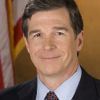 | Roy Cooper (D) | 51.5 | 2,834,790 |
 | Dan Forest (R) | 47.0 | 2,586,605 | |
 | Steven DiFiore II (L) | 1.1 | 60,449 | |
 | Al Pisano (Constitution Party) | 0.4 | 20,934 | |
| Total votes: 5,502,778 | |||
| = candidate completed the Ballotpedia Candidate Connection survey. | ||||
| If you are a candidate and would like to tell readers and voters more about why they should vote for you, complete the Ballotpedia Candidate Connection Survey. | ||||
Do you want a spreadsheet of this type of data? Contact our sales team. | ||||
Democratic primary election
Democratic primary for Governor of North Carolina
Incumbent Roy Cooper defeated Ernest Reeves in the Democratic primary for Governor of North Carolina on March 3, 2020.
Candidate | % | Votes | ||
| ✔ | | Roy Cooper | 87.2 | 1,128,829 |
 | Ernest Reeves | 12.8 | 165,804 | |
| Total votes: 1,294,633 | |||
| = candidate completed the Ballotpedia Candidate Connection survey. | ||||
| If you are a candidate and would like to tell readers and voters more about why they should vote for you, complete the Ballotpedia Candidate Connection Survey. | ||||
Do you want a spreadsheet of this type of data? Contact our sales team. | ||||
Republican primary election
Republican primary for Governor of North Carolina
Dan Forest defeated Holly Grange in the Republican primary for Governor of North Carolina on March 3, 2020.
Candidate | % | Votes | ||
| ✔ | | Dan Forest | 89.0 | 698,077 |
 | Holly Grange | 11.0 | 86,714 | |
| Total votes: 784,791 | |||
| = candidate completed the Ballotpedia Candidate Connection survey. | ||||
| If you are a candidate and would like to tell readers and voters more about why they should vote for you, complete the Ballotpedia Candidate Connection Survey. | ||||
Do you want a spreadsheet of this type of data? Contact our sales team. | ||||
2016
The general election for governor was held on November 8, 2016.
Roy Cooper defeated incumbent Pat McCrory and Lon Cecil in the North Carolina governor election.
| North Carolina Governor, 2016 | ||||
|---|---|---|---|---|
| Party | Candidate | Vote % | Votes | |
| Democratic |  Roy Cooper Roy Cooper |
49.02% | 2,309,190 | |
| Republican | Pat McCrory Incumbent | 48.80% | 2,298,927 | |
| Libertarian | Lon Cecil | 2.19% | 102,986 | |
| Total Votes | 4,711,103 | |||
| Source: North Carolina Secretary of State | ||||
2012
Bev Perdue (D) did not run for re-election. Pat McCrory (R) defeated Walter Dalton (D) in the November 6, 2012 general election.
| Governor of North Carolina General Election, 2012 | ||||
|---|---|---|---|---|
| Party | Candidate | Vote % | Votes | |
| Democratic | Walter Dalton | 43.2% | 1,931,580 | |
| Republican | Pat McCrory |
54.6% | 2,440,707 | |
| Libertarian | Barbara Howe | 2.1% | 94,652 | |
| Write-in | Various | 0% | 1,356 | |
| Total Votes | 4,468,295 | |||
| Election results via NC State Board of Elections | ||||
See also
| North Carolina | State Executive Elections | News and Analysis |
|---|---|---|
 |
 |
 |
|
|
|
|
External links
Footnotes
- ↑ Politico, "The most important governor’s race of 2024 is about to have its own version of Trump," March 5, 2024
- ↑ Josh Stein 2024 campaign website, "Meet Josh,' accessed July 10,2024
- ↑ 3.0 3.1 Mark Robinson 2024 campaign website, "Meet Mark," accessed July 10, 2024
- ↑ The New York Times, "The Quiet Way Democrats Hope to Expand Their Power at the State Level," February 20, 2024
- ↑ Inside Elections with Nathan L. Gonzales, "Gubernatorial Ratings," September 26, 2024
- ↑ WAVY, "2 GOP governors pull support for NC Republican gubernatorial candidate Mark Robinson," September 24, 2024
- ↑ The Cook Political Report with Amy Walter, "After New Damaging Robinson Revelations, North Carolina Governor Shifts to Likely Democrat," September 20, 2024
- ↑ X.com,"J. Miles Coleman," September 19, 2024
- ↑ The Cook Political Report, "North Carolina and Washington Gubernatorial Races Shift Toward Democrats," August 27, 2024
- ↑ Transparency USA, "North Carolina Finance Summary," accessed August 12, 2024
- ↑ The Carolina Journal,"Poll: Lawfare backfires on Biden, as Trump stays strong in NC," June 17, 2024
- ↑ ECU Center for Survey Research, "Trump leads Biden by 5 points in North Carolina; Gubernatorial election remains close with Stein up 1 on Robinson; Trump guilty verdict has little impact on NC voter intentions for November," accessed July 18, 2024
- ↑ For more information on the difference between margins of error and credibility intervals, see explanations from the American Association for Public Opinion Research and Ipsos.
- ↑ Pew Research Center, "5 key things to know about the margin of error in election polls," September 8, 2016
- ↑ RV=Registered Voters
LV=Likely Voters - ↑ The sponsor is the person or group that funded all or part of the poll.
- ↑ 3.8% don't know, 2.3% other, 2.4% blank/null/won't vote
- ↑ 4% someone else, 4% undecided
- ↑ 5% independent, minor-party, or write-in
- ↑ 5% another candidate, 6% undecided
- ↑ 2% Don't know/refused
- ↑ RV=Registered Voters
LV=Likely Voters - ↑ The sponsor is the person or group that funded all or part of the poll.
- ↑ 3% Other, 6% Neither, 1% Don't know/refused
- ↑ Undecided 12%, Vinny Smith 1%
- ↑ 10% don't know, 3% won't vote, 1% other
- ↑ 1.7% other, 1.4% blank/null/won't vote, 4.1% don't know
- ↑ 9% don't know, 1% other
- ↑ 11.3% Undecided
- ↑ 2% undecided, 1% refused, 1% Smith
- ↑ 4.8% Someone else, 11.3% Undecided
- ↑ 14% don't know, 1% other
- ↑ 2% would not vote; 6% no opinion/skipped
- ↑ 2% other candidates; 13% undecided
- ↑ 3% other; 8% neither
- ↑ Blank/null/won't vote 2%; 1% other; 5% don't know
- ↑ 1% other; 1% wouldn't vote; 3% don't know
- ↑ 1% wouldn't vote;3% don't know
- ↑ 3% undecided; 1% another party's candidate
- ↑ 2% undecided; 1% another party's candidate
- ↑ 11.4% undecided
- ↑ 17% don't know/refused
- ↑ 10% undecided, 2% someone else
- ↑ 12% undecided
- ↑ 13% undecided
- ↑ 23% don't know, 2% other
- ↑ 11% undecided
- ↑ 7% undecided
- ↑ 11% undecided, 2% other candidates
- ↑ 13% don't know, 1% other
- ↑ 9% undecided, 3.5% someone else
- ↑ 1% other, 1% wouldn't vote, 1% don't know
- ↑ 18% undecided
- ↑ 13% don't know, 1% other
- ↑ 12% don't know/refused
- ↑ 17% Undecided
- ↑ 15% undecided
- ↑ 16% don't know, 1% other
- ↑ 23% don't know, 1% other
- ↑ 10% not sure
- ↑ 23% don't know, 2% other
- ↑ Breakdown
- ↑ 11% undecided, 4% other
- ↑ 14% undecided
- ↑ 9% not sure, 4% would not vote
- ↑ 17% undecided
- ↑ 4% someone else/another party, 22% unsure
- ↑ Undecided
- ↑ Undecided
- ↑ Someone else 5%, Undecided 15%
- ↑ Inside Elections also uses Tilt ratings to indicate an even smaller advantage and greater competitiveness.
- ↑ Amee LaTour, "Email correspondence with Nathan Gonzalez," April 19, 2018
- ↑ Amee LaTour, "Email correspondence with Kyle Kondik," April 19, 2018
- ↑ Amee LaTour, "Email correspondence with Charlie Cook," April 22, 2018
- ↑ OpenSecrets.org, "Outside Spending," accessed December 12, 2021
- ↑ OpenSecrets.org, "Total Outside Spending by Election Cycle, All Groups," accessed December 12, 2021
- ↑ National Review.com, "Why the Media Hate Super PACs," December 12, 2021
- ↑ 78.0 78.1 WUNC, "Nearly all of Lt. Gov. Mark Robinson's campaign staff quits after CNN report," September 22, 2024
- ↑ 79.0 79.1 CNN,"‘I’m a black NAZI!’: NC GOP nominee for governor made dozens of disturbing comments on porn forum, September 19, 2024
- ↑ X,"Mark Robinson", September 19, 2024
- ↑ CNN, "Several senior campaign officials for Mark Robinson step down in wake of CNN report," September 23, 2024
- ↑ CNN,"'Mark Robinson could not exist without the support of Trump,' says North Carolina gov. candidate Josh Stein," September 22, 2024
- ↑ Daily Kos, "Daily Kos Elections' presidential results by congressional district for 2020, 2016, and 2012," accessed December 15, 2023
 |
State of North Carolina Raleigh (capital) |
|---|---|
| Elections |
What's on my ballot? | Elections in 2026 | How to vote | How to run for office | Ballot measures |
| Government |
Who represents me? | U.S. President | U.S. Congress | Federal courts | State executives | State legislature | State and local courts | Counties | Cities | School districts | Public policy |
| ||||||||||||||||||||||||||