

It’s the 12 Days of Ballotpedia! Your gift powers the trusted, unbiased information voters need heading into 2026. Donate now!
Joel Flaum
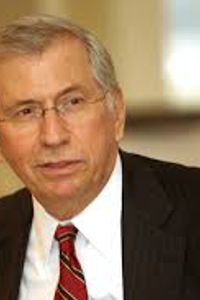
Joel Martin Flaum was a federal judge on the United States Court of Appeals for the 7th Circuit. He joined the court in 1983 after being nominated by President Ronald Reagan. He assumed senior status on November 30, 2020. His service ended on December 4, 2024, upon his death.[1][2]
Flaum was previously a judge on the United States District Court for the Northern District of Illinois from 1974 to 1983.[1]
Education
Flaum graduated from Union College with his bachelor's degree in 1958, and from Northwestern University School of Law with both his J.D. in 1963 and his LL.M. in 1964.[1]
Military service
Flaum served as a judge advocate general in the U.S. Naval Reserves from 1981 to 1992. By the completion of his service, Flaum attained the rank of lieutenant commander.[1]
Professional career
- 1983-2020: Judge, United States Court of Appeals for the 7th Circuit
- 2020-2024: Senior judge
- 2000-2006: Chief judge
- 1974-1983: Judge, United States District Court for the Northern District of Illinois
- 1972-1975: First assistant U.S. attorney, Northern District of Illinois
- 1970-1972: Assistant attorney general, Illinois Attorney General's Office
- 1969-1972: First assistant attorney general, Illinois Attorney General's Office
- 1967-1968: Associate director, Police Legal Advisory Program, Northwestern University School of Law
- 1967-1969: Lecturer, Northwestern University School of Law
- 1965-1969: Assistant state's attorney, Cook County, Illinois
- 1964-1965: Attorney in private practice, Chicago, Ill.[1]
Judicial nominations and appointments
7th Circuit Court of Appeals
 |
| Nominee Information |
| Name: Joel Martin Flaum |
| Court: United States Court of Appeals for the 7th Circuit |
| Progress |
| Confirmed 20 days after nomination. |
 Nominated: April 14, 1983 Nominated: April 14, 1983
|
 ABA Rating: ABA Rating:
|
| Questionnaire: |
| Hearing: April 27, 1983
|
| QFRs: (Hover over QFRs to read more) |
| Reported: May 3, 1983
|
| Confirmed: May 4, 1983
|
| Vote: Unanimous consent
|
Flaum was nominated by President Ronald Reagan on April 14, 1983, to a seat vacated by Robert Sprecher as Sprecher died in judicial service. Hearings on Flaum's nomination before the United States Senate Committee on the Judiciary were held on April 27, 1983, and his nomination was reported by U.S. Sen. Strom Thurmond (R-S.C.) on May 3, 1983. Flaum was confirmed by unanimous consent in the U.S. Senate on May 4, 1983, and he received his commission on May 5, 1983. Flaum served as the chief judge of the court from 2000 to 2006.[1][3] Flaum assumed senior status on November 30, 2020.[2]
Northern District of Illinois
Flaum was nominated by President Gerald Ford on November 18, 1974, to a seat vacated by Judge Philip Tone as Tone assumed senior status. Flaum was confirmed by the U.S. Senate on December 18, 1974, and he received his commission on December 20, 1974. Flaum left the Northern District of Illinois on June 1, 1983, upon his elevation to Seventh Circuit Court of Appeals. Flaum was succeeded in this position by Judge Ilana Rovner.[1]
Noteworthy cases
Union challenge to Wisconsin's labor law defeated in court (2014)
On April 18, 2014, a three-judge panel of the Seventh Circuit, composed of Judges Flaum, Ilana Rovner, and Judge Virginia Kendall of the Northern District of Illinois sitting by designation, ruled that Wisconsin's Act 10, a law enacted in 2011 that barred government employers from collectively bargaining with employees' unions over anything save for wages, was constitutionally sound, upholding a lower court opinion from the Western District of Wisconsin.[4]
In the underlying case, the American Federation of State, County, and Municipal Employees Local 60 and Laborers Local 236 brought suit against Wisconsin Governor Scott Walker, alleging violations of their constitutionally protected First Amendment right to the freedom of association, as well as their right to petition the government for redress of grievances. The plaintiffs further alleged violations of their Fourteenth Amendment right to equal protection of the laws. Prior to the plaintiffs' appeal, Judge William Conley rebuffed their claims, stating that as public employees of the state, they "remain[ed] free to associate and their unions remain[ed] free to speak; municipal employers are simply not allowed to listen."[4]
In an opinion written by Judge Flaum, the Seventh Circuit affirmed Judge Conley's ruling, commenting that "the line between constitutionality and unconstitutionally is not drawn according to how open a state decisionmaker is to what you have to say."[4]
See also
- United States Court of Appeals for the 7th Circuit
- United States District Court for the Northern District of Illinois
External links
Footnotes
- ↑ 1.0 1.1 1.2 1.3 1.4 1.5 1.6 Federal Judicial Center, "Biographical directory of federal judges," May 31, 2016
- ↑ 2.0 2.1 United States Courts, "Current Judicial Vacancies," accessed November 30, 2020
- ↑ United States Congress, "PN 194 - Joel M. Flaum - The Judiciary," accessed May 31, 2016
- ↑ 4.0 4.1 4.2 Courthouse News Service, "Defeat for Union Challenge to Wisc. Labor Law," April 23, 2014
| Political offices | ||
|---|---|---|
| Preceded by - |
United States Court of Appeals for the 7th Circuit 2020-2024 |
Succeeded by - |
| Preceded by Robert Arthur Sprecher |
United States Court of Appeals for the 7th Circuit 1983-2020 |
Succeeded by - |
| Preceded by Philip Tone |
United States District Court for the Northern District of Illinois 1974-1983 |
Succeeded by Ilana Rovner |

| |||
|---|---|---|---|
| Active judges |
Chief Judge: Virginia Kendall • Robert Dow • Sharon Coleman • Edmond E. Chang • Jorge L. Alonso • Franklin U. Valderrama • John Tharp, Jr. • Mary Rowland • Sara Lee Ellis • Andrea R. Wood • Manish Shah • Iain D. Johnston • John Robert Blakey • LaShonda A. Hunt • Martha Pacold • Steven Seeger • John Kness • Jeffrey Cummings • Sunil Harjani • Lindsay Jenkins • Jeremy Daniel • Georgia Alexakis • April Perry | ||
| Senior judges |
Marvin Aspen • Elaine Bucklo • Suzanne Conlon • Robert Gettleman • Joan Gottschall • Ronald Guzman • Frederick Kapala • Matthew Kennelly • Charles Kocoras • Joan Lefkow • George Marovich • Charles Norgle • Rebecca Pallmeyer • Philip Reinhard • James Zagel • Thomas M. Durkin • | ||
| Magistrate judges | Jeffrey Cole • Susan Cox • Maria Valdez • Sheila Finnegan • Jeffrey Gilbert • Young Kim (Illinois) • Daniel G. Martin • David Weisman • Gabriel Fuentes • Lisa Jensen • Beth Jantz • Heather McShain • Margaret Schneider • | ||
| Former Article III judges |
James Holderman • Wayne Andersen • Ruben Castillo • David Coar • John Darrah • Samuel Der-Yeghiayan • John F. Grady • William Hart • William Hibbler • Harry Leinenweber • George Lindberg • Blanche Manning • James B. Moran • John Nordberg • Ann Williams (Federal judge) • Paul Plunkett • Joel Flaum • Brian Duff • Ilana Rovner • Mark Filip • Milton Shadur • Thomas Drummond • Henry Williams Blodgett • William Bauer • Philip Tone • Peter Stenger Grosscup • Christian Cecil Kohlsaat • Solomon Hicks Bethea • Kenesaw Mountain Landis • George Albert Carpenter • Adam Cliffe • James Herbert Wilkerson • John Peter Barnes • George Johnson (Illinois) • William Harrison Holly • Philip Leo Sullivan • Michael Igoe • William Lynch (Illinois) • James Alesia • Richard Austin • Nicholas Bua • William Campbell (Illinois) • John Crowley (Illinois) • Bernard Decker • Susan Getzendanner • Julius Hoffman • Alfred Kirkland • Winfred Knoch • Walter LaBuy • George Leighton • Abraham Marovitz • Prentice Marshall • Frank McGarr • Richard McLaren • Thomas McMillen • Julius Miner • Alexander Napoli • James B. Parsons • Joseph Perry (Illinois) • Edwin Robson • Stanley Roszkowski • Elwyn Shaw • Hubert Will • Charles Woodward • Gary Feinerman • John Z. Lee (Illinois) • Nancy Maldonado • | ||
| Former Chief judges |
Marvin Aspen • Ruben Castillo • John F. Grady • Charles Kocoras • James B. Moran • Rebecca Pallmeyer • John Peter Barnes • Philip Leo Sullivan • William Campbell (Illinois) • Frank McGarr • James B. Parsons • Edwin Robson • | ||

| |||
|---|---|---|---|
| 1974 |
Bauer • Bramwell • Cahn • Churchill • Clarke • Cook • Elfvin • Fitzgerald • Flaum • Gerry • Kirkland • Sessions • Torruella • Graafeiland | ||
| 1975 |
Brimmer • Brotman • Grady • Haden • Henley • Higginbotham • Kennedy • Leighton • McNagny • Meskill • O'Conor • Rogers • Shell • Siler • Stafford • Stevens • Thompson • Tjoflat • Wong | ||
| 1976 |
Ackerman • Anderson • Aronovitz • Broderick • Callister • Cohill • Copenhaver • Crowley • Davis • Fay • Goettel • Guy • Haight • Hall • Hill • Ingram • Manos • Munson • Poole • Pratt • Richey • Schwartz • Schwarzer • Sear • Sterling • Takasugi • Waters • Williams • Wood | ||

| |||
|---|---|---|---|
| 1981 |
Bartlett • Beam • Becker • Bork • Cacheris • Cardamone • Chapman • Coughenour • Cox • Crow • Cyr • Doumar • Eschbach • Forrester • Garwood • Gibson • Glasser • Hall • Hamilton • Head • Jones • Kiser • Krenzler • Lee • Magnuson • McLaughlin • Miner • Moore • Nowlin • O'Connor • Pierce • Posner • Potter • Russell • Ryan • Shabaz • Sprizzo • Stevens • Waters • Wilhoit • Wilkins • Winter | ||
| 1982 |
Acker • Acosta • Altimari • Bell • Bissell • Black • Bullock • Caldwell • Coffey • Contie • Coyle • Dowd • Fagg • Fong • Fox • Gadbois • Gibson • Ginsburg • Hart • Higginbotham • Hogan • Irving • Jackson • Jolly • Kanne • Kovachevich • Krupansky • Lynch • Mansmann • McNamara • Mencer • Mentz • Mihm • Moody • Nordberg • Paul • Pieras • Plunkett • Porfilio • Potter • Pratt • Rafeedie • Restani • Roberts • Scalia • Selya • Telesca • Wellford | ||
| 1983 |
Baldock • Barbour • Barry • Bowman • Carman • Carter • Curran • Davis • Dorsey • Feldman • Fish • Flaum • Gibbons • Hallanan • Harris • Hinojosa • Hull • Hupp • Katz • Keenan • Kelly • Kram • Laffitte • Limbaugh, Sr. • Limbaugh, Sr. • Milburn • Nesbitt • Nevas • O'Neill • Rymer • Sharp • Starr • Vinson • Vukasin • Wexler • Woods | ||
| 1984 |
Barker • Beezer • Biggers • Billings • Bissell • Boyle • Brewster • Browning • DiCarlo • Duhe • Garcia • George • Hall • Hargrove • Higgins • Hill • Holland • Ideman • Jarvis • Keller • Leavy • Lee • Legge • Leisure • Little • Livaudais • Longobardi • McKibben • Milburn • Newman • Norgle • Prado • Rea • Rosenblatt • Rovner • Scirica • Smith, Jr. • Sneeden • Stotler • Suhrheinrich • Torruella • Wiggins • Wilkinson | ||
| 1985 |
Alley • Altimari • Anderson • Aquilino • Archer • Arnold • Baldock • Batchelder • Battey • Broomfield • Brown • Brown • Brunetti • Buckley • Cobb • Conmy • Cowen • Davidson • Dimmick • Duff • Easterbrook • Edgar • Farnan • Fernandez • Fitzpatrick • Fuste • Greene • Gunn • Guy • Hall • Hilton • Holderman • Hughes • Johnson • Jones • Korman • Kozinski • La Plata • Leinenweber • Letts • Lovell • Ludwig • Maloney • Mansmann • Marcus • McDonald • Meredith • Miller • Mills • Miner • Motz • Nelson • Noonan • Porfilio • Revercomb • Rhoades • Ripple • Rodriguez • Rosenbaum • Roth • Ryan • Sam • Scott • Sentelle • Silberman • Sporkin • Stanton • Stapleton • Strand • Strom • Tacha • Tevrizian • Thompson • Todd • Tsoucalas • Walker • Walter • Weber • Williams • Wilson • Wingate • Wolf • Wollman • Young • Zloch | ||
| 1986 |
Anderson • Boggs • Bryan • Cedarbaum • Cholakis • Conway • Davies • Dearie • Dubina • Duggan • Edmondson • Fawsett • Fitzwater • Gex • Graham • Hackett • Hansen • Henderson • Hittner • Howard • Jensen • Kay • Kleinfeld • Kosik • Lagueux • Lechner • Magill • Mahoney • Manion • McAvoy • McQuade • Norris • O'Scannlain • Rehnquist • Ryskamp • Scalia • Selya • Simpson • Smalkin • Spencer • Stiehl • Wilkins • Williams • Woodlock • Zatkoff | ||
| 1987 |
Alesia • Beam • Bell • Conboy • Cowen • Cummings • Daronco • Doty • Dwyer • Ebel • Ellis • Gadola • Gawthrop • Greenberg • Harrington • Howard • Hoyt • Hutchinson • Kanne • Kelly • Larimer • Leavy • Lew • Marsh • Mayer • McKinney • Michel • Mukasey • Musgrave • Niemeyer • Parker • Phillips • Politan • Pro • Raggi • Reasoner • Reed • Scirica • Sentelle • Smith • Smith • Stadtmueller • Standish • Tinder • Torres • Trott • Turner • Van Antwerpen • Voorhees • Webb • Whipple • Wolin • Wolle • Wood • Zagel | ||
| 1988 |
Arcara • Babcock • Brorby • Butler • Cambridge • Camp • Conlon • Cox • Dubois • Duhe • Ezra • Forester • Friedman • Garza • Hutton • Jordan • Kennedy • Lake • Lamberth • Lifland • Lozano • Marovich • Nygaard • Patterson • Schell • Smith • Smith • Tilley • Waldman • Zilly | ||


